

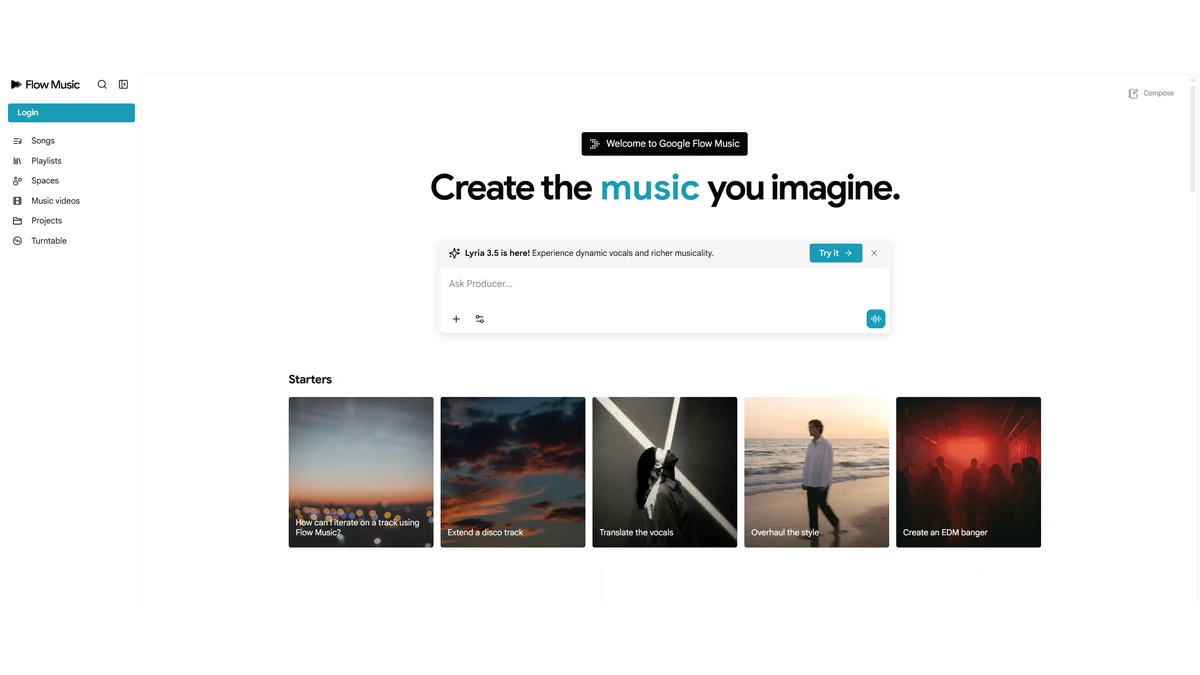
Google DeepMind rolled out Lyria 3.5 inside Google Flow Music on July 29, the latest version of its AI music generation model with upgrades to melody, lyrics, and vocal quality. According to Google, the update produces richer, more complex melodic structures that sound more natural, generates lyrics with better prompt adherence and structural awareness, and gives vocals more expression and emotion alongside cleaner pronunciation.
Creative control also got an overhaul. Google says users can now more easily set a track's tempo and duration, and, per corroborating coverage from Android Central, adjust vocals, drums, and bass independently rather than regenerating an entire clip to change one element. Track length can now run from 30 seconds up to three minutes, a jump from the fixed 30-second ceiling Lyria 3 shipped with when it launched in February.
Lyria 3.5 fits into Google's broader push to make Flow Music a working songwriting tool rather than a novelty generator. Every track the model produces carries an imperceptible SynthID watermark, Google says, so platforms and listeners can check whether a clip was AI-made or edited. The underlying Lyria family already powers Dream Track in YouTube Shorts and the music tools inside Google Vids, so Google's musicality and vocal gains here should reach those products without a separate rollout of their own.
For musicians and creators leaning on AI-generated backing tracks, the finer instrument-level controls address a common complaint about earlier text-to-music tools: no way to adjust one part of a mix without starting over. Whether Lyria 3.5's vocal and lyric improvements hold up once outside users start prompting it, rather than Google's own demo clips, is the open question now that the rollout is live.






