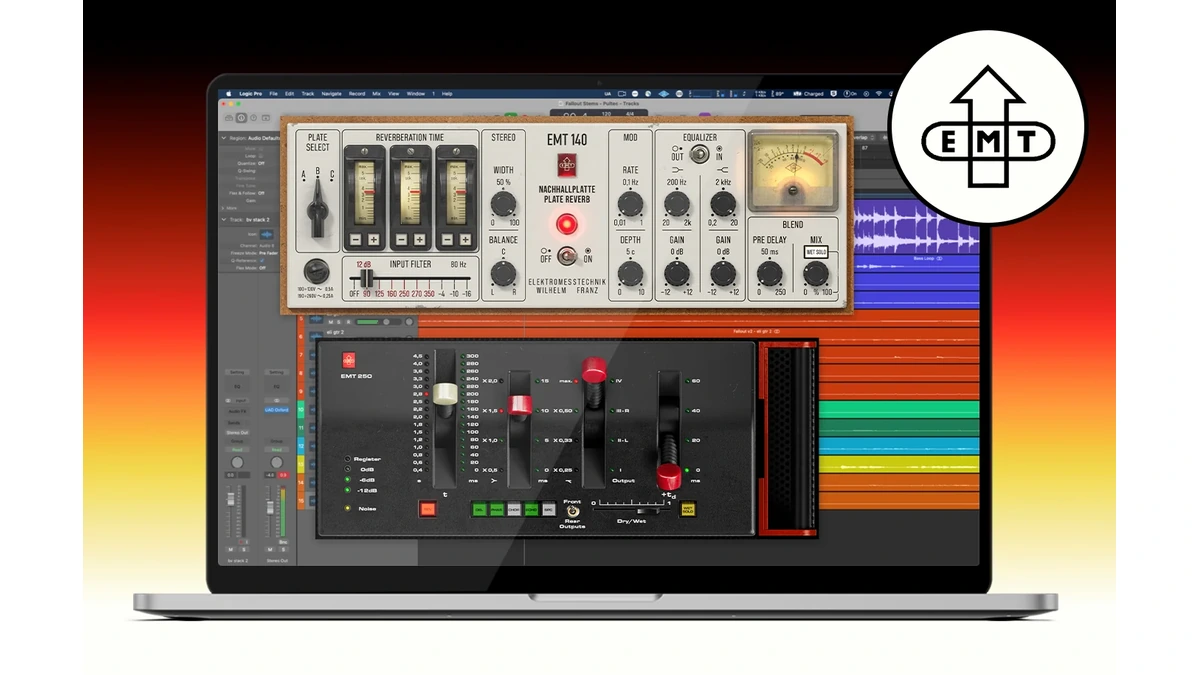
Universal Audio dropped the hardware requirement from two of its most celebrated reverb emulations, making the UAD EMT 140 Classic Plate Reverberator and UAD EMT 250 Classic Electronic Reverb available as native plug-ins on macOS and Windows, no Apollo interface or UAD accelerator card required.
Both plug-ins launch at an introductory price of $79 each, down from the standard $149, and are included in the UAD Spark subscription, per Universal Audio. A Mix Tape Pro bundle combines EMT 140 and EMT 250 alongside eight additional UAD titles for $119 through the end of August.
The EMT 140 and EMT 250 are fixtures of major-label recording sessions, credited on records by The Beatles, Pink Floyd, Prince, Radiohead, and the Red Hot Chili Peppers. The original EMT 140 was a physical steel plate roughly the size of a pool table: studio engineers ran audio through transducers that set the plate vibrating, producing the dense, warm decay that defined decades of rock and pop production. UA modeled its emulation from three physically distinct units at The Plant Studios in California. The EMT 250, introduced in 1976, was among the first digital reverb processors ever built; UA sourced its algorithm from a preservation-grade unit at Ocean Way Recording in Los Angeles and added six modulation modes including delay, phasing, chorus, and echo. Both carry official endorsement from EMT International, the original German manufacturer.
The shift to native matters most for independent producers. Until now, running either plug-in required an Apollo audio interface or a UAD PCI or Thunderbolt accelerator, hardware ranging from a few hundred to several thousand dollars. Removing that dependency puts the emulations within reach of home studios and the laptop-plus-DAW setup that dominates independent music production today.
Existing Apollo DSP owners of either version qualify for upgrade pricing; UA has not published a specific discount amount on the press page.