
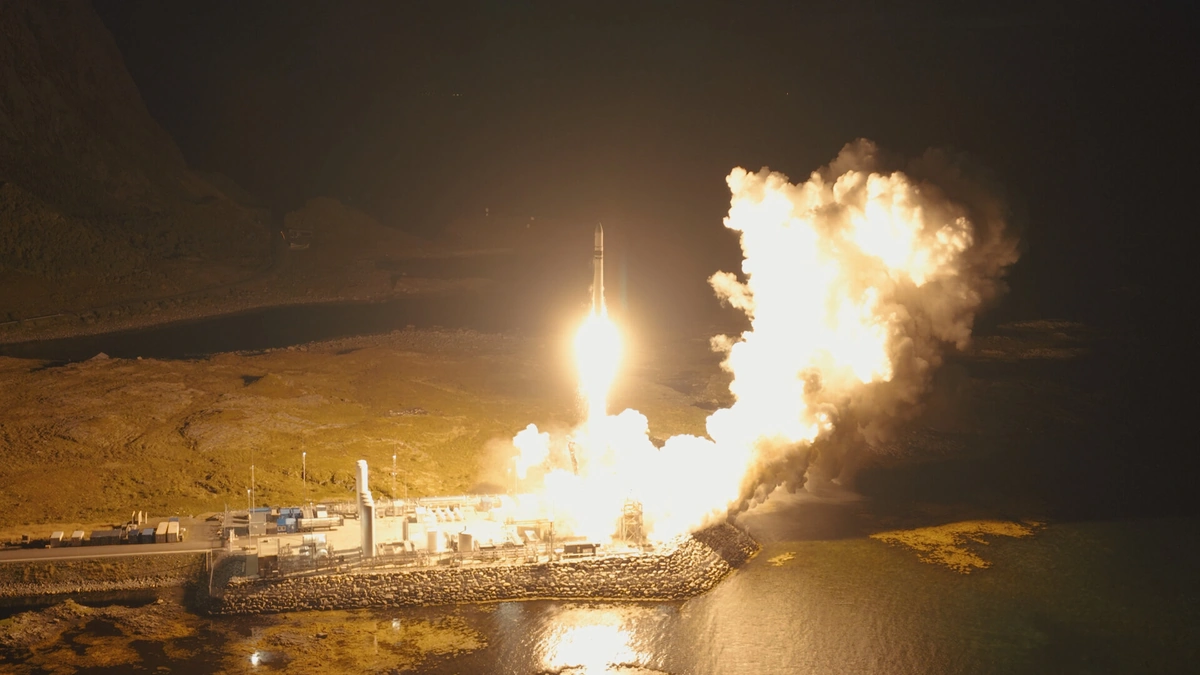
Isar Aerospace reached orbit with its Spectrum rocket on September 5, the first time a rocket has launched to orbit from continental Europe. Spectrum lifted off from Andøya Spaceport in northern Norway, reaching orbit on the company's second attempt.
The rocket carried six commercial and educational CubeSats plus a small technology experiment, and all of them reached orbit, according to the European Space Agency. Isar Aerospace's first Spectrum flight, in March 2025, ended about 30 seconds after liftoff when the rocket fell into the sea. Reaching orbit on the second try is the harder result. It needs both stages to fire and separate cleanly, then the upper stage to hold a stable path around Earth.
Isar Aerospace was founded near Munich in 2018 and is one of several European startups building small rockets for the commercial and government satellite market. Spectrum is designed to carry up to 1,000 kilograms to low Earth orbit, the weight class that covers most Earth-observation and communications satellites.
ESA co-funded the flight through its Boost program, which supports commercial launch services, and the mission was named Onward and Upward. It also clears the first requirement of the European Launcher Challenge, an ESA competition that asks selected companies to reach orbit no later than 2027. Isar Aerospace is the first of the entrants to get there.
The gap this closes is geographic. Europe has launched its own orbital rockets for decades, but the Ariane vehicles fly from a spaceport in French Guiana, South America. Small satellites built in Europe have mostly ridden to orbit on SpaceX rockets from the United States or on rideshare missions arranged outside the region. A working small launcher operated from Norway gives European customers a route to orbit that starts at home.
What is not yet clear is how quickly Isar Aerospace can turn one successful flight into a steady service. The company says it has more Spectrum rockets in production, plans to fly them often, and is building a second launch site in Nova Scotia, Canada. Regular and reliable access is a different problem from a single trip to orbit, and the coming flights are where that gets tested.