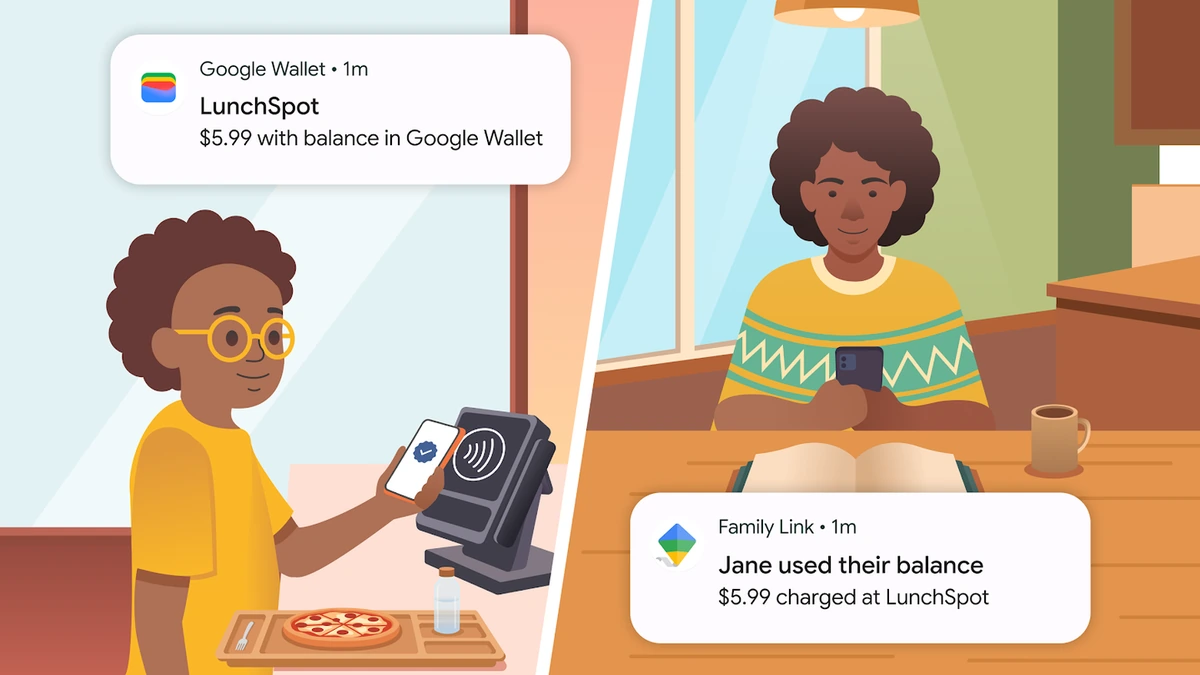
Google added a new Google Wallet feature that lets parents in the U.S. set up a supervised spending balance for kids and teens under 18. Kids can tap to pay with the balance on NFC-enabled Android phones or Wear OS watches. They don't need a bank account or a card of their own to use it.
According to Google, the balance lives inside Family Link, the same app parents already use for screen-time and app limits. Parents fund it by moving money from their own account, cap how much a kid can spend, watch transactions arrive as they happen, and freeze the balance instantly if something looks off. A recurring-transfer option is coming later, Google says, so an allowance won't require manually sending cash every week.
The point isn't a new banking product. It's distribution. Rather than shipping a standalone finance app for kids, Google hung a spendable balance off a parental-control tool millions of families already have installed for screen time and app permissions.
That puts Google Wallet in more direct competition with kid-focused banking apps like Greenlight and Step, which built their businesses around a physical debit card for teens. Google's version skips the card entirely, betting that a phone or a watch a kid already carries is enough.
If you're the parent, the pitch is one less app to manage, not powers you couldn't get elsewhere. You already trust Family Link with screen time, so the same control panel now doubles as a spending switch, and handing over bus fare turns into unlocking a balance from your own phone instead of digging for cash.
Google didn't say when the recurring-transfer option arrives, or whether the balance will expand beyond the U.S. anytime soon.