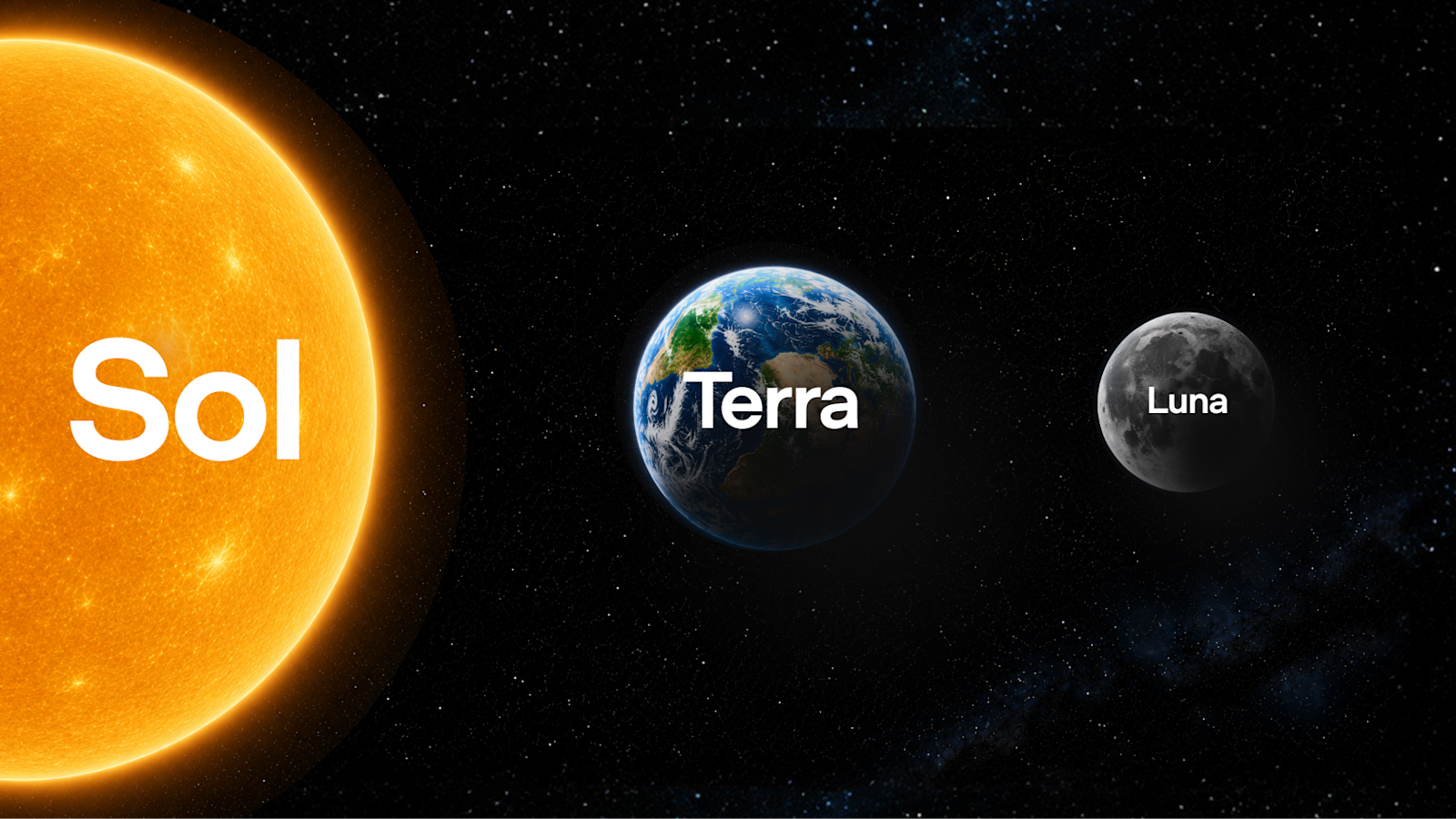
OpenAI released a limited preview of GPT-5.6, a new three-tier model family built around its most extensive safety architecture to date, pairing stronger reasoning with a layered cybersecurity safeguard stack developed in coordination with the U.S. government. The family introduces Sol (the flagship), Terra (a balanced mid-tier), and Luna (a fast, lower-cost option), each carrying capabilities matched to a separate safeguard configuration, according to OpenAI.
Sol is OpenAI's most capable coding and security research model yet, achieving the highest recorded score on Terminal-Bench 2.1, which measures command-line workflows requiring planning and tool coordination. On ExploitBench, Sol performs competitively with Mythos Preview while using roughly a third of the output tokens, a material efficiency gain for long-horizon security tasks. Terra carries competitive performance with GPT-5.5 at half the input cost; Luna brings strong capability at the lowest per-token price in the family ($1 input / $6 output, versus Sol at $5 / $30 per 1M tokens), per OpenAI's announcement.
The cybersecurity angle is where the release is most distinct from prior GPT generations. OpenAI dedicated over 700,000 A100-equivalent GPU hours to automated red-teaming specifically targeting universal jailbreaks, attacks that generalize across prompts rather than exploiting one narrow failure mode. Real-time classifiers evaluate output as it is generated; for higher-risk requests, generation can pause while a larger reasoning model reviews the conversation before the response reaches the user. Account-level signals run across sessions to distinguish persistent misuse from legitimate dual-use security work.
Despite its enhanced cyber capabilities, Sol does not cross what OpenAI calls the Cyber Critical threshold under its Preparedness Framework. In browser-engine evaluations, it identified bugs and exploitation primitives but did not autonomously produce a working full-chain exploit under the tested conditions. OpenAI describes this as a step change in capability that still sits below the threshold, and the reason it is using a phased release rather than waiting longer or shipping without restriction.
GPT-5.6 also introduces a new naming convention. The number identifies the model generation; Sol, Terra, and Luna are permanent capability tiers that can advance independently, giving developers and enterprises clearer choices across intelligence, speed, and cost than version numbers alone convey. In July, Sol will be available on Cerebras infrastructure at up to 750 tokens per second for select customers, as OpenAI confirmed, initially limited while capacity ramps.
Access during the preview is limited to a small group of trusted partners whose participation has been shared with the U.S. government. OpenAI said it does not intend for this kind of pre-release government access to become a long-term default, framing it as a short-term coordination step while the Administration develops a framework for future frontier model releases under the cyber Executive Order.