Anthropic has made three admin tools generally available for Claude Enterprise: smart reports on how teams use Claude, in-app surveys that ask members what it changed, and pooled group budgets that give a team one shared allowance. Availability depends on an organization's configuration.
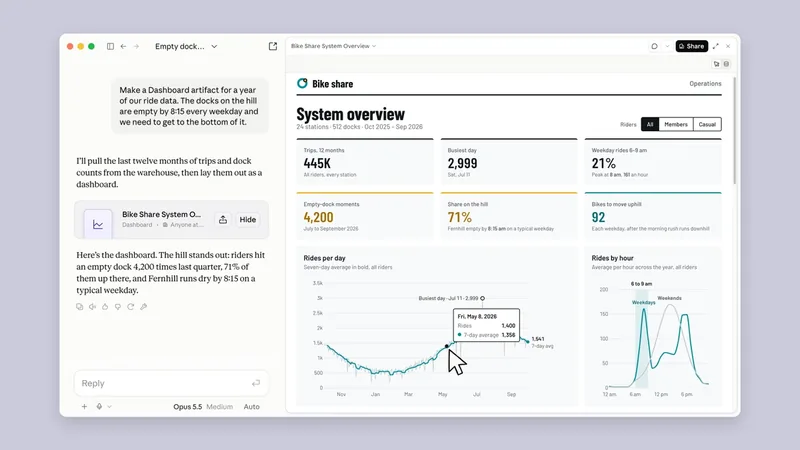
To build a smart report, an admin picks a team, a time window and which products to cover. Anthropic says Claude reads a sample of that team's transcripts, sorts the activity into workstreams, and attaches to each one its cost, its output and the snags people hit, a missing connector or a tool call that failed, for example. Each report has one list of suggestions, including repeat tasks worth packaging as skills and rules worth adding to a code repository. A billing-permission admin can lift someone's spend limit without leaving the report, and owners can let team leads who are not admins run reports for their own groups. Anthropic says the reports are meant for tracking adoption and planning investment, not for evaluating individual performance or making employment decisions. John Jannone, an AI enablement lead at DoorDash, says smart reports still surfaced things he did not know, even though he works closely with how his teams use Claude.
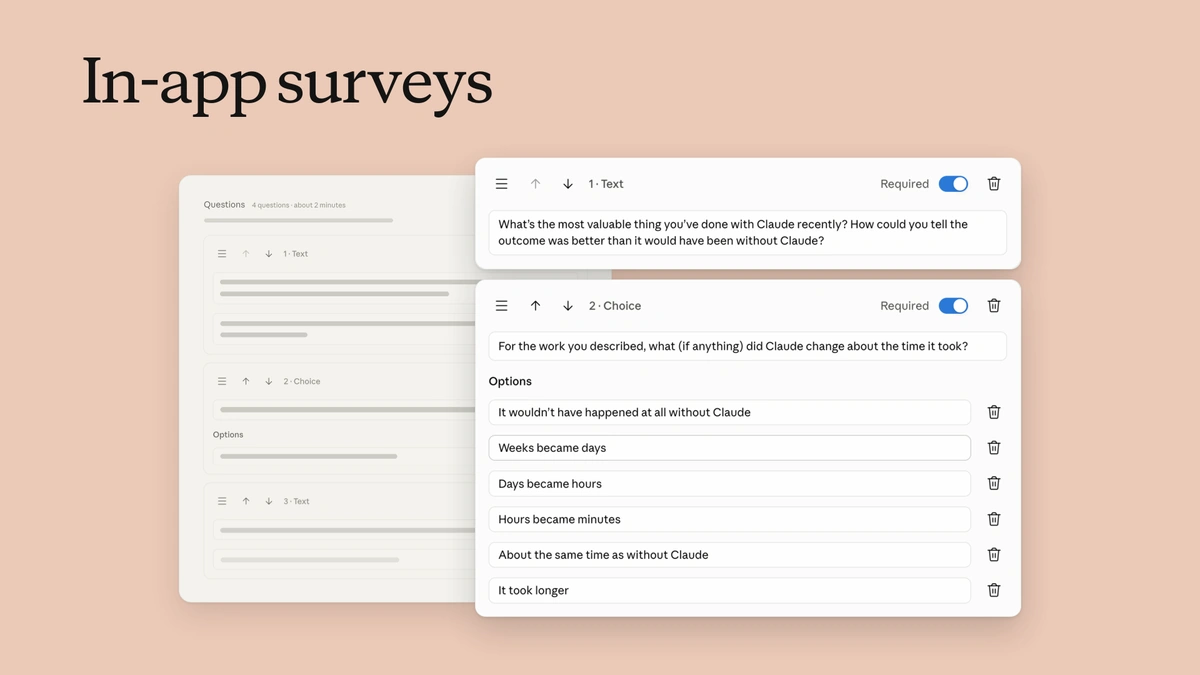
Surveys come with four stock prompts: the most valuable thing a person has done with Claude recently, how it changed the time the task took, which use of Claude a teammate should copy, and what would break or slow down first if the team lost access tomorrow. Admins can rewrite or drop any of them and decide the audience, schedule and placement. A member sees a brief card after a reply, in whatever tool they are already working in. Answers show up on the survey page live and can be exported to a spreadsheet. Claude Enterprise surveys can now also run for organizations on customer-managed encryption keys, and in organizations with a single retention period for all data, the surveys and answers are purged on that same schedule.
A pooled group budget gives the whole group one monthly allowance, so heavy users are less likely to hit an individual limit early in the month while others leave budget unspent. Member limits still apply as a guardrail against unusually high individual use, and each request is charged to both the pool and the person, so whichever runs out first stops that member. Anyone who runs out can file a request for more inside Claude, which routes to admins. The setup screen suggests an amount based on the group's recent usage, and billing-permission admins get email alerts at 50, 75 and 95 percent of a budget and again when it is used up.
For buyers, the budgets sit on top of Enterprise's existing controls: admin-set user and org spend limits, plus role-based access and audit logs, which the Team plan lacks. Enterprise costs $20 per seat per month, billed annually and before tax, plus usage at API rates, with a 20-seat minimum; Anthropic's sales team also offers tailored quotes. Organizations with a HIPAA configuration or customer-managed encryption keys may see different availability.