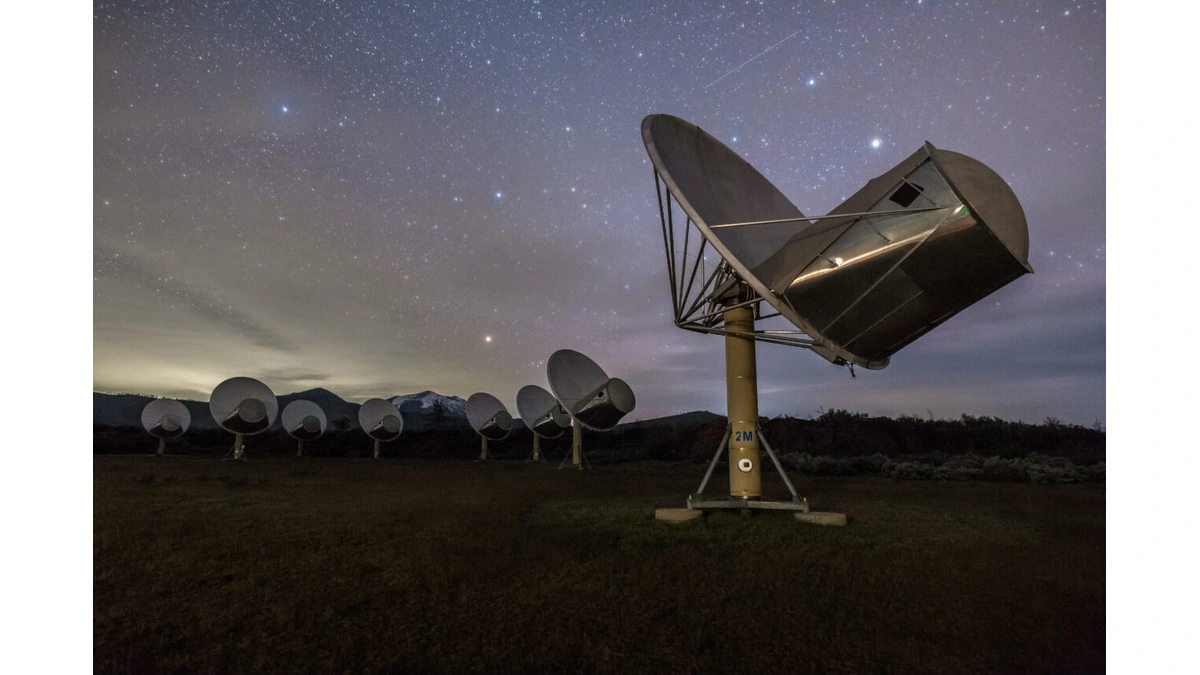
AI agents can now run radio observations at the Allen Telescope Array in the search for extraterrestrial signals, according to NVIDIA. A researcher makes one natural-language request, and an agent can steer the antennae, calibrate and focus the instrument, catch and fix data errors, apply AI models to the incoming stream and plot the result. Breakthrough Listen and the SETI Institute are bringing the agents into their daily search at the array in Northern California, with NVIDIA's Holoscan platform feeding the agents live sensor data.
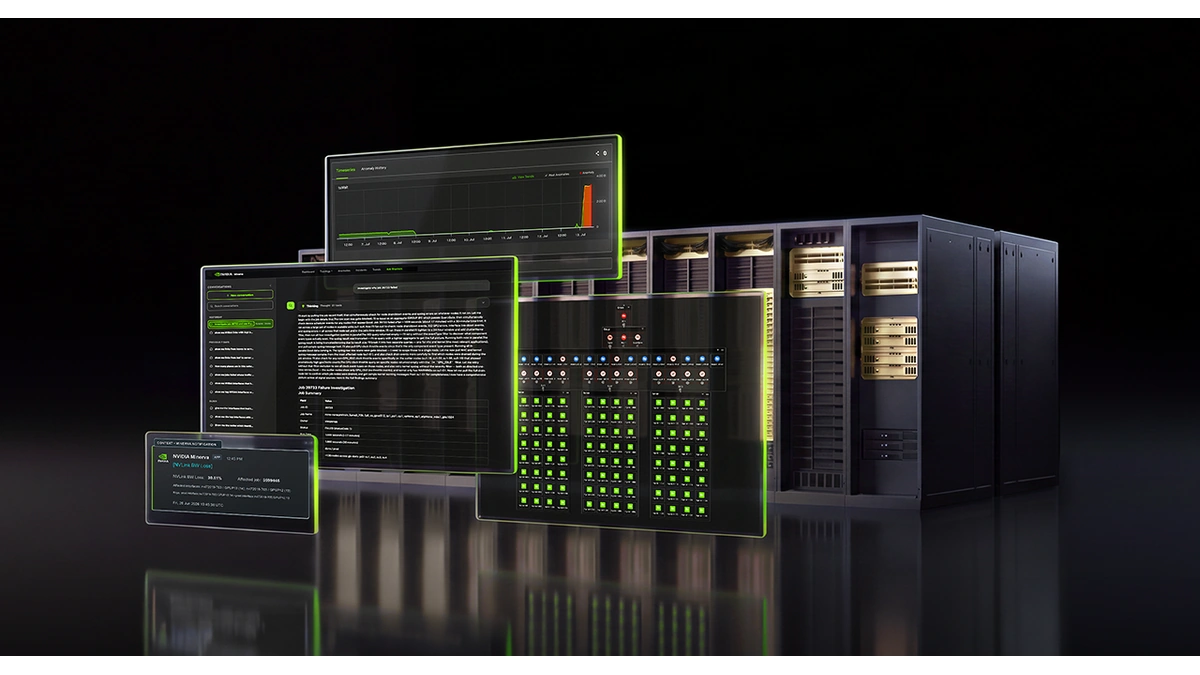
DAQIRI, a data acquisition library NVIDIA offers with its Holoscan platform, pulls terabits per second of sensor data straight into GPU memory, so observations are processed in flight instead of filling hard drives. CyberEther, a signal-processing framework developed at the SETI Institute, does the math on NVIDIA CUDA-X libraries, including cuFFT and cuBLAS. Nexus, a web-based observatory orchestrator, is the harness the agents work through. It keeps instrument state, compute resources and pipelines in one place and lets researchers watch packet loss, read live spectrograms and rewrite signal-processing blocks by prompt.
NVIDIA says the system can handle 2.4 terabits per second on its RTX PRO 6000 Blackwell GPUs, with inference running on premises next to the instrument. It also says agents compress work that would take humans weeks or years into hours, and gives no baseline for that comparison.
NVIDIA credits the pipeline with the first real-time AI detection of a pulsar, in the Crab Nebula, without dating it. In November 2025, the SETI Institute reported that an AI system on Holoscan at the array had detected giant pulses from the Crab Pulsar in tests, at up to 86 gigabits per second, and it made no mention of agents.
DAQIRI is not built only for telescopes. NVIDIA describes it as a software-defined data acquisition library that turns raw UDP and RoCE v2 streams into GPU-ready memory, usable from C++ or Python, and says any instrument that speaks Ethernet can feed it without changes to its hardware or software. The data then passes to tools such as Holoscan for sensor processing or TensorRT for inference, and NVIDIA lists automated manufacturing lines and high-rate sensor networks as targets alongside scientific instruments.
Andrew Siemion, the Bernard M. Oliver chair for SETI at the SETI Institute and principal investigator of Breakthrough Listen, said what the new agentic observatories find "may have much more in common with themselves than with the humans who created them," which he called a breakthrough in translation and not something to fear. At the Allen Telescope Array, the team is now evaluating open models, including NVIDIA Nemotron, for cases where data locality and turnaround matter most, and for observatories that may someday run offline on the far side of the moon.