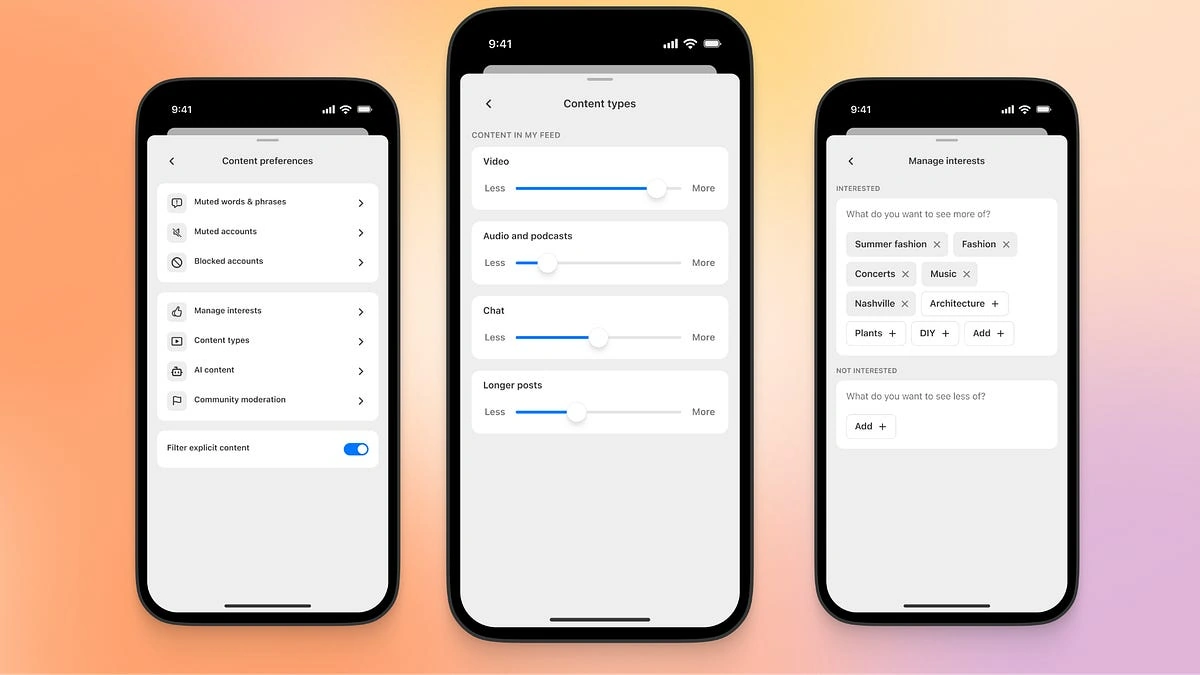
Substack now lets readers shape its feed with a new set of content preferences, controls for how much video, audio, longform writing and community features such as chat the feed surfaces.
The controls sit in the content preferences section of the settings. Readers can ask for more or less of each format, mute specific keywords and phrases, fine-tune the topics they follow, and have AI-generated material labeled automatically. Substack's own examples were everyday ones: more baseball chatter while the playoffs are on, politics snoozed for a week, fewer videos in the feed.
Substack backs the launch with numbers. According to Substack, the app drove nearly 800,000 paid subscriptions and more than 80 million free ones to writers and creators over the past six months, and more than half of the paid subscriptions from the Substack app came directly from its Notes feed. Those are Substack's own figures.
The post leans into the label co-founder Hamish McKenzie accepted a year ago, that Substack is social media, while arguing it is a different kind of one. Substack describes its feed as built to lead readers to work they will stick with and pay for rather than to maximize time spent scrolling, and the preferences extend that claim by handing part of the ranking decision to the reader. For writers, feed reach can now vary with each reader's format settings: a video-heavy Substack publication may reach fewer readers who have dialed video down, while one built on longform posts could reach more of the readers who have turned longform up.