NVIDIA NemoClaw is an open blueprint that lets industrial engineering teams build specialized, long-running AI agents with a secure runtime, introduced at GTC Taipei at COMPUTEX. The announcement, published on NVIDIA, positions NVIDIA NemoClaw as the framework for what the company calls autonomous AI engineers: agents capable of compressing weeks of computer-aided engineering work into hours by automating the full surrounding workflow around simulations.
NVIDIA NemoClaw provides a secure runtime built on NVIDIA OpenShell, a model router, NeMo libraries for customization, and a harness layer that integrates with orchestration frameworks such as OpenClaw and Hermes. Each agent operates with enforced policy-based control over file, network, and tool access at every layer. Deployments run on DGX Spark personal AI supercomputers, enterprise data centers, or cloud providers. That security architecture matters in industrial CAE and EDA environments where incorrect simulation outputs carry real engineering consequences.
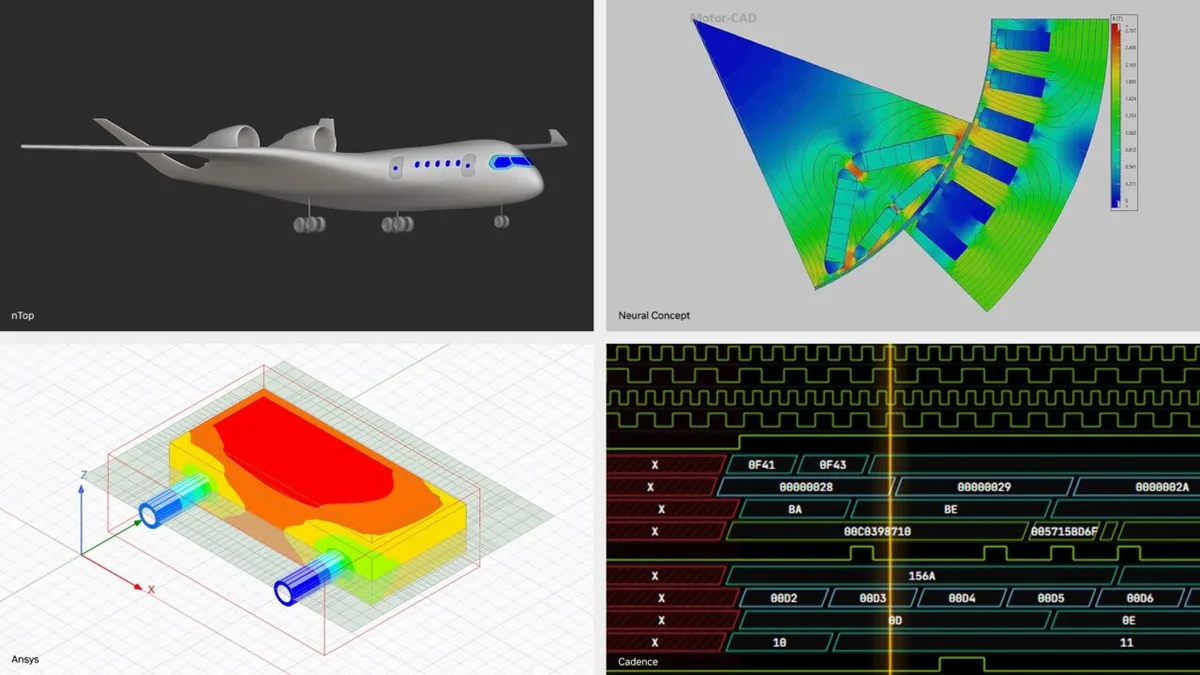
The partner roster at launch is substantial. Cadence is using NVIDIA NemoClaw to automate RTL verification for chip design, cutting that step from weeks to hours according to NVIDIA. Siemens integrated it into Fuse EDA AI Agent for semiconductor, 3DIC, and PCB workflows. Synopsys demoed Ansys Icepak running GPU electronics cooling simulations autonomously at the show floor. Dassault Systemes is productizing its 3DEXPERIENCE Agentic Platform on NemoClaw. On the startup side, Flexcompute is running multiphysics co-packaged optics design overnight with it, and PhysicsX is partnering with the Microsoft Surface team to build a thermal simulation agent for consumer device design.
The practical claim is about throughput, not accuracy: NVIDIA is arguing that agents built on NVIDIA NemoClaw can execute the full workflow surrounding simulations autonomously, including CAD setup, meshing, debugging, post-processing, and report generation, which has historically been the labor-intensive portion of industrial engineering. Whether the quality of agentic outputs holds up in production pipelines at Cadence or Siemens is the question that will take months of deployment data to answer. For context on where this fits into the broader shift toward generative AI in enterprise workflows, the move from assistant to workflow automation has been the consistent pattern across engineering-heavy sectors.