The pitch for physical AI has always been easy to demo and hard to ship. At Hannover Messe 2026, running April 20 to 24 in Germany, NVIDIA tried to close that gap by pointing past the simulation reel to named factories where its Omniverse and Isaac software is meant to be running on real production lines. The company put its case on named partners and measurable plant outcomes rather than the usual stage footage, which is the more interesting move.
The supporting cast is unusually broad. NVIDIA said engineering-software makers including Cadence, Dassault Systèmes, Siemens and Synopsys are wiring its CUDA-X libraries, Omniverse and open Nemotron models into their tools so that factory simulation runs with physically accurate results. On the floor itself, vision AI agents built on NVIDIA Metropolis and Cosmos Reason models fuse camera feeds with existing plant systems for monitoring, while a Siemens blueprint for an autonomous electronics factory is set in Erlangen. Deutsche Telekom is supplying an Industrial AI Cloud built in Germany on NVIDIA infrastructure, a nod to the data-residency concerns that slow this kind of rollout in European plants.
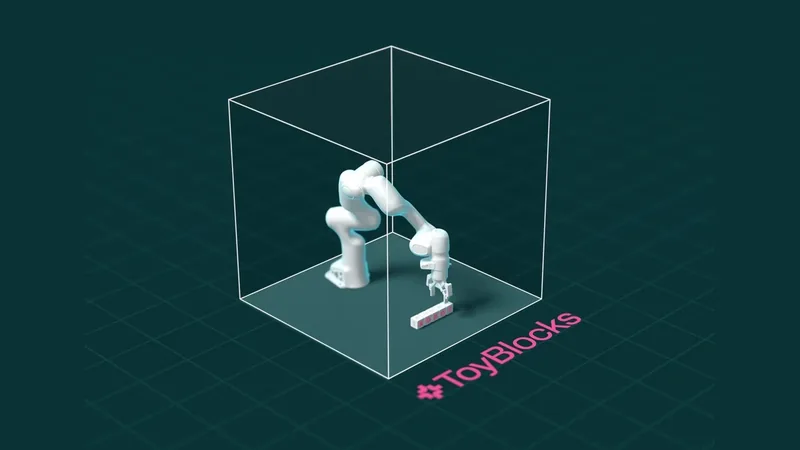
The humanoid examples are the part worth watching. Humanoid's HMND 01 wheeled robot, developed with Isaac Sim and Isaac Lab and running the Jetson Thor edge module, reached working hardware in seven months, a cycle NVIDIA said usually takes up to two years. AEON is slated to run assembly work at BMW's Leipzig plant, which NVIDIA describes as one of the first humanoid deployments inside a German production environment. Those are pilots, not fleets, and the company is careful to frame them as early.
Where NVIDIA reaches for hard numbers, they belong to its customers rather than to the platform. Terex, which builds material-handling equipment across more than 40 plants, is expected to see a 3 percent increase in yield and a 10 percent reduction in rework, according to NVIDIA. Microsoft's Azure Physical AI Toolchain, built on NVIDIA's Physical AI Data Factory Blueprint, is aimed at moving autonomous robots into production faster. Both are forward-looking estimates, the kind of figure that reads well in a keynote and gets tested only once the lines are actually running.
NVIDIA has spent two years making the software case for the digital-twin approach, and Hannover is where it shifted the argument onto other companies' shop floors. The deployments it laid out read as credible commitments, but the yield gains, the rework cuts and the humanoid assembly runs are all still in front of us. The signal to watch is not the partner logos, which accumulate at every trade show, but whether any of these pilots converts into a second and third line inside the same plant.