The Google antitrust case is a label for three separate US lawsuits that challenge how Google runs its search engine, its advertising technology and its Android app store. The Justice Department and groups of states brought the search and ad tech cases. Epic Games v. Google, the Play Store case, is a private suit by the maker of Fortnite, decided on appeal in the Ninth Circuit's July 31, 2025 opinion. Courts have ruled against Google in all three, and none of the orders breaks the company up.
The Google Antitrust Cases at a Glance
As of October 2026, each case sits at a different stage. The search case reached a Final Judgment entered December 5, 2025, which Google has appealed, per the plaintiffs' D.C. Circuit brief. The ad tech case reached a September 2, 2026 remedies order but has no entered judgment. Epic's jury verdict stands after the Ninth Circuit's affirmance.
| Case | Court and judge | Who sued | What it is about | Where it stands |
|---|---|---|---|---|
| Search | D.D.C., Judge Amit Mehta | Justice Department and states | Monopolies in general search services and search text advertising | Final Judgment entered December 5, 2025; on appeal in the D.C. Circuit |
| Ad tech | E.D. Va., Judge Leonie Brinkema | Justice Department, Virginia and other states | Monopolies in the publisher ad server and ad exchange markets, and tying the two | Remedies ordered September 2, 2026; joint proposed judgment filed October 2, 2026 |
| Play Store | N.D. Cal., Judge James Donato | Epic Games, a private company | Android app distribution and Google Play Billing | Verdict and three-year injunction affirmed by the Ninth Circuit on July 31, 2025 |
This is a plain-English explainer, not legal advice. The European Commission's Google decisions get a short section further down.
Where Each Case Stands
Here is the latest dated step in each case.
- Search. As of October 2026, per the plaintiffs' July 28, 2026 brief in the D.C. Circuit (Nos. 26-5023, 26-5047, 26-5049), Google's appeal and the plaintiffs' cross-appeal are in briefing, with oral argument not yet scheduled at that filing. Per the plaintiffs' September 17, 2026 status report, the Technical Committee and Google are still setting up the data-sharing and syndication processes.
- Ad tech. As of October 2026, per the Eastern District of Virginia docket, the court's September 2, 2026 order and opinion rejected the structural remedies and accepted most behavioral remedies, and the parties filed a joint proposed final judgment on October 2, 2026. The docket through that filing shows no judgment entered.
- Epic. As of October 2026, per the Ninth Circuit's July 31, 2025 opinion, the verdict and the three-year injunction in Epic Games v. Google were affirmed. The Northern District of California docket shows the court receiving monthly injunction-compliance reports, including one dated September 17, 2026. Epic and Google signed a settlement and jointly asked the court to modify the injunction, then withdrew the renewed request on July 14, 2026, so the original injunction still governs, per the same docket.
- European Union. As of October 2026, the Commission's three main Google decisions have case pages that record their later court history (AT.39740, AT.40099, AT.40670).
Last checked October 18, 2026; court dockets move, so confirm on the linked pages.
The Legal Tests in Plain English
A Sherman Act monopolization case asks two questions: does the company hold monopoly power in a defined market, and did it get or keep that power through anticompetitive conduct? Section 2 of the Sherman Act covers monopolization. Section 1 covers restraints of trade and carried the ad tech tying claim. Per the Justice Department's page on the antitrust laws, a monopoly is unlawful when the firm kept its power "not through competition on the merits" but by suppressing competition.
The ad tech court's April 17, 2025 memorandum opinion, quoting the Eastman Kodak and Grinnell precedents, states the two elements: possession of monopoly power in the relevant market, and willful acquisition or maintenance of it, as distinguished from a superior product, business acumen or historic accident. Size alone fails the second element.
- Monopoly power
- A dominant position in a relevant market. Holding it is not unlawful by itself.
- Relevant market
- The products buyers and rivals treat as substitutes. The courts used general search services and general search text advertising (search), publisher ad servers and ad exchanges for open-web display ads (ad tech), and Android app distribution and Android in-app billing (Epic).
- Anticompetitive conduct
- Suppressing competition instead of out-competing rivals. The Justice Department's example is exclusive contracts that reduce competition.
- Unlawful tying
- Forcing customers to buy one product in order to get another, in the Justice Department's description.
- Remedy
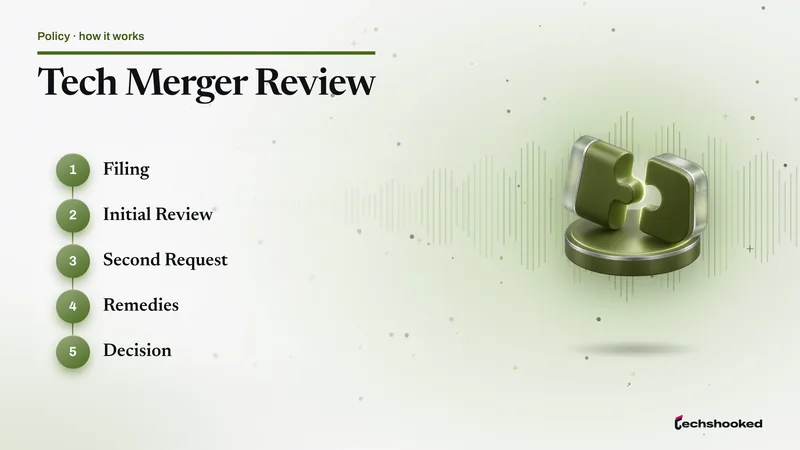
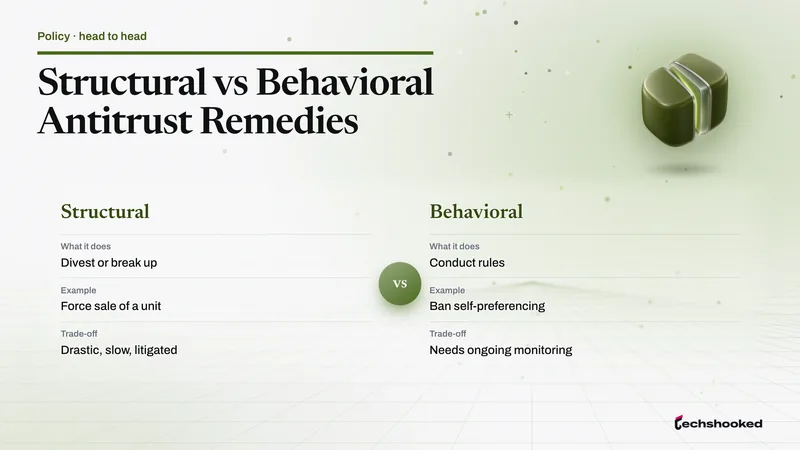
- The order that fixes a violation. Behavioral remedies set conduct rules; structural ones, such as a divestiture, change ownership.
United States v. Google: The Search Case
United States v. Google, filed in the District of Columbia in October 2020, is the case in which a federal court found that Google illegally maintained monopolies in general search services and general search text advertising. Per the recitals of the court's Final Judgment, the complaint was filed on October 20, 2020, and the Colorado plaintiff states filed theirs on December 17, 2020.

After a nine-week bench trial, the court issued a 277-page opinion in August 2024 concluding that "Google is a monopolist, and it has acted as one to maintain its monopoly" in violation of Section 2 of the Sherman Act, per the Justice Department's summary. Judge Amit Mehta's December 5, 2025 memorandum opinion cites that ruling as 747 F. Supp. 3d 1 (D.D.C. 2024) and refers back to his Remedies Opinion of September 2, 2025 (ECF 1435). The Final Judgment entered the same day orders:
- Bans on conditioning Google Play or other Google app licenses, or Google payments, on carrying Google Search, Chrome, Google Assistant or a Google GenAI product such as the Gemini app, and on OEMs and carriers refraining from rival search, browser or GenAI products, on devices sold in the United States (Section III).
- Distribution and default agreements that terminate within one year.
- Web Search Index and user-side data for Qualified Competitors, excluding trade secrets such as ranking signals (Section IV).
- Search and search text ads syndication (Sections V and VI).
- A five-member Technical Committee (Section VII).
- A six-year term, effective 60 days after entry (Section VIII).
Counting 60 days from entry, as Section VIII of the Final Judgment directs, puts the effective date at February 3, 2026. The court stopped short of a breakup. Its memorandum opinion says it rejected Chrome divestiture, mandated choice screens and a complete payment ban, which puts the difference between structural and behavioral remedies into practice.
As of October 2026, per the plaintiffs' July 28, 2026 brief, Google has appealed to the D.C. Circuit and the plaintiffs have cross-appealed. Google contests market definition, monopoly power in general search text advertising, the exclusivity of its default deals, anticompetitive effects, and the data and syndication remedies, including their reach to GenAI companies. The plaintiffs contest the rejected payment ban, not the divestiture ruling. Companies the brief lists as having filed amicus briefs or notices of intent to file include Brave Software, Mozilla, Apple, Samsung Electronics and OpenAI.
The Ad Tech Case in Virginia
The Google ad tech case, filed in the Eastern District of Virginia in January 2023, is the case in which a federal court found that Google monopolized the publisher ad server and ad exchange markets and unlawfully tied the two products. Per the Justice Department's case page, the department, the Commonwealth of Virginia and other states filed on January 24, 2023. The Justice Department says the complaint alleged Google subverted competition "through a series of acquisitions and anticompetitive auction manipulation"; the court found the DoubleClick and AdMeld acquisitions not anticompetitive on their own but upheld the exclusionary-conduct claims. The explainer on how regulators review the acquisitions that built these positions covers the merger side.
After a 15-day trial in September 2024, per the Justice Department, Judge Leonie Brinkema's memorandum opinion, cited as 778 F. Supp. 3d 797 (E.D. Va. 2025), found monopoly power in the open-web display publisher ad server and ad exchange markets under Section 2 of the Sherman Act. It also found unlawful tying of DFP and AdX under Section 2 and Section 1. The plaintiffs did not prove a relevant market for advertiser ad networks.
A tie between Google's own seller tool and its own exchange resembles self-preferencing, and the explainer on why self-preferencing is a core antitrust theory against platforms sets out that theory, which the European Commission applied to Google's ad tech.
The court's September 2, 2026 order and remedies opinion rejected divestiture of AdX, open-sourcing of DFP's final auction logic and a contingent DFP divestiture. It accepted most behavioral remedies, for six years, effective 60 days after entry and worldwide:
- Interoperability and data-sharing.
- Anti-discrimination rules.
- Limits on buy-side bidding behavior.
- A Monitor and a Technical Committee, with work to appoint them starting as soon as the judgment is entered.
- An Internal Compliance Officer.
As of October 2026, per the Eastern District of Virginia docket, the parties filed the joint proposed final judgment the order called for on October 2, 2026, and the docket through that filing shows no judgment entered.
Epic Games v. Google and the Play Store
Epic Games v. Google is a private lawsuit, not a government case, and a jury sided with Epic on December 11, 2023. The Ninth Circuit's July 31, 2025 opinion sets out the steps:
- Google removed Fortnite from the Play Store, and Epic sued in the Northern District of California on August 13, 2020, per the court's docket.
- On December 11, 2023, a unanimous jury found willful monopoly power in Android app distribution and in-app billing, worldwide excluding China, and unlawful tying of the Play Store to Google Play Billing.
- On October 7, 2024, the court entered a three-year injunction, as the Ninth Circuit opinion recounts: no rewards to distributors, developers, OEMs or carriers for advantaging the Play Store, and developers may link users to alternative billing and distribution.
- Catalog-sharing and app-store distribution provisions came with eight months for Google to comply and a three-person Technical Committee.
- Judges McKeown, Forrest and Sanchez affirmed the verdict and the injunction on July 31, 2025.
As of October 2026, per the Northern District of California docket, recent entries include a July 24, 2026 order on injunction-compliance reports and an FRE 706 expert (ECF 831), a September 17, 2026 monthly compliance report (ECF 847), and the vacating of a September 24 status conference at the parties' joint request (ECF 850). Rules on outside billing and rival stores reach beyond Google Play, and the explainer on how app store rules and sideloading fit into the same enforcement wave maps them.
Timeline of the Google Antitrust Cases
The dates below come from the court opinions, judgments and docket entries linked throughout this guide; the last column names the record behind each date.
| Date | Case and event | Source page |
|---|---|---|
| August 13, 2020 | Epic Games sues Google in the N.D. Cal. | N.D. Cal. docket |
| October 20, 2020 | The Justice Department and states file the search case in the D.D.C. | Search judgment, recitals |
| January 24, 2023 | The Justice Department and states file the ad tech case in the E.D. Va. | DOJ ad tech case page |
| December 11, 2023 | A jury returns a unanimous verdict for Epic. | Ninth Circuit opinion |
| August 2024 | Search liability opinion (ECF 1032, August 5, 2024). | DOJ summary; D.D.C. December 2025 opinion |
| October 7, 2024 | Three-year injunction in the Epic case. | Ninth Circuit opinion |
| April 17, 2025 | Ad tech liability opinion. | E.D. Va. liability opinion |
| July 31, 2025 | The Ninth Circuit affirms the verdict and the injunction. | Ninth Circuit opinion |
| September 2, 2025 | Search remedies opinion. | D.D.C. December 2025 opinion |
| December 5, 2025 | The D.D.C. enters the Final Judgment and a memorandum opinion. | Search judgment |
| February 3, 2026 | The search judgment takes effect, 60 days after entry (computed from Section VIII). | Search judgment, Section VIII |
| July 28, 2026 | The plaintiffs file their response and cross-appeal brief. | D.C. Circuit brief |
| September 2, 2026 | Ad tech remedies order and opinion (unsealed September 16, 2026). | E.D. Va. order and opinion |
| October 2, 2026 | The ad tech parties file a joint proposed final judgment. | E.D. Va. docket |
What the Remedies Change for Users, Publishers and Rivals
The remedies in the Google antitrust case work mainly through contracts, data access and technical processes, so their effects reach users, publishers and rivals in different ways. Each entry pairs one ordered change with one limit.
- Users
- Default and distribution deals must end within one year, and Google may not tie its app licenses or payments to carrying its search, browser, assistant or GenAI products, per the Final Judgment; the court declined a blanket ban on exclusive contracts as too vague, and no choice screen was ordered, per its December 5, 2025 opinion.
- Publishers
- The ad tech remedies opinion orders interoperability and anti-discrimination rules for DFP and AdX. The parties are still settling the final judgment, per the E.D. Va. docket.
- Rivals and AI companies
- Qualified Competitors can receive index and user-side data, and the Justice Department says the remedies reach GenAI companies. Syndication terms are unfinished: Google sent draft template licenses to the TC on August 10 and 19, 2026, per the September 17, 2026 status report, and the DOJ search case page lists an October 13, 2026 plaintiffs' recommendation for a template license covering search and search text ads.
- Chrome and Android
- Chrome stays with Google after the rejected divestiture, and Section III of the search judgment bars conditioning deals on carrying Search, Chrome, Google Assistant or the Gemini app. On Android, the Epic injunction affirmed by the Ninth Circuit bars rewards for advantaging the Play Store, for three years.
One list of names causes confusion. The court's August 25, 2026 order names Anthropic, Brave, DeepSeek, DuckDuckGo, Ecosia, Meta, Microsoft, OpenAI, Perplexity, Yahoo and SpaceXAI only to define which employers count as competitors under post-employment limits on Technical Committee staff. It does not certify any of them as Qualified Competitors.
As of October 2026, per the plaintiffs' D.C. Circuit brief, Google's appeal contests the data and syndication remedies. For rivals, the license templates and data processes matter more than the headline rulings.
The European Commission's Google Decisions
The European Commission has fined Google in four cases under EU competition law. The three below are the main ones; the fourth, a €1.49 billion fine over AdSense contracts in 2019 (IP/19/1770), was annulled by the General Court on September 18, 2024.
- Google Shopping (AT.39740). A €2.42 billion fine for giving an illegal advantage to Google's own comparison shopping service, per the June 2017 Google Shopping decision.
- Android (AT.40099). A €4.34 billion fine over restrictions on Android device manufacturers and mobile network operators, per the 2018 Android decision (IP/18/4581), which the General Court cut to €4.125 billion in September 2022.
- Ad tech (AT.40670). A €2.95 billion fine for favoring Google's own ad tech services, per the 2025 ad tech decision (IP/25/1992). The Commission ordered Google to end the self-preferencing and propose measures within 60 days, and said its preliminary view was that only a divestment of part of Google's services would end the conflicts of interest, though it first wanted to assess Google's proposal.
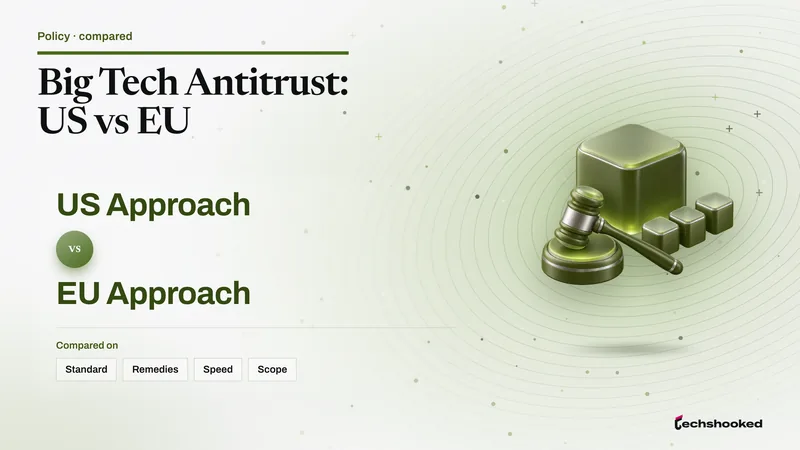
The analysis of how US and EU authorities compare in policing the largest platforms sets these decisions beside the US cases, and a separate explainer covers the EU rules that regulate gatekeepers ex ante, before any violation is found.
Is Google Guilty? What the Rulings Found and Did Not Find
Google has not been found guilty of a crime. The courts made civil liability findings, and only the search ruling is on appeal. The ad tech case has no entered judgment yet, and Google's Supreme Court petition in the Epic case was dismissed in March 2026, per the N.D. Cal. docket.
| What the courts found | What they did not find or order |
|---|---|
| Search: monopoly power, willfully maintained, in general search services and general search text advertising | Search: no Chrome divestiture, no mandated choice screens, no complete payment ban |
| Ad tech: monopoly power in the publisher ad server and ad exchange markets, plus unlawful tying of DFP and AdX | Ad tech: no proven market for advertiser ad networks; no AdX divestiture |
| Epic: the jury verdict, affirmed by the Ninth Circuit | Epic: no divestiture among the injunction's terms |
The Justice Department's antitrust laws page says monopolization offenses may be prosecuted criminally or civilly. All three Google cases are civil: two government suits under Section 2 of the Sherman Act, with Section 1 added for ad tech tying, and one private suit. A civil finding produces orders on how Google does business, not a sentence, and those orders are what Google must follow.
Frequently Asked Questions
Is Google guilty of antitrust violations?
Courts found Google liable for illegal monopolization in all three US cases, but civil liability is a legal finding, not a criminal guilty verdict. In the search case, the Justice Department said the court's August 2024 opinion concluded that Google is a monopolist and acted as one to maintain its monopoly. In the ad tech case, the Eastern District of Virginia found on April 17, 2025 that Google violated Sections 1 and 2 of the Sherman Act, per the court's memorandum opinion. In Epic Games v. Google, a jury ruled against Google on December 11, 2023, and the Ninth Circuit affirmed that verdict in its July 31, 2025 opinion.
What is an antitrust case?
An antitrust case is a lawsuit asking a court to stop conduct that unreasonably restrains competition or builds or keeps a monopoly by anticompetitive means. The Justice Department's page on the antitrust laws says an unlawful monopoly exists when a firm has market power and obtained or kept it through anticompetitive conduct rather than competition on the merits. The Google cases here rest on Section 2 of the Sherman Act (monopolization), and the ad tech case adds Section 1 for unlawful tying.
How many times has Google been sued?
No court or regulator publishes a running count of lawsuits against Google, so any single total is an estimate. The three US antitrust cases above cover search, ad tech and the Play Store. Outside the United States, the European Commission has issued its own decisions against Google, including the Google Shopping decision, the Android decision and the ad tech decision. Private and state suits also exist, so treat headline counts with caution unless they name the cases they include.
Can I get a payment from the Google antitrust cases?
Not from the search Final Judgment or the Epic injunction, which set rules for Google's conduct and create no claims process for individual users. Section X of the search Final Judgment says nothing in it confers rights on other persons beyond submitting complaints to the Compliance Officer and the Technical Committee. The Ninth Circuit's Epic opinion likewise describes an injunction on distribution and billing practices. A payment notice would come from a different case, such as the consumer and state Play Store suits that settled before the Epic trial, per the Ninth Circuit opinion, or a privacy settlement, so check the notice itself and the court it names.
Will Google be broken up?
No court has ordered a breakup in these cases so far. In the search case, the court's December 5, 2025 memorandum opinion says it rejected Chrome divestiture, mandated choice screens and a complete payment ban. In the ad tech case, the court's September 2, 2026 order rejected the divestiture of the AdX ad exchange and the contingent divestiture of the DFP publisher ad server remainder, and accepted most behavioral remedies instead.