A smart home security system is a hardware-and-software platform that combines sensors, cameras, and professional or self-monitored response protocols to detect, deter, and respond to intrusion, fire, and environmental hazards across a residential property.
The buyer's framework that follows weighs seven vendors (SimpliSafe, Ring, ADT, Vivint, Abode, Wyze, and Aqara) against the operational axes that decide whether a residential platform earns its keep over five years: install model, monitoring cost and contract length (noting that ADT's contract term in California is 24 months, though terms vary by state), false alarm dispute exposure, ecosystem fit across Alexa, Google Home, Apple HomeKit, and the Matter protocol, camera data privacy posture, and the 5-year total cost of ownership normalized over 60 months. CISA's Cross-Sector Cybersecurity Performance Goals name IoT device hardening and network segmentation as baseline controls that any residential security deployment intersects with, and NIST SP 800-53 Rev 5 supplies the access control and audit accountability vocabulary used in the privacy evaluation below.
What a Smart Home Security System Actually Does
The seven smart home security system platforms compared below all serve the residential market; the table isolates where they diverge on the seven attributes that decide most procurement outcomes. After the table, the prose addresses the differentiator axes rather than walking through each vendor.
| Vendor | Install model | Monthly monitoring cost | Contract required | False-alarm dispute process | Ecosystem (Alexa/Google/HomeKit/Matter) | Camera data: E2EE + law enforcement sharing | 5-year TCO estimate |
|---|---|---|---|---|---|---|---|
| SimpliSafe | DIY, self-install | $19.99 to $29.99 (optional) | None, month-to-month | SimpliSafe disputes municipal fines directly via dispatch records | Alexa, Google Home; no HomeKit, no Matter | No E2EE for cloud clips; subpoena required for footage release | $1,000 to $2,200 |
| Ring | DIY, self-install | $10 to $20 (Ring Protect) | None | AI motion verification reduces dispatch; user appeal channel | Alexa, Google Home; no HomeKit; limited Matter | Optional E2EE on eligible cameras; closed law enforcement portal 2023 | $800 to $1,800 |
| ADT | Professional install | $45 to $60 | 36-month standard | Two-call verification before dispatch; central station handles fines | Google Home via ADT+; no HomeKit; no Matter | No E2EE for cloud clips; subpoena required | $2,700 to $4,400 |
| Vivint | Professional install | $40 to $50 | 42 or 60-month financing common | Two-way audio verification from monitoring center | Alexa, Google Home; no HomeKit; no Matter | No E2EE for cloud clips; subpoena required | $2,400 to $4,200 |
| Abode | DIY, self-install | $8 to $25, or $8/day on demand | None | Self-verification via Abode app; on-demand pro monitoring | Alexa, Google Home, HomeKit, Matter | Encrypted cloud storage; subpoena required; no police portal | $700 to $1,600 |
| Wyze | DIY, self-install | $3 to $10 (Cam Plus) | None | Self-monitored only unless Wyze Cam Protect added | Alexa, Google Home; no HomeKit; no Matter | No E2EE for cloud clips; Feb 2024 incident exposed thumbnails briefly | $200 to $700 |
| Aqara | DIY, prosumer | $0 (no mandatory cloud) | None | Self-verification; no central station option | Alexa, Google Home, HomeKit, Matter, Zigbee 3.0 | Local processing on hub; minimal cloud footprint; subpoena required for any cloud data | $400 to $1,200 |
The TCO column is where the install-model axis pays out. SimpliSafe, Ring, Abode, Wyze, and Aqara cluster well under $2,500 over five years because monitoring is optional and there is no contract penalty exposure. ADT and Vivint cluster above $2,500 because the 36-month-plus contract structure compounds the monthly fee with cancellation risk and front-loaded equipment financing. The privacy column splits the field along a different line: Abode and Aqara offer the strongest local processing posture and HomeKit and Matter compatibility, while Ring and Wyze sit in the Amazon-owned ecosystem with documented privacy events on the record (Ring's law enforcement data sharing portal closure in 2023, Wyze's February 2024 thumbnail exposure event). Data residency obligations under regulations covered in GDPR Compliance vs HIPAA Compliance matter for any household with non-US legal exposure or healthcare-adjacent monitoring needs, and the underlying hub protocol choices are explored in Smart Home Hubs: Zigbee vs Z-Wave Protocols.
For most residential buyers, three of the seven columns are binary pass/fail disqualifiers, and the rest are weighted tradeoffs. Renters need contract-free month-to-month monitoring and portable hardware, which eliminates ADT and Vivint by default. Privacy-first buyers need verifiable end-to-end encryption or local processing, which narrows the field to Abode and Aqara before any other criterion is applied. Households needing 24/7 pro monitoring with verified dispatch SLA need a central station relationship, which keeps ADT and Vivint in scope despite the higher TCO. The remaining columns (monthly fee, ecosystem breadth, false alarm dispute mechanics) are weighted tradeoffs that depend on the household's specific risk model.
SimpliSafe, Ring, and ADT: The Primary Three Examined
A home security system from one of the three flagship vendors covers the majority of the residential market, and each one occupies a structurally different position. The list below summarizes the architectural posture before the false alarm subsection examines the dispatch verification layer that ties the three together.
- SimpliSafe. A DIY installation kit with no mandatory monitoring contract, a local alarm mode that fires the on-site siren even when monitoring is off, and a camera storage architecture that defaults to local capture with optional cloud video storage on the Interactive plan. SimpliSafe's dispatch verification uses self-attested user response on the keypad or app, escalating to central station callback only when configured.
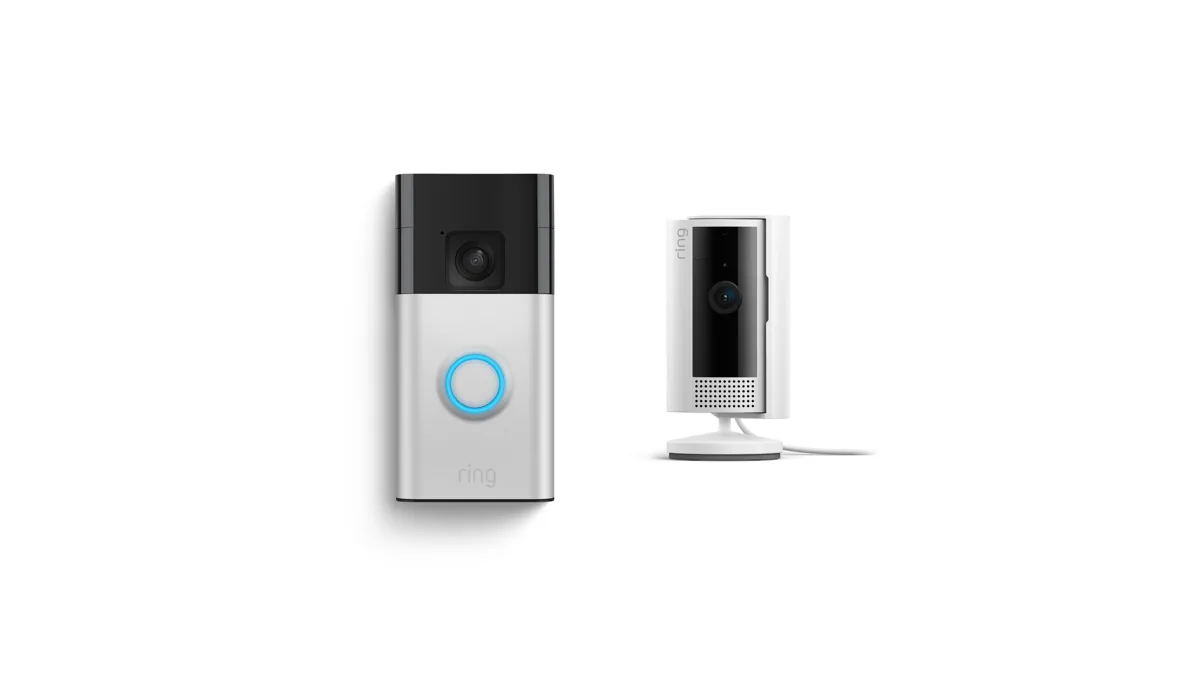
- Ring. A DIY install platform anchored on the video doorbell, with Amazon ecosystem depth through Alexa Guard, Ring Alarm Pro with the Eero router integration, and a Ring Protect subscription that gates cloud clip review. Ring's sunset of the Request for Assistance tool in the Neighbors app ended the mechanism by which police could ask users for footage directly through Ring; the current posture is documented in Ring's own transparency report.
- ADT. A professional install delivered through dealer or direct channels, a 36-month monitoring contract as the default, and a central station with two-call verification before dispatch. The ADT+ app integrates with Google Home; HomeKit and Matter are not supported. The 5-year TCO sits at the top of the field because the monthly fee is the highest and the contract penalty exposure is the steepest.
False-Alarm Handling and Municipal Fine Exposure
Municipal false alarm fines are the line item most buyers omit from the monthly cost model. A typical jurisdiction grants a first-event grace, then escalates: $25 to $100 for the second offense, $100 to $250 for the third, and $250 to $500 or more for subsequent events in a 12-month window. Repeat-offender ordinances in some cities suspend police response entirely until the household pays an alarm-permit reinstatement fee. Pro monitoring adds a verification step that reduces the rate at which false events reach dispatch in the first place.
The three vendors handle verification differently. SimpliSafe's self-verification model pings the user via app and keypad and dispatches only when the user fails to respond or confirms the event; the user is the verification layer. ADT's two-call protocol routes the central station through a primary and secondary contact before dispatch, with the option of video verification on camera-equipped accounts. Ring's AI motion verification screens the event at the camera using person, package, and vehicle classifiers before any human notification, suppressing the bulk of nuisance triggers from foliage, headlights, and pets. None of the three eliminates the false-alarm fine surface, but the verification design changes the rate at which the household incurs them. SmartThings Alternatives and Best Smart Home Hubs covers the hub-side options that supply the motion detection routing logic underneath these verification layers.
5-Year TCO and Privacy Audit: Choosing the Right System
A home security platform selection rarely has a single correct answer, but the buyer's profile narrows the field quickly. The decision matrix below maps five common archetypes to a defensible starting point. The TCO column behind each recommendation assumes upfront equipment plus 60 months of monitoring at the published mid-tier rate.
- Renter prioritizing portability and zero contract risk
- SimpliSafe or Abode. Both ship as a DIY installation kit that travels with the resident, both operate month-to-month, and neither carries a cancellation penalty. Abode pulls ahead if HomeKit or Matter compatibility is required at the next address. Expected 5-year TCO: $700 to $2,200.
- Homeowner already invested in the Amazon smart home ecosystem
- Ring with the Ring Protect Plus plan. The Alexa Guard and Ring Alarm Pro integration depth reward households already standardized on Echo devices. The privacy trade is the Amazon data pipeline and the cloud video storage default; end-to-end encryption is available on eligible cameras and should be enabled at enrollment. Expected 5-year TCO: $800 to $1,800.
- Household with young children, elderly occupants, or medical-response needs
- ADT or Vivint. The 24/7 central station relationship and the documented dispatch SLA carry weight that self-monitored vendors cannot match for medical and fire response. The 36-month monitoring contract is the cost of that certainty. Expected 5-year TCO: $2,400 to $4,400.
- Privacy-first buyer opposed to cloud data pipelines
- Aqara with a local hub, or Abode with HomeKit Secure Video. Both keep the bulk of camera processing on-device and minimize the cloud footprint, both support E2EE where cloud storage is used, and both integrate with the Matter protocol for ecosystem neutrality. Expected 5-year TCO: $400 to $1,600.
- Ultra-budget buyer under $300 total
- Wyze with self-monitoring. The hardware floor is the lowest in the field and the monthly Cam Plus subscription is optional. Households selecting this path should review Wyze's February 2024 incident disclosure, confirm the remediation status, and avoid placing cameras in bedrooms or bathrooms regardless of vendor. Expected 5-year TCO: $200 to $700.
The TCO breakdown below shows how the five-year figure decomposes for the three archetypes most buyers fall into. Equipment cost is the upfront residential kit; monitoring is 60 months at the mid-tier rate; penalty exposure is the contract cancellation risk at the midpoint of the term.
- Renter on SimpliSafe Interactive. $350 equipment + ($29.99 x 60) = $2,149 total, no penalty exposure.
- Homeowner on Ring Protect Plus. $400 equipment + ($20 x 60) = $1,600 total, no penalty exposure.
- Family on ADT Complete with 36-month contract. $1,200 equipment + ($55 x 60) = $4,500 total, with a midterm cancellation penalty exposure of approximately $700 if the household moves at month 18. Compare Smart Thermostats: Nest, Ecobee, Honeywell covers the adjacent smart home ecosystem decision households often make alongside the security layer.
The camera data privacy posture and the TCO line item together carry more weight than the feature-by-feature spec comparison that dominates most buyer guides. Any of the seven vendors closes the unmonitored-property attack surface that no system at all leaves open; the differences in encryption, on-device processing, and contract structure are second-order optimizations on top of that first-order improvement.
Further reading
- How iOS Differs From Android (mobile ecosystem reference covering HomeKit and Google Home integration paths)
- How To Secure Your IoT Devices (device-side hardening floor for every sensor and camera in the deployment)
- Smart Home Hubs: Zigbee vs Z-Wave Protocols (protocol-layer comparison underneath the hub choice in any security stack)
- Role Of TLS/SSL In Data Protection (transport-layer encryption protecting camera streams to cloud-side video storage)
- Best Privacy Tools For Enterprises (complementary privacy tooling for households running camera infrastructure)
- GDPR Compliance vs HIPAA Compliance (data residency and lawful access framework relevant to camera data privacy)
- Gartner Research on smart home security market sizing, and the NIST National Vulnerability Database for CVE references against specific camera and hub firmware versions
Frequently Asked Questions
What happens if I cancel a professional monitoring contract early?
Early cancellation typically triggers a penalty equal to 75 to 100 percent of the remaining monthly fees on the contract term. ADT's standard 36-month contract, for example, charges 75 percent of the remaining balance at cancellation, which can reach $450 to $900 depending on when the cancellation occurs and which plan tier was selected. Vivint contracts carry similar structures. SimpliSafe and Abode have no cancellation penalties because they operate month-to-month or without mandatory subscriptions, making them the lower-risk option for buyers unsure of their tenure at a property.
Does Ring share my camera footage with police without my permission?
Ring closed its Neighbors Public Safety Service law enforcement portal in 2023, ending the mechanism by which police could request footage without a warrant directly from Ring. As of that policy update, Ring requires a subpoena, court order, or emergency exception for Amazon to produce footage from Ring's servers. Users who enable end-to-end-encrypted streams for eligible cameras prevent Amazon from accessing that footage at all, even under legal process. Ring's own transparency report is the authoritative source for current data-sharing statistics and legal request volume.
Can I use SimpliSafe, Ring, or ADT with Apple HomeKit or Matter?
Matter and HomeKit support varies significantly across the three primary vendors. Abode and Aqara are the strongest options for HomeKit and Matter-native operation. SimpliSafe has no native HomeKit or Matter support as of recent reporting. Ring integrates with Alexa and Google Home but lacks HomeKit and has limited Matter device support. ADT+ integrates with Google Home. Buyers who prioritize ecosystem neutrality and local control should evaluate Abode or Aqara before committing to Ring or ADT infrastructure.