Wi-Fi 8 is the next wireless networking generation that the IEEE 802.11 working group is building around ultra high reliability, meaning steadier throughput, lower latency, and fewer lost frames rather than a bigger peak speed number. UHR is the shorthand taken from the IEEE 802.11bn project title. Routers built on the draft are on pre-order now, while the working group's official timeline predicts final approval in May 2028, so anyone weighing an early purchase has to separate what IEEE has written down from what router makers claim.
What Wi-Fi 8 Is and Where the Standard Stands
Wi-Fi 8 is the consumer name for IEEE 802.11bn, an amendment still in draft that aims for steadier connections rather than a higher peak speed. IEEE sets separate 25% improvement targets for throughput, tail latency, and lost frames against Wi-Fi 7, each in at least one mode. Routers are on pre-order, and IEEE predicts final approval in May 2028.
IEEE 802.11bn is an active standards project, with its project authorization approved in September 2023 and a draft that has passed its first working group ballot. The IEEE 802.11 Working Group runs the work in task group TGbn, and after its September 2026 interim session the picture breaks into four points.
- The name: Wi-Fi 8 is the consumer label for the 802.11bn amendment, and the working group page describes TGbn as "Ultra High Reliability, aka Wi-Fi 8".
- Project status: IEEE lists the project as an Active PAR (project authorization request), with authorization approved in September 2023 (IEEE Standards Association).
- Ballot status: TGbn passed the working group initial ballot on draft D2.0 with more than 8,000 comments received. Around 20% were resolved in September, and the group approved making the draft available for sale (IEEE 802.11 Working Group).
- What is still open: 802.11bn has no final publication date, only the predicted schedule in the next section, and no Wi-Fi Alliance certification date for Wi-Fi 8 is announced. The Wi-Fi Alliance presents Wi-Fi 8 as the next generation of Wi-Fi, with reliability as its stated purpose.
When Wi-Fi 8 Arrives: The Predicted IEEE Timeline
Wi-Fi 8 arrives in two stages: routers built on the draft are on pre-order now, and the finished IEEE 802.11bn standard is predicted to receive final approval in May 2028, according to the working group's official project timelines. No Wi-Fi Alliance certification date for Wi-Fi 8 is announced.
The timelines page, dated September 19, 2026, records the D2.0 ballot closing on September 2, 2026 with 77% approval and lists these predicted milestones (IEEE 802.11 Working Group):
- January 2027 (predicted): working group recirculation ballot.
- May 2027 (predicted): initial IEEE Standards Association (SA) ballot.
- July 2027 (predicted): Standards Association recirculation ballot.
- March 2028 (predicted): final approval by the 802.11 working group and by the IEEE 802 LAN/MAN Standards Committee.
- May 2028 (predicted): approval by RevCom and the IEEE SA Standards Board, the same board approval step that IEEE lists for 802.11be-2024 in September 2024.
Every date is a projection, and the comment backlog shows why it can move: the D2.0 ballot drew more than 8,000 comments, and around 20% were resolved in September, per the working group's status report.
Wi-Fi 8 Targets: Reliability Over Peak Speed
IEEE frames 802.11bn around Ultra High Reliability, defined as separate targets of 25% for throughput, latency, and lost frames, each measured against the Extremely High Throughput operation of the previous generation. Extremely High Throughput (EHT) is the operation defined by IEEE 802.11be, the amendment behind Wi-Fi 7. The project page words every goal as at least one mode of operation, so none of the three is a promise for every device.
- Throughput: at least one mode that raises throughput by 25%, measured at the MAC data service access point, in at least one SINR level (signal-to-interference-plus-noise ratio, the Rate-vs-Range curve), compared with EHT MAC and PHY operation.
- Latency: at least one mode that cuts 95th percentile latency by 25%, which targets the slow tail of delays rather than the average.
- Lost frames: at least one mode that reduces MPDU loss by 25%, especially for transitions between BSSs (the cells that individual access points serve). An MPDU, or MAC Protocol Data Unit, is the unit of data a radio sends, and every lost unit means a retransmission.
- Power and peer-to-peer: a mechanism to reduce power consumption for APs, including mobile APs, plus improved P2P operation.
- Scope: operation from 1 GHz to 7.250 GHz, with backward compatibility and coexistence with legacy 802.11 devices in the 2.4 GHz, 5 GHz, and 6 GHz unlicensed bands.
Each of the three targets stands alone. Adding them into one headline gain, or reading them as a speed upgrade, goes beyond what IEEE wrote. The Wi-Fi Alliance backs the framing, saying Wi-Fi 8 raises the bar for reliability. For a household, ultra high reliability should show up as fewer stalls on video calls and game sessions, a result worth confirming in independent tests, because 95th percentile latency and MPDU loss are not figures a router box lists.
Wi-Fi 8 vs Wi-Fi 7: What Changes and What Stays
Wi-Fi 7 and Wi-Fi 8 differ less in headline radio features than in what each generation is built to protect: Wi-Fi 7 chases throughput and low latency, while Wi-Fi 8 prioritizes holding performance steady. Wi-Fi 7 rests on IEEE 802.11be, which IEEE lists as the Active Standard 802.11be-2024. Its counterpart, the 802.11bn amendment, is still moving through ballots.
| Aspect | Wi-Fi 7 | Wi-Fi 8 |
|---|---|---|
| IEEE amendment | 802.11be (Extremely High Throughput) | 802.11bn (Ultra High Reliability) |
| Status | Active Standard 802.11be-2024, board approval September 2024, published July 2025 (IEEE) | Active project, first working group ballot passed (IEEE), final approval predicted for May 2028 (IEEE 802.11 timelines) |
| Stated focus | Wi-Fi Alliance: "high throughput, lower latency, and greater reliability" for demanding applications such as AR, VR, and XR | Wi-Fi Alliance: Wi-Fi 8 "raises the bar for reliability" |
| Headline radio features | 320 MHz channels in 6 GHz, multi-link operation, 4K QAM (20% higher rates than Wi-Fi 6's 1024 QAM, per Wi-Fi Alliance) | The ASUS GT-BN98 lists 320MHz bandwidth and 4096-QAM as well; the differences are in reliability techniques |
| Coordination | Wi-Fi Alliance: multi-link operation "supports more efficient load balancing of traffic among links" | Wi-Fi Alliance: Wi-Fi 8 "allows access points (APs) to collaborate instead of competing for spectrum" |
| Frequency scope | 2.4, 5, and 6 GHz (Wi-Fi Alliance) | 1 GHz to 7.250 GHz, with coexistence on 2.4, 5, and 6 GHz (IEEE) |
Multi-link operation (MLO) balances traffic among the links of one connection. Multi-AP coordination moves the cooperation up a level, between access points, which TP-Link and MediaTek both aim at homes that run more than one access point, such as a mesh. Wi-Fi 7 (IEEE 802.11be) introduced 320 MHz channels in the 6 GHz band, and the one Wi-Fi 8 router that lists its channel width lists 320MHz too, so a buyer comparing spec sheets will find few differences in the radio list. Neither column carries a peak-speed figure for the standard, since the IEEE project page states its goals as percentage targets.
How Wi-Fi 8 Techniques Work
The first Wi-Fi 8 products describe their gains through a short list of named techniques, and TP-Link groups them under a feature set it calls Wi-Fi 8 StabilityEngine. They include unequal modulation, non-primary channel access, and several ways of making access points cooperate. Every description below is a vendor account of a draft standard, not final 802.11bn text, and the percentages are vendor test data from TP-Link's internal testing under controlled conditions.
- Unequal modulation (UEQM) with new MCS and 2xLDPC
- TP-Link says UEQM, new modulation and coding schemes (MCS), and 2xLDPC help hold throughput steady in a noisy home. It claims up to 33% more consistent throughput at mid-to-long range and up to 24% more consistent throughput than Wi-Fi 7 under interference (TP-Link).
- Non-primary channel access (NPCA)
- According to TP-Link, NPCA keeps the network responsive as more devices come online.
- ELR (Enhanced Long Range) and DRU (Distributed Resource Units)
- TP-Link credits the pair with stronger coverage at the edges of the home and better uplink for distant low-power devices.
- DSO
- TP-Link says DSO expands capacity for homes with many devices, while MediaTek describes it as optimizing bandwidth usage at peak traffic. The vendors expand the acronym differently, so it stays unexpanded here.
- Multi-AP coordination (Co-TDMA, Co-SR, Co-BF)
- TP-Link says the three Co- features coordinate homes with more than one access point. MediaTek says Wi-Fi 8 coordinates multiple APs in mesh networks to reduce interference.
ELR, DRU, and DSO reach the Archer 8 Ultra via future software updates, so an early buyer gets the radio hardware before the complete feature set. Broadcom supplies that router's Wi-Fi 8 chipset, per TP-Link, while MediaTek sells its own Wi-Fi 8 silicon as the Filogic 8000 family.
Wi-Fi 8 Routers You Can Pre-Order
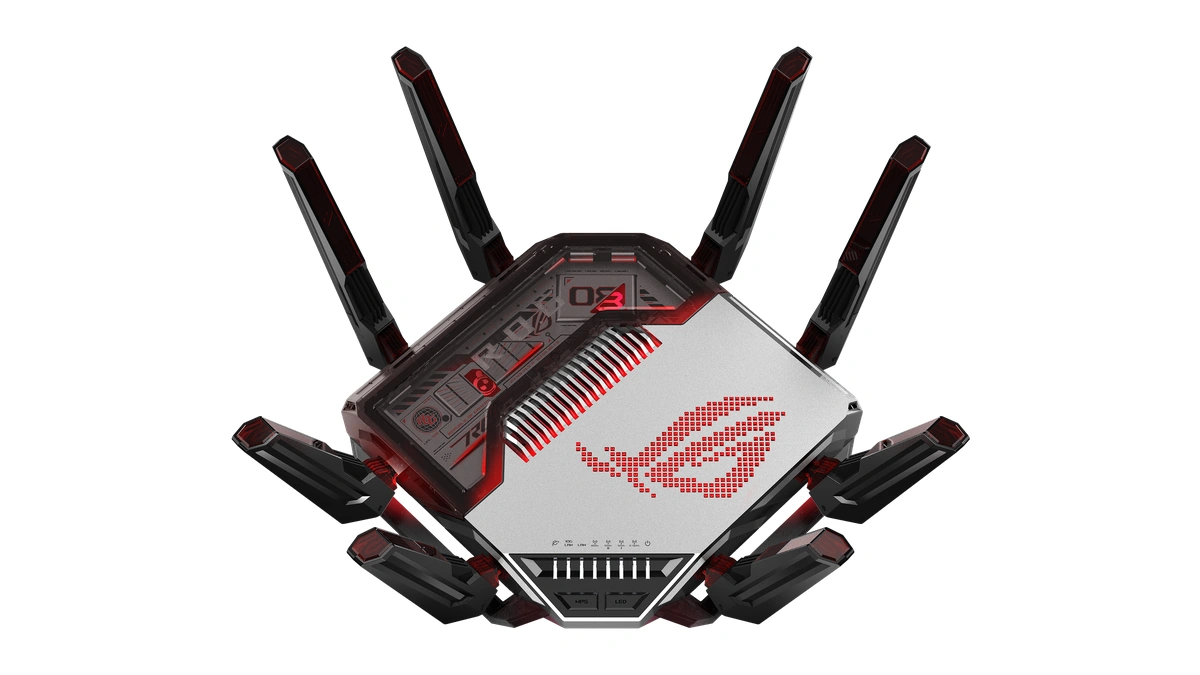
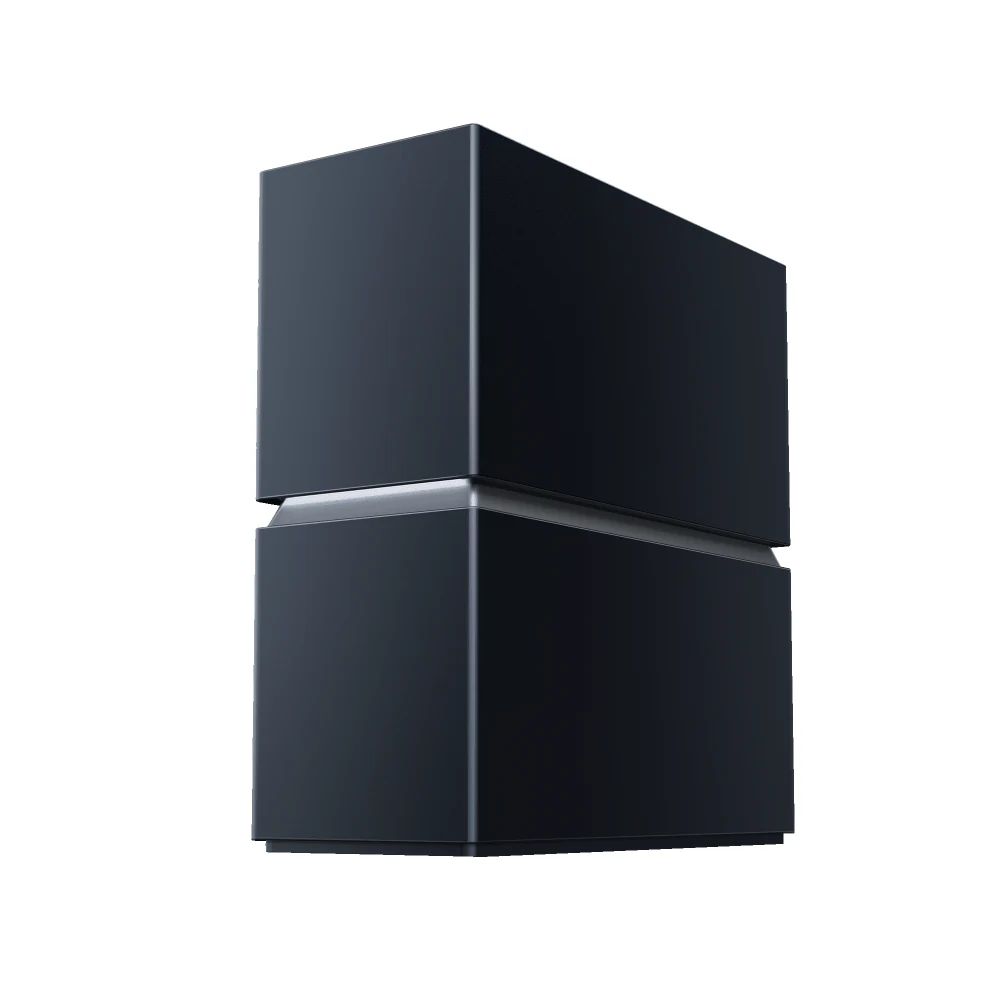
Two Wi-Fi 8 routers from major brands are on sale as pre-orders, the TP-Link Archer 8 Ultra and the ASUS ROG Rapture GT-BN98, and both sell the standard while it is still a draft. ASUS states that the IEEE 802.11bn standard has not yet been finalized, and TP-Link describes its router as built on the upcoming IEEE 802.11bn standard.
| Feature | TP-Link Archer 8 Ultra | ASUS ROG Rapture GT-BN98 |
|---|---|---|
| Bands | Tri-band | Quad-band |
| Headline wireless rate | 19 Gbps tri-band, model BN19000, sold as Archer BN800 | Up to 25,000 Mbps quad-band, based on preliminary vendor test data |
| Wired ports | Two 10 Gbps WAN/LAN and four 2.5 Gbps LAN; the product page also lists one 1 Gbps LAN | Two 10G ports and four 2.5G ports |
| Maker's performance claim | Up to 33% more consistent throughput than Wi-Fi 7 at mid-to-long range and up to 24% under interference, from internal testing | Higher mid-to-long range throughput and better IoT coverage, from preliminary vendor test data |
| Feature timing | ELR, DRU, and DSO via future software updates | Some features optional, implementation-dependent, or delivered through future firmware updates |
Only ASUS lists channel width and modulation, 320MHz bandwidth and 4096-QAM, so the table leaves both rows out instead of comparing one side.
The Archer 8 Ultra uses a Broadcom Wi-Fi 8 chipset and 18 internal antennas. TP-Link gives maximum estimates of up to 3,600 sq. ft. of coverage (3,000 sq. ft. in the EU) and up to 200 devices, per its press release. TP-Link says pre-orders opened September 30 in the United Kingdom, Germany, Australia, Canada, and more, with additional regions and pricing to be announced. The numbers in both columns are vendor test data for draft-standard hardware, so independent lab results will matter more than either spec sheet.
Why the Router Is Only Half of the Wi-Fi 8 Upgrade
A Wi-Fi 8 router delivers the full set of reliability features only to client devices that also support Wi-Fi 8, which is the main limit on what an early upgrade buys. ASUS puts it directly: full use of its Wi-Fi 8 features requires both the router and the client to support Wi-Fi 8. Four consequences follow.

- Legacy clients still connect. IEEE's project scope calls for backward compatibility and coexistence with legacy devices in the 2.4, 5, and 6 GHz bands (IEEE).
- Client silicon is a plan, not a shelf item. MediaTek positions Filogic 8000 for gateways and for client solutions in smartphones, laptops, TVs, streaming devices, tablets, and IoT devices, and says it is part of the IEEE 802.11bn Task Group leadership. Its page speaks of what the products will deliver.
- Features arrive in stages. TP-Link and ASUS both say some capabilities come through later software or firmware releases, so the first weeks of ownership will not show the finished feature set.
- Mesh owners should check their nodes. MediaTek describes multi-AP coordination as coordinating access points across a mesh, so a mesh owner should confirm that each node supports Wi-Fi 8 before counting on that benefit. Low-power devices on Thread, Zigbee, or Z-Wave do not depend on the Wi-Fi generation, and the guide to understanding smart home technology explains how that gear relates to home Wi-Fi coverage.
Wi-Fi 8 Chips Announced by Broadcom, Qualcomm, and MediaTek
Broadcom, Qualcomm, and MediaTek have each announced Wi-Fi 8 silicon. Broadcom's first family, from October 2025, includes the BCM43109 for smartphones, laptops, tablets, and cars, which it said was sampling to select partners (Broadcom). Its dual-band BCM6714 and BCM6719 followed in January 2026, each combining 2.4 GHz and 5 GHz radios in one chip (Broadcom). Qualcomm's FastConnect 8800, announced in March 2026, integrates Wi-Fi 8 into a mobile connectivity system. A chip announcement is a reason to watch, not proof that a phone or laptop you can buy supports Wi-Fi 8.
Who Should Upgrade to Wi-Fi 8 and Who Should Wait
Most households should treat Wi-Fi 8 as a purchase to plan for rather than rush, because the standard is unfinished, key features arrive later, and clients that use it are still arriving. A five-step check turns the standards status into a decision.
- Keep the router you already have if the complaint is not coverage or crowding. Smart-home devices on smart home hubs and protocols such as Matter, Zigbee, and Z-Wave are unaffected by the router generation.
- If a purchase cannot wait, a Wi-Fi 7 router is the finalized-standard option, since IEEE lists 802.11be-2024 as a published Active Standard. A struggling Wi-Fi 5 or Wi-Fi 6E router is the natural place to start.
- Count as an early adopter only with a large or multi-floor home, many devices, or multigigabit internet, and accept that ELR, DRU, and DSO come later, per TP-Link.
- Check that the phones, laptops, and TVs that matter most could ever use Wi-Fi 8. Netflix, YouTube, and Twitch streams, and online play on Steam, PlayStation, or Xbox, also depend on the plan itself, and a faster router cannot raise it; stream optimization and internet requirements sets out what each use needs.
- Re-check the standard's status. IEEE final approval and Wi-Fi Alliance certification are the two milestones that remove the draft risk. The working group predicts the first for May 2028, and the second has no announced date.
Until both milestones land, an early Wi-Fi 8 purchase is a bet on firmware delivering what the box promises.
Frequently Asked Questions
Is Wi-Fi 8 faster than Wi-Fi 7?
Not by a headline margin, because IEEE aims Wi-Fi 8 at reliability: separate 25% targets for throughput, 95th percentile latency, and lost frames, each in defined conditions. IEEE words these as at least one mode of operation compared with the previous generation's operation, not as a guarantee for every device. TP-Link's own testing claims up to 33% more consistent throughput than Wi-Fi 7 at mid-to-long range, which is a vendor figure for one router.
When is Wi-Fi 8 coming out?
Wi-Fi 8 routers are already on pre-order, but the standard is unfinished. The IEEE 802.11 working group's official timeline predicts final approval of 802.11bn in May 2028, with Standards Association ballots predicted for May and July 2027. No Wi-Fi Alliance certification date for Wi-Fi 8 is announced, and the IEEE dates are projections that can move.
Is Wi-Fi 7 a finished standard?
Yes. Wi-Fi 7 is IEEE 802.11be, which IEEE lists as the Active Standard 802.11be-2024, approved in September 2024 and published in July 2025. That makes a Wi-Fi 7 router the finalized-standard choice for anyone who cannot wait for Wi-Fi 8.
Is it worth waiting for Wi-Fi 8 before buying a new router?
It is worth waiting if your current router works and your complaints are dead spots or crowded-network slowdowns rather than a slow plan. IEEE has not finalized the 802.11bn amendment, and both early routers say some Wi-Fi 8 features arrive later: TP-Link lists ELR, DRU, and DSO as coming through future software updates on the Archer 8 Ultra, and ASUS says certain Wi-Fi 8 features may be optional or arrive through future firmware updates. Buy a current router now only if you need the capacity today.
Will a Wi-Fi 8 router work with my existing phones and laptops?
Yes, older devices keep connecting, because IEEE says 802.11bn provides backward compatibility and coexistence with legacy 802.11 devices in the 2.4 GHz, 5 GHz, and 6 GHz bands. The Wi-Fi 8 gains are a different matter: ASUS states that full use of its Wi-Fi 8 features requires both the router and the client device to support Wi-Fi 8. An older phone gets the router's better hardware at best, not the new reliability features.
Do I need a multigigabit internet plan for a Wi-Fi 8 router?
No. The first Wi-Fi 8 routers pair the new radios with fast wired ports, but the ports are there to accept multigigabit plans and wired devices, not to set a minimum. TP-Link's Archer 8 Ultra has two 10 Gbps WAN/LAN ports and four 2.5 Gbps LAN ports, and the ASUS ROG Rapture GT-BN98 lists two 10G ports and four 2.5G ports. Wi-Fi 8's pitch is a steadier connection, not a bigger plan.