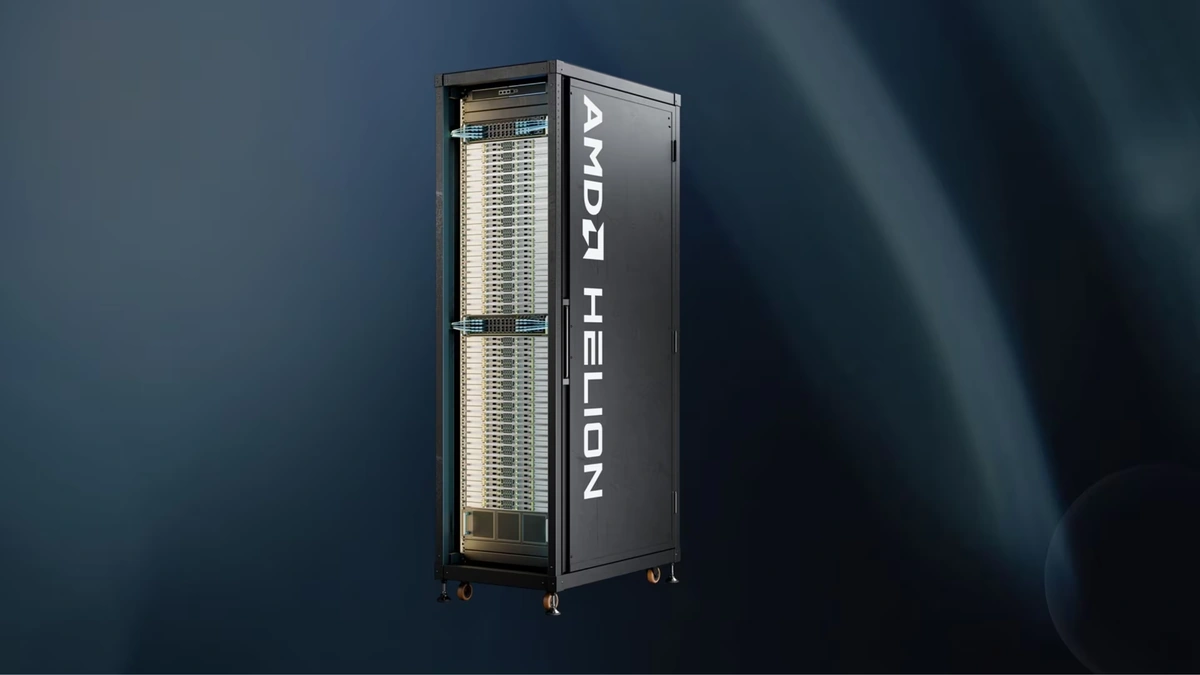
AMD Helion packs up to 32,768 EPYC cores into a single rack for running AI agents, and leaves the GPUs that serve the models to separate infrastructure.
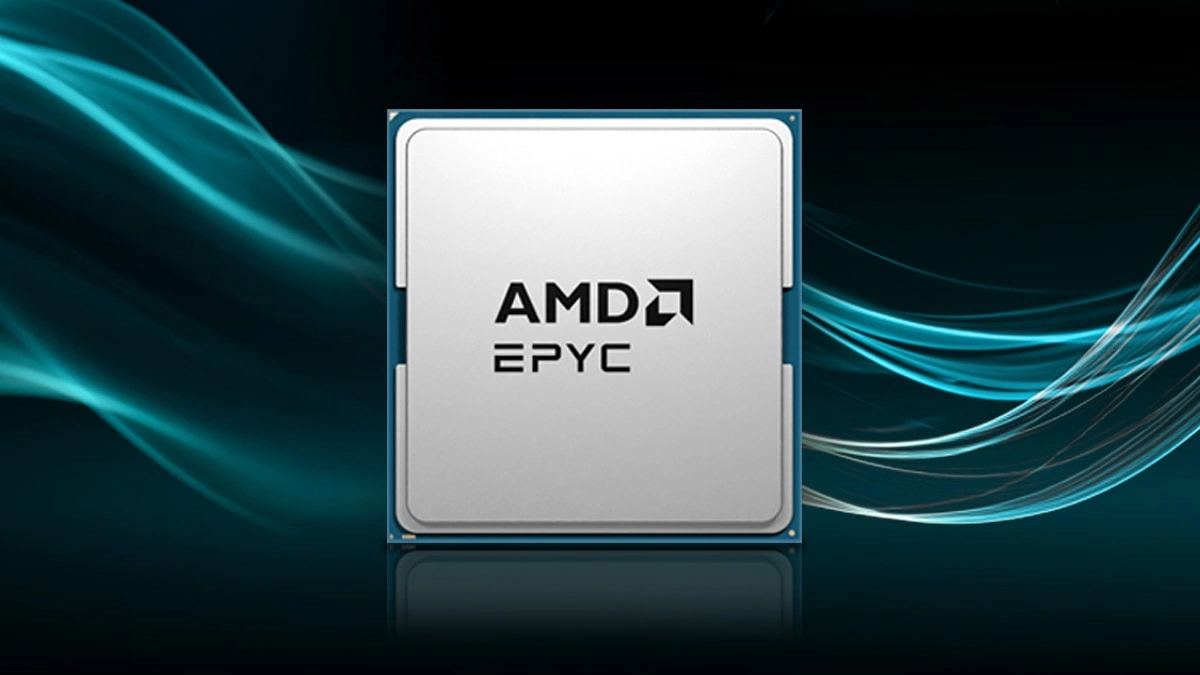
That CPU-only build is one of two configurations in the open rack blueprint that AMD introduced for agentic AI. It rests on an Open Compute Project specification, uses 6th Gen EPYC processors and targets hyperscale customers that want dedicated capacity for agent execution. The other configuration is an all-in-one rack that mixes EPYC CPU nodes, Instinct MI350P GPU nodes and general-purpose compute, which AMD aims at enterprises. Both can be built with liquid or air cooling, and AMD says it plans to contribute the AMD Helion specification to OCP.
The argument behind the split comes from Dan McNamara, who runs compute and enterprise AI at AMD. He described agentic AI as "not a single workload," spanning personal agents, enterprise applications, code execution and complex workflows with different compute needs. Read plainly, the claim is that agents spend much of their time on tool calls, code execution and orchestration, work that ordinary server cores can carry, so a rack sized around accelerators can leave expensive silicon idle. That serves AMD's EPYC business, and it is also a fair engineering point. The all-in-one rack is the hedge for buyers who would rather keep agents and inference on one platform.
AMD Helion follows the company's Helios rack-scale solution and keeps its open-platform approach. Cisco, Dell Technologies, Hon Hai, HPE, Lenovo, QCT, Supermicro and Wiwynn each gave AMD a supporting statement. Supermicro went furthest, saying it will bring Helion to market through its Data Center Building Block Solutions as an ORv3-compliant design. The other quotes describe flexibility and collaboration rather than orders.
For now AMD Helion is a reference design, not a product with a price. AMD says the rack configurations are under development with ecosystem partners and planned for November 2026, and it names no customers or pricing. Buyers weighing CPU against accelerator spend can start with this explainer on what CPUs and GPUs each do best.