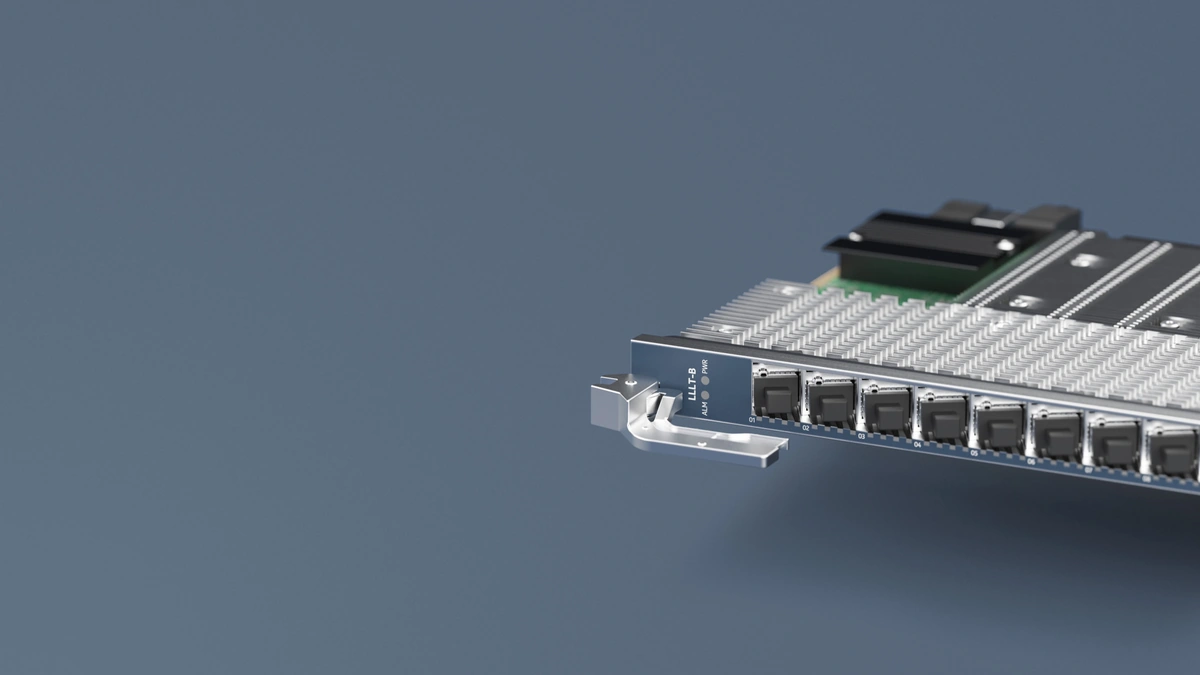
Nokia has built a fiber line card that runs GPON, 10G, 25G and 50G PON on every one of its 16 ports, and the company says no other vendor offers a 16-port card with that range. Nokia aims the card at operators that must pick a PON speed before knowing how fast traffic will grow, and the general-availability target is 2027.
The card, which Nokia calls an industry first, is built on its in-house Quillion chip and a set of multi-PON optical modules. Earlier line cards could limit operators to a narrower set of PON technologies, Nokia says, which meant committing capacity in advance or adding hardware once the market moved. With the new card, an operator can add or change PON generations on the same port and the same fiber. Nokia's own example is an operator that deploys 10G plus 25G PON today and adds 50G when demand picks up, or one that plans for 10G plus 50G and slots in 25G if the market goes another way.
Nokia lists three performance claims for the product: up to 4x lower upstream latency, quantum-safe encryption and authentication for network and user data, and end-to-end resilience with no single point of failure. Nokia gave no baseline for the latency figure and no pricing.
The AI angle is Nokia's framing of demand. Richer content, heavier cloud use and growing upstream traffic are pushing capacity and latency requirements up, and Maryam Chaudry, SVP and GM of Fixed Networks at Nokia, said operators "do not have to bet everything on a single path." Jeff Heynen, vice president of broadband access and home networking at Dell'Oro Group, offered an outside view in the same material: flexibility "is becoming just as important as performance," and multi-generation ports give operators a lower-risk route to evolve their networks.
What changes in practice is the shape of the decision. Instead of picking 25G or 50G at purchase time and living with it, an operator would pick per port and per market when to light each generation. With Nokia's availability target at 2027, though, that choice is a planning input for upcoming fiber builds, not hardware an operator can order into a rollout now.