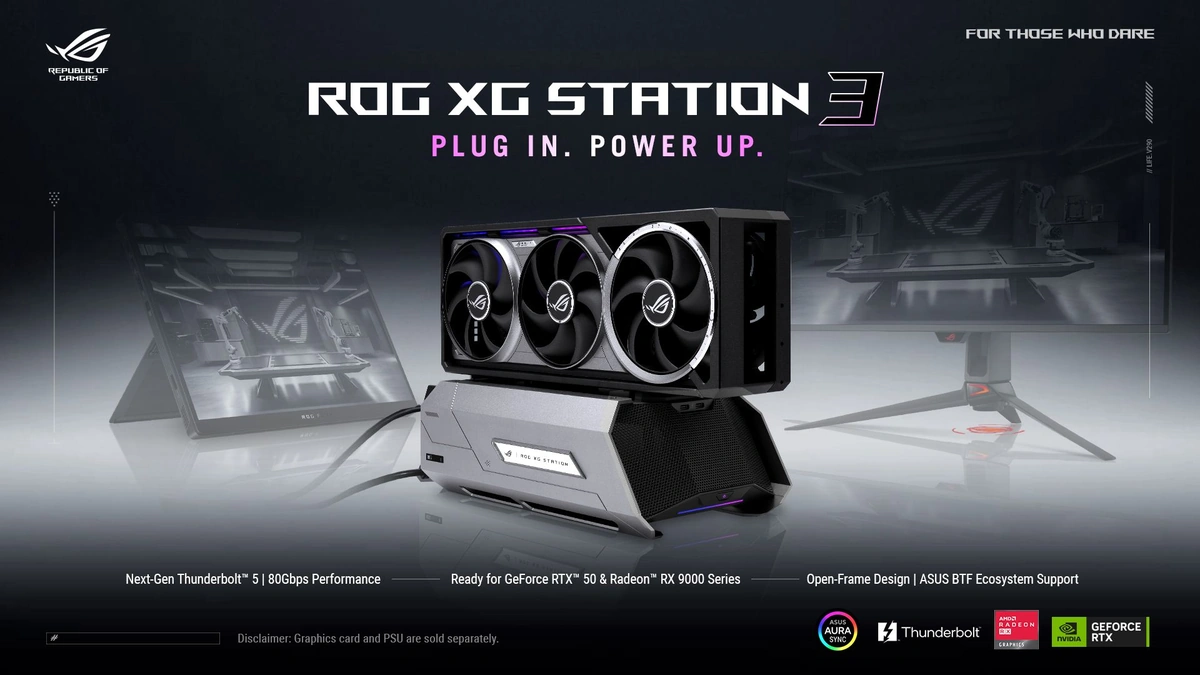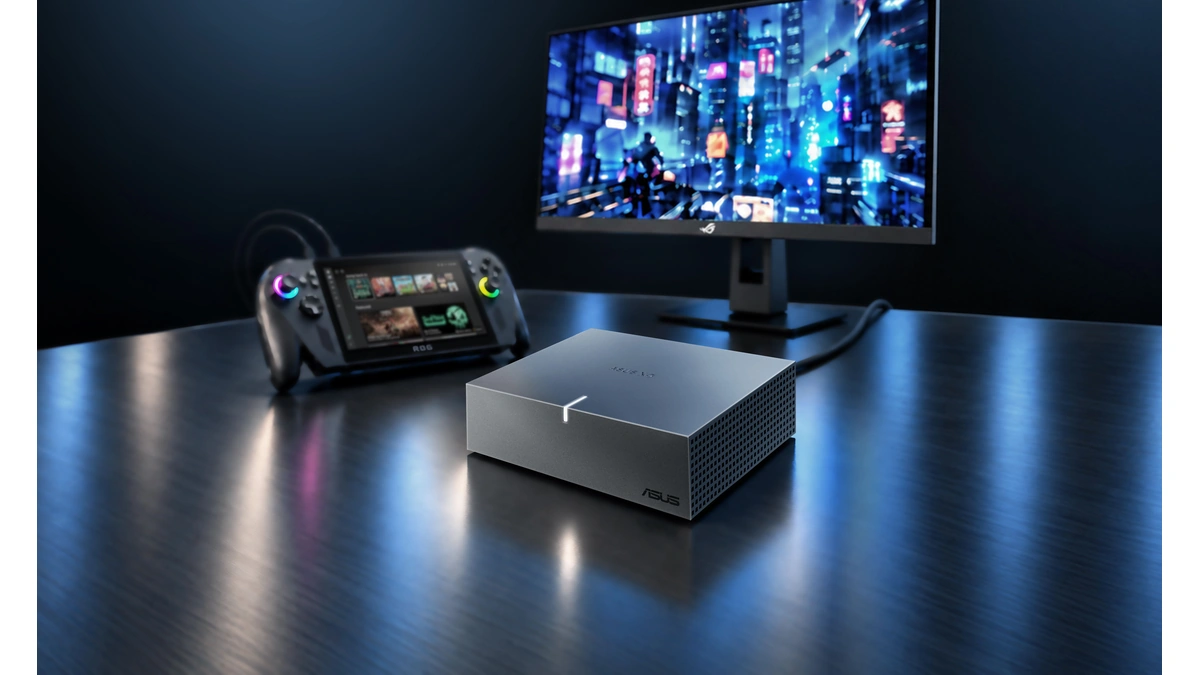
ASUS XG Core turns a USB4 port into a graphics upgrade. The compact dock holds a Radeon RX 9060 XT LP with 16GB of GDDR6, and it connects to a compatible laptop, mini PC or gaming handheld without anyone opening the device.
Hosts that ASUS XG Core supports include the ROG Ally X and ROG Xbox Ally X, and ASUS adds compatible Thunderbolt 3 systems to the list. The dock measures 144 x 117 x 39mm, small enough for a gear bag. Beyond games, the company points to video editing, 3D rendering, and local AI image generation and language-model inference in compatible software such as ComfyUI, LM Studio and Ollama, adding that performance and compatibility depend on the workload, model and system configuration. It advises checking host connectivity and external GPU support before use.
The GPU inside ASUS XG Core has 2,048 stream processors and a 128-bit memory interface with 20Gbps memory, according to ASUS' XG Core specifications. Multiplying those two memory figures and dividing by 8 gives 320GB/s of memory bandwidth. The USB4 link to the host is rated at up to 40Gbps, or 5GB/s, so the card's memory moves data about 64 times faster than the cable's rated peak. Native HDMI 2.1b and DisplayPort 2.1a ports carry the video. ASUS rates the GPU at 406.3 AI TOPS with INT4 matrix sparsity.
Display output tops out at two screens, with a maximum resolution of 3840 x 2160. The dock takes power through its own USB-C input, and the box holds a USB-C cable, a USB-C adapter, a DC cable and a power cord. ASUS aims XG Core at laptops, mini PCs and handhelds that rely on integrated graphics, older laptops included. It calls the card's performance desktop-class without naming a benchmark or a comparison card, and says actual performance varies by connected device, game or application, and settings. ASUS has not given a price or an on-sale date for XG Core, and it notes that products may not be available in all markets.
ASUS XG Core runs a boost clock of up to 1,600MHz by default and up to 1,620MHz in the OC mode that GPU Tweak III unlocks. That software also exposes core clock, memory frequency, voltage and fan controls, with an on-screen display for live monitoring.