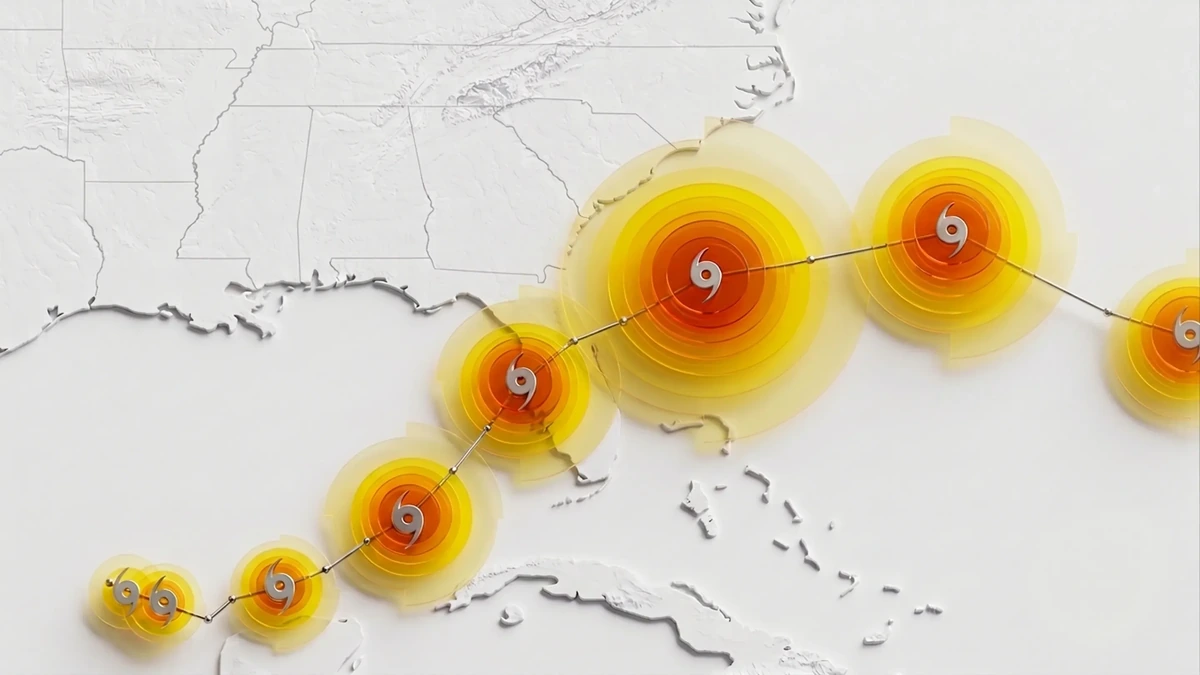
Google DeepMind's WeatherNext AI model now gives hurricane forecasters roughly a full extra day of accurate warning on a tropical cyclone's track, intensity, and wind structure, and the company is open-sourcing the code and weights behind it.
Three-day WeatherNext forecasts are now about as accurate as the two-day forecasts earlier systems could produce, according to a peer-reviewed study detailed in a Google DeepMind write-up of results published in the journal Nature. Google DeepMind itself frames that jump as equivalent to roughly a decade of typical meteorological progress and calls it a breakthrough; that characterization is the company's, describing its own research.
The system already has a field record. During the 2025 Atlantic hurricane season, WeatherNext helped the National Hurricane Center anticipate Hurricane Melissa's rapid intensification and landfall in Jamaica, buying forecasters time they would not otherwise have had. Google DeepMind built the model with Google Research, the Cooperative Institute for Research in the Atmosphere, and the UK Met Office, and has widened its cyclone ensemble from 50 simulated scenarios per storm to 1,000, letting forecasters weigh rare but catastrophic outcomes such as sudden intensification.
WeatherNext Cyclones trained on nearly 20 terabytes of global atmospheric data alongside the IBTrACS record of roughly 5,000 historical storms, then learned to produce a 15-day global forecast in under a minute on a single TPU using a technique Google DeepMind calls Functional Generative Networks. The model runs at a resolution of 28 by 28 kilometers, about 100 times coarser than the specialized intensity models it now outperforms, a result Google DeepMind says its own researchers do not yet fully understand.
Google DeepMind is releasing the code and model weights behind WeatherNext and WeatherNext Cyclones for researchers, forecasters, and developers to build on, along with a compact version that runs on a single TPU inside a free public Colab notebook. The forecasts themselves are viewable on Google's Weather Lab tool, which the company recently expanded beyond cyclone tracks to cover global temperature, precipitation, and wind speed forecasts.