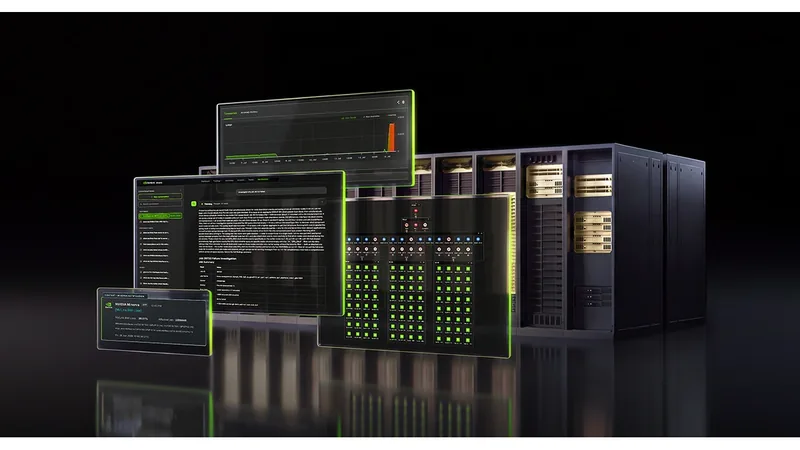
LG Group is building an AI factory in partnership with NVIDIA to advance its robotics, autonomous driving, data center, and GPU cloud businesses, according to a joint announcement published June 7. The factory will give LG Group accelerated computing infrastructure to train, simulate, validate, and deploy AI applications across its consumer electronics, mobility, and industrial units.
On the robotics side, LG Electronics is developing home-based robots (including a model called CLoiD) and plans to integrate NVIDIA's Isaac Sim and Isaac Lab frameworks for training in virtual environments. The company is exploring NVIDIA's GR00T reasoning vision-action model for both home cobots and modular robotics platforms. LG CNS is adding the same frameworks to its PhysicalWorks industrial robot platform to accelerate AI adoption in manufacturing and logistics. LG Electronics is also building a physical AI data factory to generate high-quality training data for robotics projects, using NVIDIA's Cosmos world foundation models for synthetic data generation.
The collaboration extends to data center infrastructure. LG Electronics, LG Uplus, and LG Energy Solution plan to build AI factories aligned with NVIDIA's DSX platform. LG Uplus, a Korean telecommunications provider, aims to build a large-scale data center accommodating the latest NVIDIA GPUs. LG Energy Solution is cooperating on 800-volt direct-current energy solutions suited to next-generation liquid-cooled GPU infrastructure.
The deal also covers LG's sovereign AI model. LG AI Research developed EXAONE, one of Korea's main open enterprise AI model families, using NVIDIA Blackwell GPUs, the NeMo framework, and Nemotron datasets. NVIDIA will help power future EXAONE development, and LG Group is extending the model across its businesses through ChatEXAONE, its enterprise chatbot service. The EXAONE collaboration sits alongside LG AI Research's prior open-weight releases, which are available to developers and researchers.
For LG Group, the partnership represents a consolidation of AI infrastructure under one vendor relationship rather than a new direction: the company already ships consumer electronics, automotive components, and industrial software globally. Whether a single AI factory can meaningfully unify compute, data, and deployment workflows across units as different as refrigerators, ADAS sensors, and sovereign language models is the integration challenge the company has taken on.