EFF has released Privacy Badger for Safari on macOS, completing the tracker blocker's coverage of the major desktop browsers. Safari support had been among the extension's most requested features for years, and Privacy Badger already counts more than 4 million users elsewhere.
Privacy Badger needs Safari 26.5 or newer. EFF says recent improvements to Safari's extension support made the port possible. Mac users install it through the App Store, and Apple's own instructions cover the extra steps Safari asks for when switching an extension on. Because this is the first Safari release, EFF wants feedback at extension-devs@eff.org or through the project's GitHub issues.
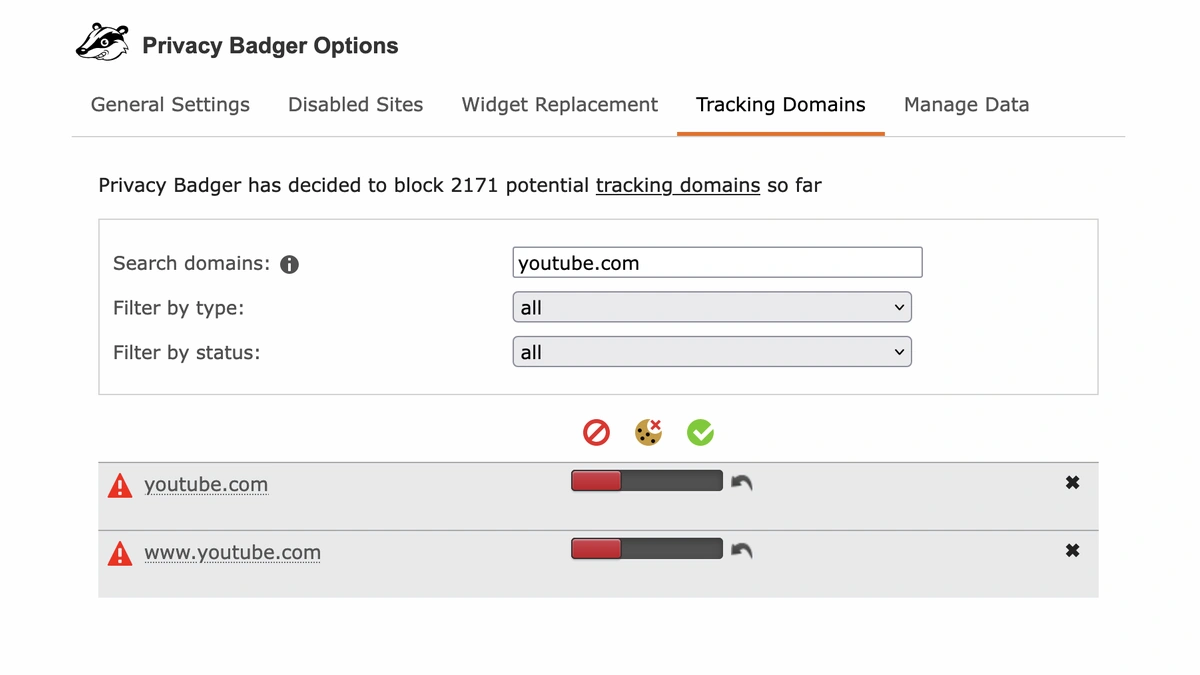
Safari's default browsing mode limits what trackers can read but still lets them load. Per EFF, the extension blocks trackers before they load, so they can't use techniques that get around Safari's own protections. EFF describes it as an algorithmic blocker that labels a domain a tracker from its observed behavior, not from a human-curated list. Embedded tweets, comment sections and video players, which can pass data along even when nobody clicks them, are swapped for click-to-activate placeholders. It works on its own, and EFF says it also holds up next to an ad blocker or Safari's Advanced setting for blocking trackers in all windows.
By default the extension sends the Global Privacy Control signal, asking sites not to sell or share personal data, alongside Do Not Track, and EFF says it learns to block trackers that ignore those signals. California, Colorado, New Jersey and Connecticut are among the states where that signal is already legally binding, EFF notes. When a page breaks, the extension can be turned off for that one site, and a Report broken site button sits beside the disable control.
EFF says the extension doesn't block ads unless they track the visitor: it goes after third-party scripts and images that keep tracking after those two signals say no. Its source code is licensed under GPLv3 or later. For iPhone and iPad, EFF says it will look into Safari for iOS once any macOS issues are ironed out, and an EFF developer has noted on the project's GitHub that Safari on iOS lacks an extension interface Privacy Badger relies on.