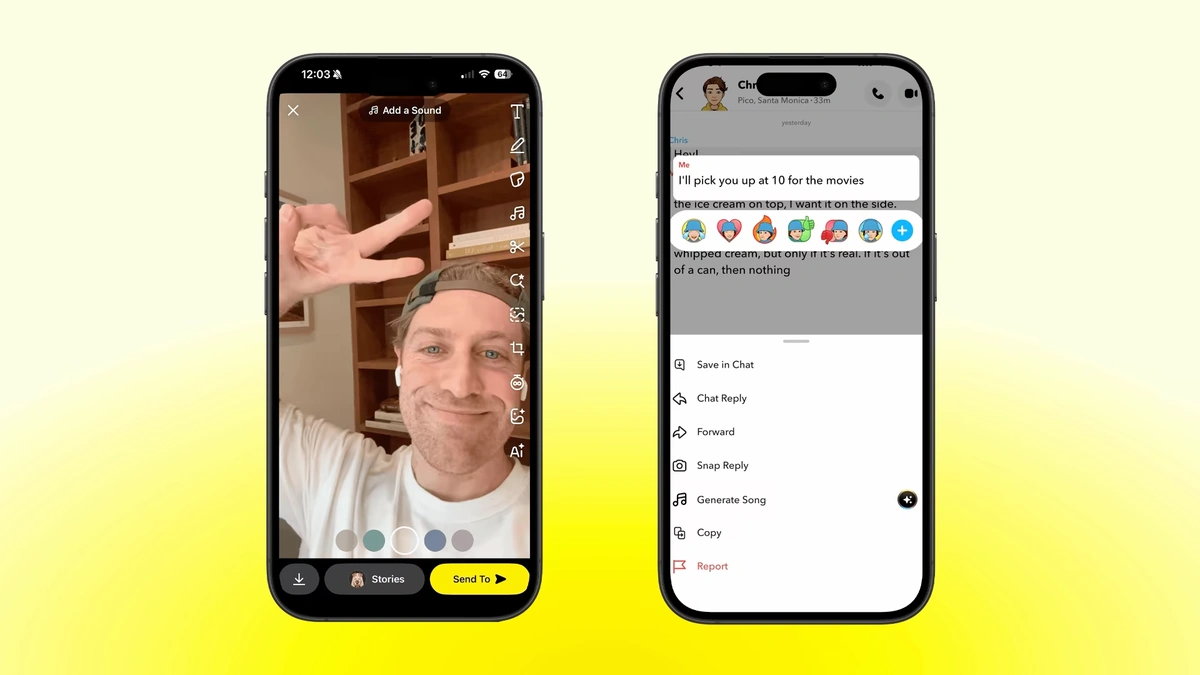
Snap is adding four AI-powered creative tools to Lens+, the premium tier of Snapchat+ that launched last year, giving Snapchat subscribers new ways to remix chats, Snaps, Stickers, and captions. The features, detailed in a newsroom post, roll out now in every market where Lens+ sells, though Snap says regional availability may vary in the coming weeks.
The headline addition, Create Song, turns a Snapchat chat message into a short original track. A subscriber presses and holds a message in Chat, taps Create Song, picks a genre, and previews the song before sending it into the conversation. Snap calls Create Song a way to make a text exchange "memorable," but the company named no AI model or music-generation partner behind it.
Three companion tools round out the Lens+ update: AI Photoshoot, AI Remix, and new caption fonts. AI Photoshoot cleans up an almost-good photo, fixing a blink or bad lighting so a subscriber can share the Snap they meant to take. AI Remix lets a subscriber reimagine a friend's incoming Snap in a new visual style before replying. The caption fonts, spanning bubble letters, spray paint, and foam textures, restyle captions, saved Stickers, and received Stickers.
Snap says Snapchat+, the base tier under Lens+, has passed 25 million subscribers worldwide. Create Song, AI Photoshoot, AI Remix, and the new fonts are Lens+-exclusive; Snap gave no launch date for individual markets or for Android versus iOS, and did not say whether any of the four tools will later reach free Snapchat users.