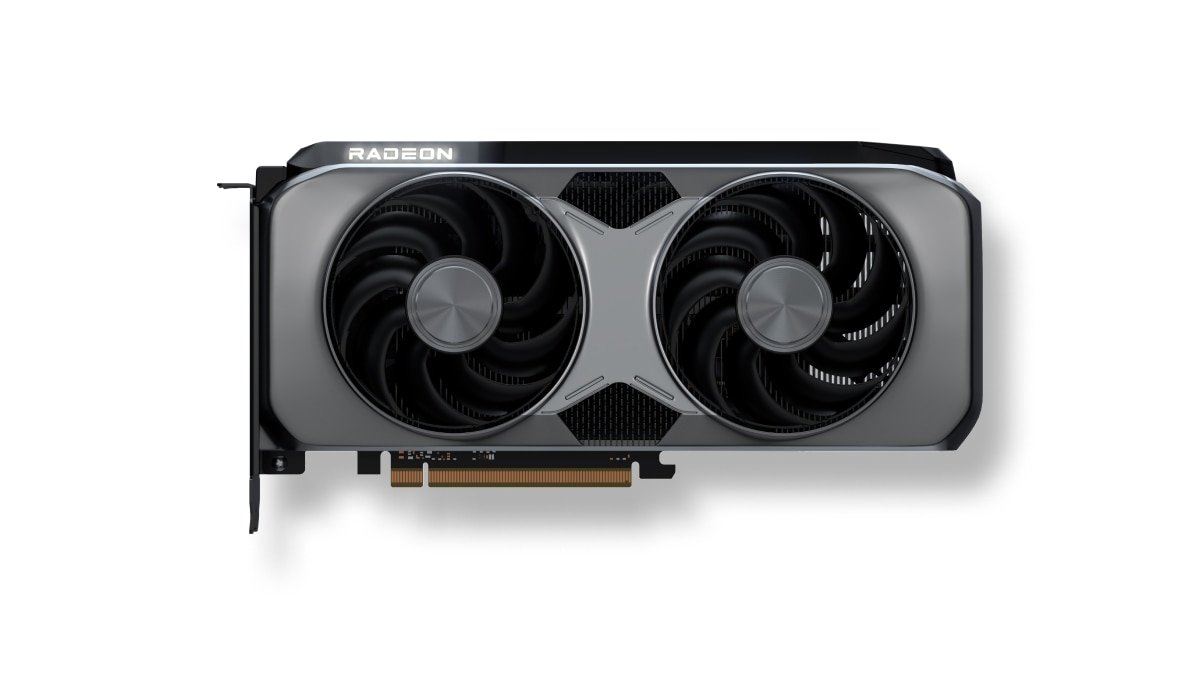
AMD Radeon RX 9070 GRE is a desktop graphics card that AMD brought to global markets at Computex 2026, converting a previously China-exclusive SKU into a worldwide product. AMD set the MSRP at $549 with availability starting June 2. The card runs the same 4nm Navi 48 silicon found in the RX 9070 and RX 9070 XT, with 48 RDNA 4 Compute Units (down from 56 on the RX 9070 and 64 on the RX 9070 XT), per AMD's Computex announcement.
The memory configuration separates it further: 12GB GDDR6 on a 192-bit bus, against 16GB on a wider bus for both standard RX 9070 variants. AMD quotes maximum memory bandwidth at 432 GB/s and TDP at 220W, the same power envelope as the standard RX 9070. AMD's comparison benchmarks claim the card delivers on average 21% higher 1440p gaming performance than the GeForce RTX 5060 Ti 16GB across 40 games.
The market context matters. The Radeon RX 9070 and GeForce RTX 5070 both launched at $549, but ongoing memory shortages have pushed street prices for both cards to $599 and above, per AMD. That gap in the $500 to $550 range is what the GRE is designed to fill. The card is, by design, recycled silicon: chips that didn't qualify for the RX 9070's 56 Compute Units get binned down to 48 and repackaged, extracting value from expensive 4nm wafer runs.
Chinese technology publications that reviewed the China-exclusive version found the card consistently faster than the RTX 5060 Ti 16GB at 1440p but short of the RTX 5070. Buyers weighing the $549 GRE against the now-$599-plus RX 9070 are trading 14% fewer Compute Units and 25% less memory capacity for a lower entry price. Partner card pricing hasn't been announced; AIB cards typically land above MSRP at launch, though the lower-binned silicon should give add-in card makers more room at the entry end of the RDNA 4 range, AMD suggests.