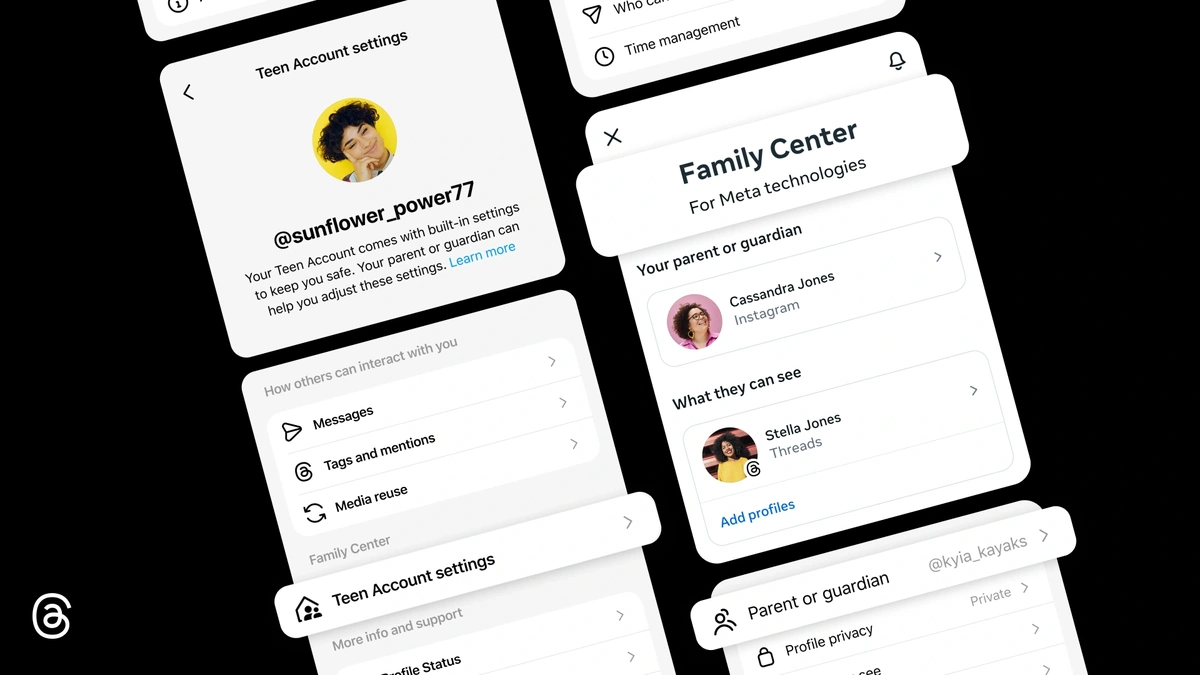
Threads is rolling out parental supervision tools across Asia Pacific this week, extending a set of controls parents already have on Meta's other apps to the text-based platform for the first time.
The rollout gives guardians visibility they did not have before. According to Meta, Family Center now shows how much time a teen has spent on Threads each day, including a weekly average, and lets parents cap total daily use or block access during set hours across every device the teen signs into.
Sleep is the next lever. Parents can mute a teen's Threads notifications and switch on auto-replies overnight, from 10 p.m. to 7 a.m. by default, or block access outright during those hours. Tagging and privacy preferences follow the same pattern: a parent can decide who is allowed to tag their teen and approve changes to sensitive-content settings. The through-line is default-to-strict. Threads already locks teen accounts to private profiles and narrows what younger users see automatically; what changes now is that parents, not just the platform's defaults, get a say in whether a teen under 16 can loosen any of it.
Meta frames the expansion as parity: Family Center already governs these settings on Facebook and Instagram, and Threads was the outlier among its apps. Meta doesn't address whether the added visibility changes how teens actually use the app, or simply hands parents a dashboard they may or may not check. Guardians in the region can set up supervision now at familycenter.meta.com/supervision.