COPPA is a federal privacy law that governs how operators of websites and online services directed to children under 13 collect, use, and disclose personal information in the United States. Enacted in 1998 and codified at 15 U.S.C. 6501-6506, COPPA (Children's Online Privacy Protection Act) sits at the center of every compliance conversation social media platforms must have when their products reach minors. The FTC's implementing regulation, 16 C.F.R. Part 312, was amended in 2013 and again in 2024, each time expanding what operators must protect and how they must obtain consent. For platform operators, the exposure is concrete: civil penalties reach $50,120 per violation, calculated per child, per day of noncompliance.
What COPPA Requires: The Statutory and Regulatory Framework
COPPA applies to operators of websites and online services that are directed to children under 13, or that have actual knowledge they are collecting personal information from a child. The statute defines three separate triggers for compliance obligations: the service is child-directed by design; the service is general-audience but the operator has actual knowledge it is collecting from a child; or the operator has actual knowledge it is collecting from a child user of a child-directed third-party site or service. The operative FTC Rule at 16 C.F.R. Part 312 translates those triggers into five concrete obligations, summarized below. COPPA's place in the broader landscape of cross-border data privacy regulation is treated in data localization laws and their impact on cloud services.
- Privacy notice (16 C.F.R. Part 312.4)
- Operators must post a clear and comprehensive privacy policy and provide direct notice to parents before collecting any data from a child.
- Verifiable parental consent (16 C.F.R. Part 312.5)
- Operators must obtain verifiable parental consent (VPC) before collecting, using, or disclosing personal information from children under 13. The consent method's reliability must match the sensitivity of data collected.
- Parental rights (16 C.F.R. Part 312.6)
- Parents may review, request deletion of, and refuse further collection or use of their child's data at any time.
- Data minimization (16 C.F.R. Part 312.7)
- Operators may collect only as much data as is reasonably necessary to fulfill the purpose for which it was collected. Collection beyond that purpose is prohibited.
- Retention and deletion (16 C.F.R. Part 312.10)
- Operators must retain collected data only as long as reasonably necessary, then delete it using reasonable security measures. Retention records are subject to FTC enforcement review.
How the 2013 and 2024 COPPA Rule Amendments Changed Platform Obligations
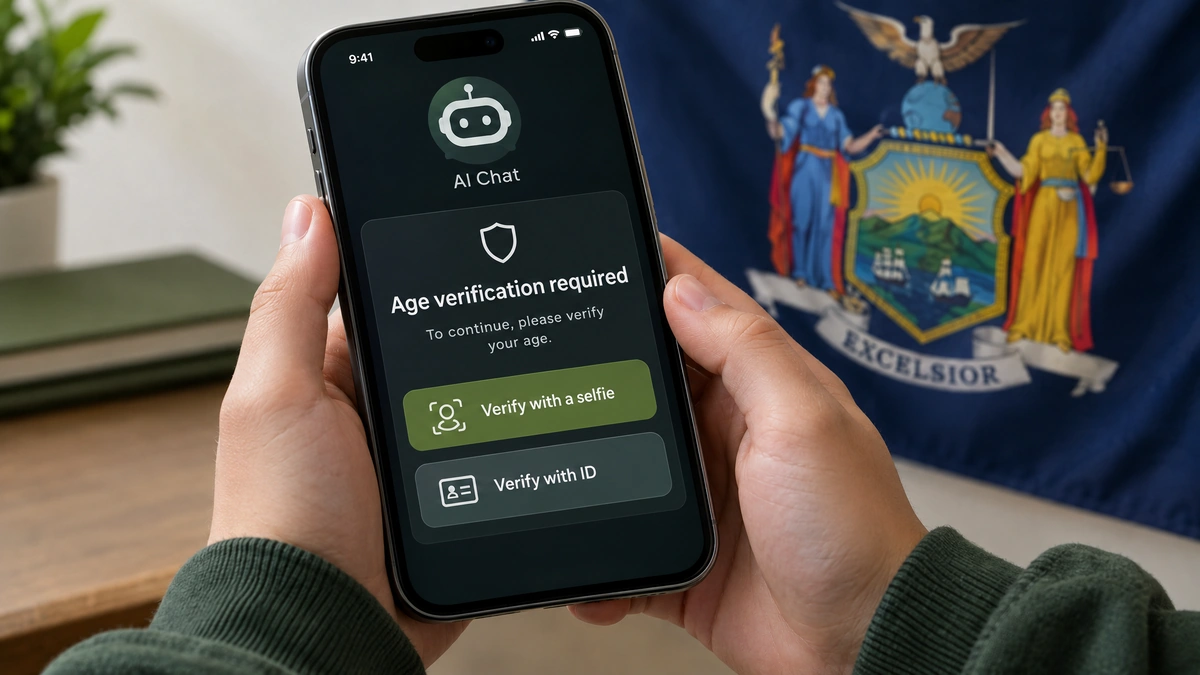
COPPA Rule amendments issued by the FTC in 2013 and 2024 substantially expanded both the scope of protected data and the mechanics of consent. The 2013 update extended the definition of personal information to cover persistent identifiers such as IP addresses, device IDs, and tracking cookies, and added geolocation data, photographs, videos, and audio files. The 2024 amendment added age estimation technology and government ID verification as acceptable VPC methods, tightened data minimization at the feature level, and introduced an explicit prohibition on using children's data for targeted advertising.
| Obligation Area | Pre-2013 Rule | 2013 Amendment | 2024 Amendment |
|---|---|---|---|
| Covered data scope | Name, address, email | Added persistent identifier (IP address, device ID, cookie), geolocation data, photos, videos, audio files | Clarified that behavioral signals used for profiling qualify as covered data even without direct identifier linkage |
| Verifiable parental consent methods | Signed form, credit card, toll-free number | Added email plus callback, video conference, government ID; introduced sliding-scale reliability requirement | Added age estimation technology (facial estimation) and government ID verification; removed email-plus sliding-scale for high-sensitivity data |
| Data minimization standard | No explicit standard | Introduced "reasonably necessary" limitation on collection | Strengthened to feature-level minimization; added prohibition on retaining children's data for targeted advertising purposes |
| Targeted advertising | No restriction | No restriction | Operators may not condition child participation on consent to targeted advertising; may not use children's collected data for behavioral advertising |
| Safe harbor program requirements | FTC approval process established | No significant change | Approved programs required to submit updated guidelines within one year of the 2024 amendment effective date |
Social Media Platforms as Mixed Audience Operators: The Compliance Pathway
COPPA obligations attach differently depending on how a platform classifies its product. Most major social media platforms, including Meta, TikTok, YouTube, and Snapchat, designate their core products as general-audience services and treat themselves as mixed audience platform operators rather than services directed primarily at children. Under that designation, COPPA obligations attach upon actual knowledge of a child user, not by default. The FTC's actual knowledge standard has grown more stringent as platforms develop sophisticated user profiling: if an algorithm infers age or uses behavioral targeting signals, the FTC treats that as evidence the platform possessed constructive knowledge of a minor's presence. The five platform-side steps below define the compliance pathway for a mixed audience platform operating under 16 C.F.R. Part 312. Consent architecture across US and EU regimes is compared in CCPA and GDPR regulations.
- Neutral age screening. Deploy an age gate at account creation that asks for date of birth and does not incentivize misrepresentation. Dark-pattern gates that steer users to enter false ages violate FTC guidance on age verification. Self-declaration alone is insufficient where the platform possesses actual knowledge signals. Document the screening method in the platform's public privacy notice.
- Age-separated experience design. Build a separate, COPPA-compliant experience for users identified as under 13. That experience must disable persistent identifier-based tracking, suppress tracking ads, and remove push notification permission prompts. The junior experience must not offer features contingent on data the platform is prohibited from collecting.
- Actual knowledge triage procedure. Establish an internal escalation workflow for signals indicating a user may be a child: age disclosed in a profile, content patterns consistent with minors, parental complaints, or school email domain. COPPA obligations attach when the operator "knowingly collects," meaning constructive knowledge signals require a documented response protocol.
- Third-party SDK and vendor audit. Review all advertising SDKs, analytics tools, and social plugins embedded in any portion of the platform accessible to children. Under COPPA Section 1303(a), operators bear liability for third-party collection conducted through their service. Vendor agreements must include express COPPA compliance obligations.
- Verifiable parental consent workflow for under-13 registration. If the platform permits registration by users under 13, implement a VPC workflow before collecting any data from those accounts. Maintain VPC records indexed to account identifiers for the duration of the account plus one year after deletion, consistent with retention and deletion obligations under 16 C.F.R. Part 312.10.
FTC Enforcement Actions: What Social Media Penalties Reveal About Compliance Risk
FTC enforcement actions against social media and digital platforms expose the compliance failures most likely to attract regulatory attention. Each case below maps platform-side failures to specific COPPA Rule obligations. The civil penalty per violation is $50,120 per child, per day, calculated from the original $10,000 statutory figure adjusted for inflation under 15 U.S.C. 6502(d). A breach affecting 10,000 children over 30 days creates a theoretical maximum exposure of $15 billion. Operators should treat the cases below not as outliers but as an enforcement pattern the FTC has stated it intends to escalate.
| Case | Year | Penalty | Violation Type | Platform-Side Failure |
|---|---|---|---|---|
| United States v. Google LLC and YouTube LLC | 2019 | $170 million ($136M FTC + $34M NY AG) | Channels serving children collecting persistent identifiers for interest-based advertising without VPC | Classifying channels as serving children without applying COPPA obligations; behavioral advertising SDKs running on content for minors |
| In the Matter of Musical.ly (TikTok) | 2019 | $5.8 million | Collecting data from children under 13 without parental consent | Actual knowledge of under-13 users (age disclosed in profiles, parental complaints received) without triggering COPPA obligations; failure to delete children's data upon parental request |
| FTC v. Meta Platforms (proposed order) | 2023 | $1.3 billion (proposed; includes COPPA component) | COPPA violations related to Facebook Messenger Kids data sharing and Instagram under-13 user data | Unauthorized data sharing with third parties; failure to honor retention and deletion commitments; monetization of minors' data |
| In the Matter of Miniclip S.A. | 2023 | $1 million | Online games for children collecting persistent IDs without VPC | Failure to recognize device identifiers used for advertising as covered data under the 2013 COPPA Rule amendment |
The Musical.ly case is particularly instructive for mixed audience platform operators: the FTC found actual knowledge based on age disclosures in user profiles and parental complaints received before violations were remediated. A platform that receives a single parental complaint and fails to act on it is on constructive notice.
COPPA vs GDPR-K and KOSA: Where US Child Privacy Law Stands in 2024
COPPA defines the floor for child privacy protection in the US, but operators with international reach face a layered compliance map that exceeds what the federal statute requires. The four frameworks below set the international and domestic legislative context against which US COPPA compliance programs must be benchmarked. The effect on US-headquartered technology companies is set out in GDPR's impact on the US tech industry, and the CCPA and GDPR comparison maps how the two consent architectures interact.
- UK Age Appropriate Design Code (Children's Code, ICO). Effective September 2, 2020, the Children's Code applies to any online service likely to be accessed by children, a threshold significantly broader than COPPA's child-directed standard. Operators must apply privacy-by-default settings, enforce data minimization, disable geolocation by default, and prohibit profiling for profile-based advertising without express opt-in. The Information Commissioner's Office issued enforcement notices against TikTok UK in 2023 for violations of the Children's Code. Social media platforms with UK users must treat the Children's Code as a parallel obligation to COPPA, not a subset of it.
- GDPR Article 8. The General Data Protection Regulation sets the age of digital consent at 16, or between 13 and 15 at member state discretion. Consent for processing below the age of digital consent requires parental authorization. GDPR Article 8 applies to all processing of minors' data in the EU, covering general-audience platforms without the actual knowledge threshold COPPA requires. GDPR uses "personal data" where COPPA uses "personal information"; operators managing cross-jurisdictional programs must track both terms with care.
- Kids Online Safety Act (KOSA). Passed by the US Senate in 2024, with House passage pending, KOSA would impose a duty of care on platforms likely to be accessed by minors, require default privacy settings, and authorize state attorney general enforcement. If enacted, KOSA would reach platforms exempt from COPPA because they lack a child-directed designation or actual knowledge finding. Operators should model KOSA obligations now, since the bill's likely effective date falls within normal product development cycles. Age verification infrastructure built for COPPA compliance provides a foundation for KOSA readiness.
- State children's privacy laws. California's Age-Appropriate Design Code Act (A.B. 2273, effective 2024, under litigation review) mirrors the UK Children's Code's likely-to-be-accessed standard. Arkansas enacted the Social Media Safety Act, which a federal court enjoined. States are legislating independently of COPPA reform; operators must maintain a jurisdiction-mapped compliance register that tracks which state laws apply to which product surfaces. Data-minimization principle and age verification requirements appear across most active state frameworks.
Building a COPPA Compliance Program for Social Media Operators
COPPA compliance for a social media operator is a product architecture problem as much as a legal one. The six program components below follow the NIST Privacy Framework's Govern-Identify-Control-Communicate-Protect core functions, mapped to specific COPPA Rule obligations. Platforms that structure their programs this way generate the documented evidence the FTC expects to see in the event of an inquiry or civil investigative demand. At the infrastructure level those obligations intersect with residency rules, mapped in data localization laws and cloud services.
- Classify every product surface. Audit each surface (web, iOS, Android, API integrations, embedded widgets) against the child-directed criteria in 16 C.F.R. Part 312.2. Assign a COPPA classification (services directed at children, mixed audience platform, or general audience) and document it in a product classification register. Revisit the register on every material product change. Classification errors are the most common root cause in FTC enforcement actions.
- Implement neutral age screening. Deploy an age gate that collects date of birth and applies COPPA controls when the user indicates they are under 13. The gate must not use dark patterns that encourage misrepresentation. Document the age verification method in the public privacy notice as required by 16 C.F.R. Part 312.4.
- Build the VPC workflow. If the platform permits under-13 registration, design a verifiable parental consent workflow that collects VPC before any data from those accounts is recorded. Maintain VPC records indexed to account identifiers and retain them for the life of the account plus one year. The record must demonstrate that consent was obtained through an FTC-approved method under 16 C.F.R. Part 312.5.
- Configure minimization rule at the feature level. When a user is identified as under 13, disable features that collect data beyond what is necessary for that specific activity. This means disabling ad targeting SDKs, restricting geolocation collection to the immediate activity context, and suppressing push notification permission prompts. The 2024 COPPA Rule amendment makes feature-level minimization requirement an explicit regulatory obligation, not a best practice.
- Establish retention and deletion schedules. Define a maximum retention period for data collected from children. FTC guidance indicates retention should not extend beyond the duration of active use plus a reasonable administrative period. Build automated deletion workflows and maintain deletion logs. The prohibition on retaining children's data for targeted ads purposes, added by the 2024 amendment, requires operators to audit every data store that receives children's records.
- Enroll in or audit against a safe harbor program. Evaluate whether enrollment in a CARU (Children's Advertising Review Unit) COPPA safe harbor program is appropriate for your platform's risk profile. An approved safe harbor program requires annual self-assessments and periodic third-party audits, and provides a liability shield for covered practices under COPPA Section 1304 (15 U.S.C. 6503). Enrollment signals program maturity to enterprise clients, advertisers, and regulators, and reduces the likelihood of a civil investigative demand escalating to a consent decree.
Platform operators should treat FTC action history as a calibration tool. The $170 million Google/YouTube settlement, the $5.8 million Musical.ly order, and the $1.3 billion proposed Meta action each map to specific program gaps: classification failures, actual knowledge signals ignored, and retention/deletion commitments unmet. Platforms that document classification decisions, maintain VPC records, and automate deletion workflows are positioned to demonstrate program maturity when the FTC inquires. Reacting to an enforcement action after the fact carries both the $50,120-per-violation-per-child financial exposure and the reputational burden of a consent decree that runs for 20 years.
Further reading:
FTC: Children's Online Privacy Protection Rule, 16 C.F.R. Part 312
FTC: Children's Online Privacy Protection Act, 15 U.S.C. 6501-6506
FTC: Complying with COPPA: Frequently Asked Questions
FTC: Google and YouTube to Pay Record $170 Million for COPPA Violations (2019)
FTC: Musical.ly Agrees to Settle FTC Allegations That It Violated Children's Privacy Law (2019)
NIST Privacy Framework Version 1.0
Protocol-level privacy controls are framed in IETF RFC 6973 Privacy Considerations.
UK ICO: Age Appropriate Design Code (Children's Code)