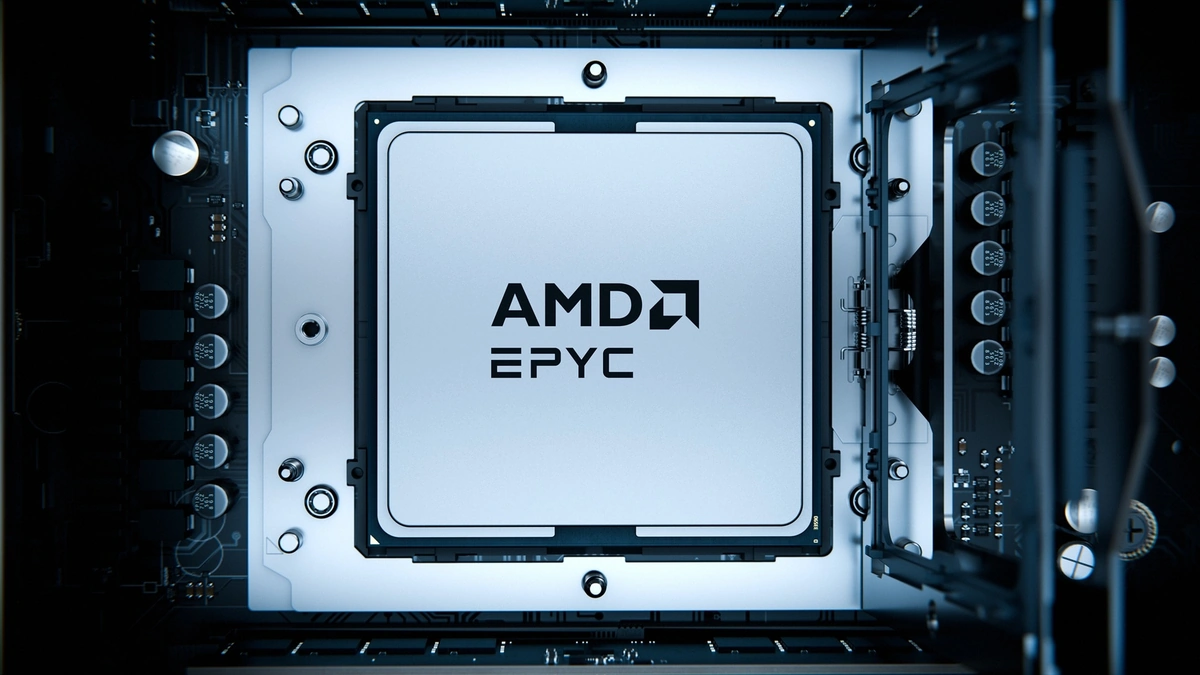
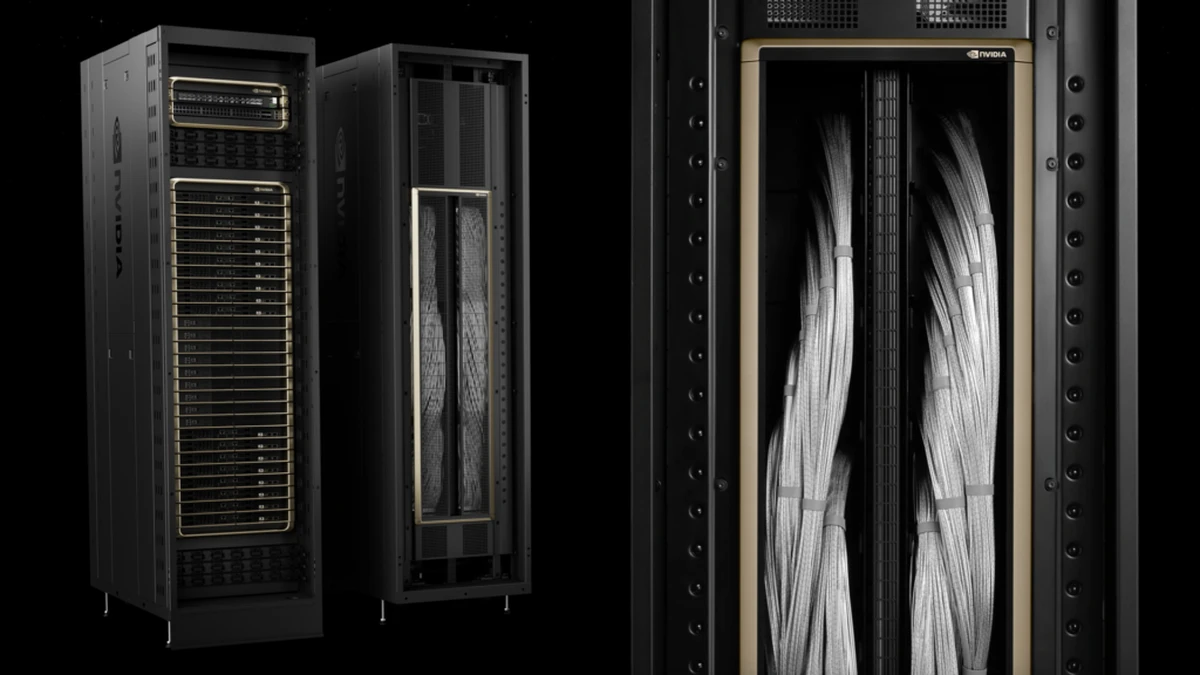
An AI accelerator is a chip that speeds up the matrix and tensor math behind neural network inference, trading general-purpose programmability for raw throughput and power efficiency. The category covers three architectural families with very different design points: the NVIDIA GPU built for parallel compute breadth, the Google TPU built as a datacenter ASIC for tensor operations, and a wave of custom accelerators including AWS Trainium, Groq, and Cerebras built around specific inference bottlenecks. Each class makes a different bet on flexibility, latency consistency, memory bandwidth, and price performance. The right choice depends on the inference workload, not the brand on the silicon, and the gap between a strong fit and a wrong one shows up in cost per token long before it shows up in benchmarks.
What an AI Accelerator Actually Does
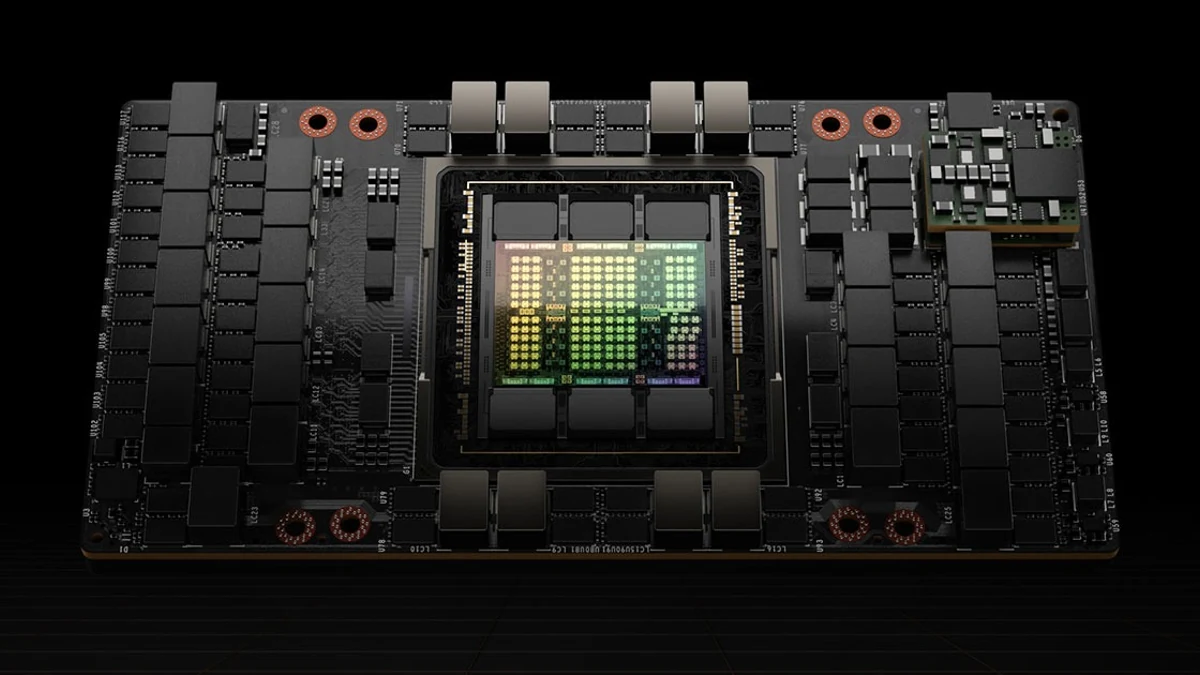
An AI accelerator is a processor designed to run one class of computation, the dense matrix multiplications inside neural networks, faster and more efficiently than a general-purpose CPU. Every transformer layer reduces to large batched matrix multiplies and element-wise tensor operations, and the gap between a CPU and a dedicated chip on that narrow workload is wide. AWS classifies inference-class devices as a family that can include GPUs, NPUs (neural processing units), DSPs (digital signal processors), FPGA devices, or CPUs with vector manipulation operators, per the AWS Well-Architected IoT Lens (AWS, Use accelerators for machine learning inference). An application-specific integrated circuit (ASIC) sits at one end of that spectrum, hard-coded for a fixed operation set, while a GPU sits at the other, programmable enough to run every major framework. For the wider system this hardware plugs into, see how modern AI systems work end to end and how AI models are served at scale.
- AI accelerator: a chip optimized for the matrix and tensor math at the core of neural network inference.
- GPU (graphics processing unit): a massively parallel programmable processor that runs every major framework out of the box.
- TPU (Tensor Processing Unit): a Google-designed ASIC built specifically for tensor operations at datacenter scale.
- ASIC (application-specific integrated circuit): a chip hard-wired for one operation set, trading flexibility for efficiency.
- Inference: the step that runs a trained model against new inputs, distinct from the training run that produced the weights.
GPU for Inference: Flexible but Power-Hungry
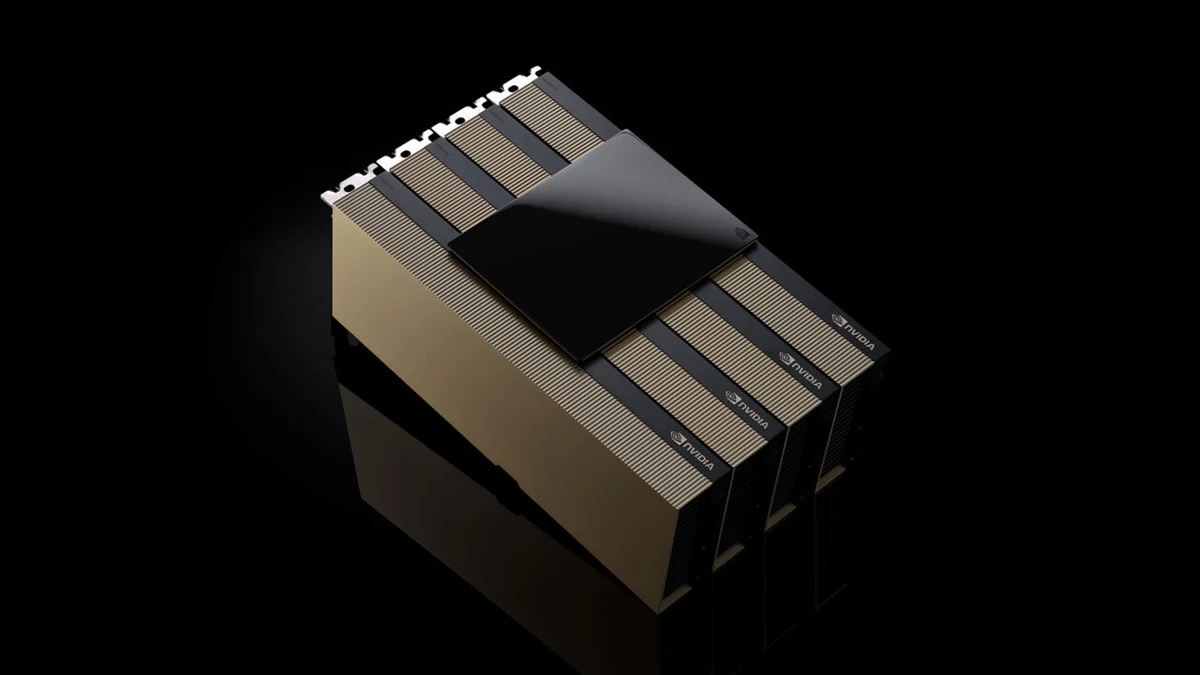
The GPU is the most widely deployed AI accelerator for inference today, offering a programmable parallel compute substrate that runs every major framework out of the box. NVIDIA frames the workload directly, stating that real-world inferencing demands high throughput and low latencies with maximum efficiency across use cases (NVIDIA Developer, Deep Learning Performance: AI Inference). The NVIDIA H100 remains one of the most widely deployed datacenter GPUs, paired with high bandwidth memory (HBM) stacks that feed the tensor cores fast enough to keep them busy on large language model inference. That memory bandwidth advantage is the single biggest reason GPU servers dominate hosted inference: weight loading, not arithmetic, is the bottleneck on most transformer workloads, and HBM throughput moves the wall. The trade-off is power. AWS states that GPUs are not power efficient and should only be selected for the highest-intensity workloads, recommending NPUs where energy efficiency matters most (AWS, Use accelerators for machine learning inference). A GPU pays for its flexibility in watts.
- Framework coverage: NVIDIA CUDA plus cuDNN and TensorRT support PyTorch, TensorFlow, JAX, and ONNX without custom compiler work.
- Memory bandwidth: HBM stacks on the NVIDIA H100 push weight loading throughput beyond what commodity DRAM can sustain.
- Workload fit: mixed batch sizes, varying model shapes, and rapidly changing architectures all run on the same GPU instance.
- Power profile: AWS classifies GPUs as not power efficient and reserves them for the highest-intensity workloads.
- Ecosystem maturity: NVIDIA's software stack remains the default landing zone for new models, which compresses time to first inference.
TPU for Inference: Deterministic Latency and Energy Efficiency
The TPU is an AI accelerator Google designed as a datacenter ASIC built specifically for tensor operations, trading GPU-style flexibility for consistent, predictable inference latency. Google's original TPU paper reported that the chip's deterministic execution model is a better match to the 99th-percentile response-time requirement of neural network applications than the time-varying optimizations of contemporary CPUs and GPUs (Google Research, In-Datacenter Performance Analysis of a Tensor Processing Unit). The arXiv preprint of that paper documents the TPU as a custom ASIC deployed in Google datacenters since 2015 to accelerate the inference phase of neural networks, on average about 15 to 30 times faster than its contemporary GPU or CPU on the cited workload (Jouppi et al., 2017, arXiv:1704.04760). Those numbers are historical and workload-specific, but the architectural lesson stands: a fixed-function tensor pipeline strips out branch-prediction variance, which is what lets an SRE meet a tight tail-latency SLO without overprovisioning. The TPU v5p generation is generally available through Google Cloud, per Google's 2024 announcement (Google, Cloud Next 2024 recap). Power efficiency follows the same logic. Specialized silicon completes a tensor multiply with fewer wasted cycles than a general-purpose core, which is why AWS notes NPU-class accelerators can deliver an order of magnitude or more energy efficiency over general-purpose CPUs or GPUs.
- Deterministic latency: per the Google Research TPU paper, the fixed execution model holds 99th-percentile response time better than a GPU.
- Tensor specialization: the TPU systolic array is wired for matrix multiplies, with no rasterization or texture hardware overhead.
- Power efficiency: Google's edge TPU lineage extends the same design philosophy to mobile and embedded inference workloads.
- Cloud availability: Google announced TPU v5p generally available at Cloud Next 2024, alongside Vertex AI for hosted serving.
- Edge variant: Coral Edge TPU infers about 10 times faster than desktop CPUs on supported models, per Google's LiteRT documentation.
Custom AI Accelerators: AWS Trainium, Groq, and Cerebras

Beyond GPU and TPU, a new generation of custom AI accelerators targets specific inference bottlenecks, from AWS Trainium's cost-per-token optimization to Groq's deterministic token throughput and Cerebras's wafer-scale memory architecture. AWS Trainium is a purpose-built chip family covering Trainium1, Trainium2, and Trainium3, designed for scalable training and inference across generative AI workloads, per the AWS Trainium product page (AWS, Trainium). AWS states Trainium2-based Amazon EC2 Trn2 instances and Trn2 UltraServers offer 30 to 40 percent better price performance than GPU-based EC2 P5e and P5en instances on the same source page, which makes the migration math concrete for teams running stable, high-volume inference. AWS also documents the Trainium3 chip as delivering 2.52 PFLOPs of FP8 compute, 144 GB of HBM3e memory, and 4.9 TB/s of memory bandwidth, doubling compute and raising bandwidth 1.7 times over Trainium2 (AWS, Trainium). Groq takes a different angle: its Tensor Streaming Processor is an ASIC built around deterministic execution to deliver high token throughput on transformer inference. Cerebras targets memory at the opposite extreme, fabricating an entire wafer as a single chip so model weights stay resident in on-chip SRAM rather than crossing an HBM interconnect on every forward pass. The three approaches do not converge on one answer, and that is the point: each AI accelerator class isolates a different inference bottleneck.
- AWS Trainium: a purpose-built AI accelerator family for training and inference, with Trainium3 delivering a large step up in FP8 compute and memory bandwidth over Trainium2, per AWS.
- AWS Inferentia: the inference-only sibling in the same Amazon EC2 lineage, paired with the Neuron SDK for compiler-driven optimization.
- Groq: a deterministic streaming ASIC architecture aimed at consistent token throughput on transformer inference.
- Cerebras: a wafer-scale engine that keeps model weights in on-chip SRAM, sidestepping the HBM interconnect bottleneck.
- Google Tensor SoC: a custom-designed System-on-Chip for running AI models on Pixel devices, optimized for computational efficiency and minimal energy consumption, per Google.
Head-to-Head: Throughput, Latency, and Power Efficiency
Comparing each AI accelerator class directly reveals the core trade-off: GPU maximizes flexibility, TPU and fixed-function ASICs maximize efficiency at a narrower workload envelope. Throughput, the tokens-per-second a chip can sustain on a steady inference stream, scales with raw matrix-multiply rate and HBM bandwidth. The NVIDIA H100 pushes high tokens-per-second on mixed workloads because its tensor cores and HBM stack handle whatever model shape lands on them. Latency consistency is a different metric. Google's TPU paper argued that the chip's deterministic execution model matches 99th-percentile response-time requirements better than CPUs or GPUs, because there are no caches, branch predictors, or speculative units to introduce variance. Power efficiency is where the gap widens further. AWS states that GPUs are not power efficient and should be reserved for the highest-intensity workloads, while NPU-class chips deliver an order of magnitude or more energy efficiency on the same task. Memory bandwidth ties all three metrics together, because weight loading dominates inference time on large models. The table below compares the four headline chip classes on those axes, using vendor-documented values where available.
| Class | Example chip | Throughput profile | Latency consistency | Power efficiency | Memory bandwidth note |
|---|---|---|---|---|---|
| Datacenter GPU | NVIDIA H100 | High on mixed workloads | Variable under load | Lower, per AWS | HBM stack, large per-die |
| Datacenter TPU | Google TPU v5p | High on tensor-heavy workloads | Deterministic, per Google | Higher than GPU on target workload | HBM, fixed tensor pipeline |
| Custom AI accelerator | AWS Trainium3 | High FP8 compute, per AWS | Consistent at fixed batch | 30-40% price-performance edge vs P5e/P5en, per AWS | Large HBM3e capacity and bandwidth, per AWS |
| Streaming ASIC | Groq | High sustained token rate | Deterministic by design | High on narrow workload | Large on-die SRAM |
Matching the AI Accelerator to the Workload
Choosing the right AI accelerator starts with the workload: batch inference at scale, real-time single-request serving, and training-then-deploy pipelines each favor a different chip architecture. Batch inference rewards throughput per dollar, where a custom AI accelerator with high HBM bandwidth often wins. Real-time serving rewards latency consistency, where a TPU or Groq-class streaming ASIC pulls ahead because tail latency, not average latency, controls user experience. Mixed-model production pipelines, where engineers rotate architectures every quarter, reward the programmability of a GPU because the time saved on framework wrangling outweighs the per-token cost gap. Training and inference share the same chips at the high end. AWS Trainium covers both phases, NVIDIA datacenter GPUs cover both phases, and Google datacenter TPUs cover both phases. Edge ASICs split the picture: Google states that the Coral Edge TPU and Google Tensor SoC target inference on Pixel and embedded devices and are not suited to full model training. This three-way comparison across GPU, TPU, and custom ASIC is what separates a deployment that meets its SLO from one that quietly overspends on the wrong silicon. The unique cut here is breadth at the inference layer: most write-ups treat one chip class at a time.
- Define the inference profile: batch versus real-time, fixed model versus rotating models, single-tenant versus multi-tenant.
- Map the bottleneck: if weight loading dominates, prioritize memory bandwidth; if tail latency dominates, prioritize deterministic execution.
- Score the chip classes: GPU for flexibility, TPU for predictable latency, custom AI accelerators for price performance at stable scale.
- Account for training: if the same team trains and serves, pick a chip class that handles both phases to avoid a hand-off.
- Pilot on cloud first: Amazon EC2, Google Cloud, and partner clouds expose each class as on-demand instances before any capital commitment.
Cost and Ecosystem Trade-offs
The total cost of running an AI accelerator in production includes instance pricing, software ecosystem maturity, operator tooling, and switching costs, not just raw chip performance. The GPU ecosystem around NVIDIA CUDA carries the deepest tooling: PyTorch, TensorFlow, JAX, vLLM, and TensorRT all assume a CUDA target, which shortens the path from a research checkpoint to a production endpoint. TPU and custom chips close the gap with their own compilers, XLA on TPU and the AWS Neuron SDK on Trainium and Inferentia, but each carries a porting cost. The price-performance argument cuts the other way at scale. AWS states Trainium2-based Trn2 instances and Trn2 UltraServers offer 30 to 40 percent better price performance than GPU-based EC2 P5e and P5en instances on its Trainium product page, a margin large enough to justify the migration effort for stable workloads. Switching back is the hidden cost: once weights, kernels, and serving infrastructure are tuned to one AI accelerator class, the migration tax compounds.
- Instance pricing: compare on-demand and reserved rates for matched chip classes on Amazon EC2 and Google Cloud, not list prices on data sheets.
- Software stack: NVIDIA CUDA leads on coverage; XLA and AWS Neuron narrow the gap on TPU and Trainium respectively.
- Operator tooling: monitoring, autoscaling, and rolling-deploy patterns are most mature on GPU clusters and improving on custom AI accelerator fleets.
- Switching cost: kernel rewrites, quantization recipes, and serving-stack changes form a sticky migration tax once a chip class is in production.
References
- NVIDIA Developer, Deep Learning Performance: AI Inference
- AWS Well-Architected IoT Lens, Use accelerators for machine learning inference
- AWS, Trainium product page
- Google Research, In-Datacenter Performance Analysis of a Tensor Processing Unit
- Google AI for Developers, LiteRT Task Library on-device accelerators
- Google, Cloud Next 2024 recap
- Jouppi et al., 2017, In-Datacenter Performance Analysis of a Tensor Processing Unit (arXiv:1704.04760)
Further reading
Frequently Asked Questions
What is the difference between a GPU and a TPU for AI inference?
A GPU is a general-purpose parallel processor adapted for AI, while a TPU is a fixed-function ASIC Google built specifically for tensor operations. GPUs support every major framework out of the box and handle mixed workloads; TPUs deliver more consistent inference latency and better performance per watt on the narrow workload class they target, per Google's original datacenter TPU paper.
When should a team use a custom AI accelerator like AWS Trainium instead of a GPU?
Custom AI accelerators like AWS Trainium make sense when a workload is well-defined, model architecture is stable, and inference volume is high enough to absorb the migration cost. AWS states Trainium2-based Trn2 instances offer 30 to 40 percent better price performance than GPU-based EC2 P5e and P5en instances, making the trade-off concrete at scale.
Why does memory bandwidth matter so much for AI inference?
Memory bandwidth determines how fast a chip can load model weights into compute units; at inference time, loading weights often takes longer than the actual matrix multiplications. AWS Trainium3 raises memory bandwidth substantially over Trainium2, which reduces the weight-loading bottleneck for large models and is why HBM generations are a key differentiator across all AI accelerator classes.
Can the same AI accelerator handle both training and inference?
GPUs handle both training and inference well, which is why they dominate research and production pipelines. Purpose-built chips like Google's datacenter TPU and AWS Trainium are also designed for training, but edge ASICs such as the Coral Edge TPU and Google Tensor SoC target inference only and are not suited for full model training.