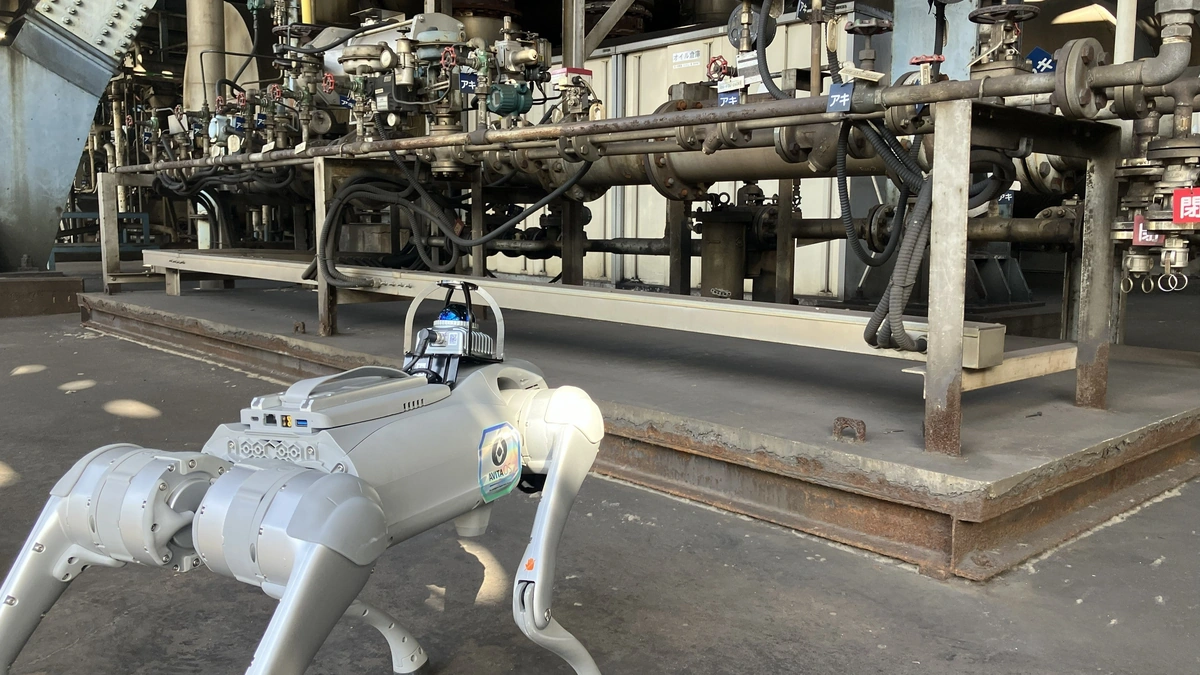
AVITA and Daicel are about to find out whether a robot can do a factory inspector's job. The two companies say a four-legged machine will begin patrolling equipment at a chemical plant in western Japan this winter, part of a trial meant to show whether physical AI can stand in for the walk-the-floor checks a person does today.
The test site is Daicel's Otake Plant in Hiroshima Prefecture. Daicel's part is essentially the assignment: opening its factory floor, setting the checklist of equipment to inspect, and defining what counts as safe operation on a working production line. AVITA's part is the machine itself, building the navigation and inspection software that lets the robot make sense of a real plant and actually finish its rounds.
That software has already had months of practice. Per Daicel, the robot has been walking the plant grounds since August, and the pair plan to switch on full autonomous-walking verification in December 2026. For now the hardware is a Unitree Go2, an off-the-shelf quadruped rather than a purpose-built industrial unit, and both companies frame that choice as provisional: whichever robot or configuration performs best against the plant's real tasks is what they say they will carry forward. Running a pilot on an off-the-shelf unit before committing to custom hardware is a common way industrial buyers de-risk this kind of bet, and it fits AVITA's own role here: the software stack, not the specific robot chassis, is what the company is on the hook for.
AVITA is a five-year-old Tokyo company led by Hiroshi Ishiguro that has mostly sold avatar software, an AI customer-service tool and an AI-driven interview product built around easing Japan's labor crunch, so the Otake trial marks a step from that avatar work into physical robots. Daicel is the far older partner here, a materials company assembled in 1919 out of eight celluloid manufacturers, and it is pitching the project as an early piece toward what it describes as a more advanced factory model, one where machines take on the repetitive rounds that today pull people away from other work.
What isn't settled yet is the endpoint. Neither company has said which robot would actually go into service after December, or whether a working patrol bot at Otake would spread to Daicel's other plants.