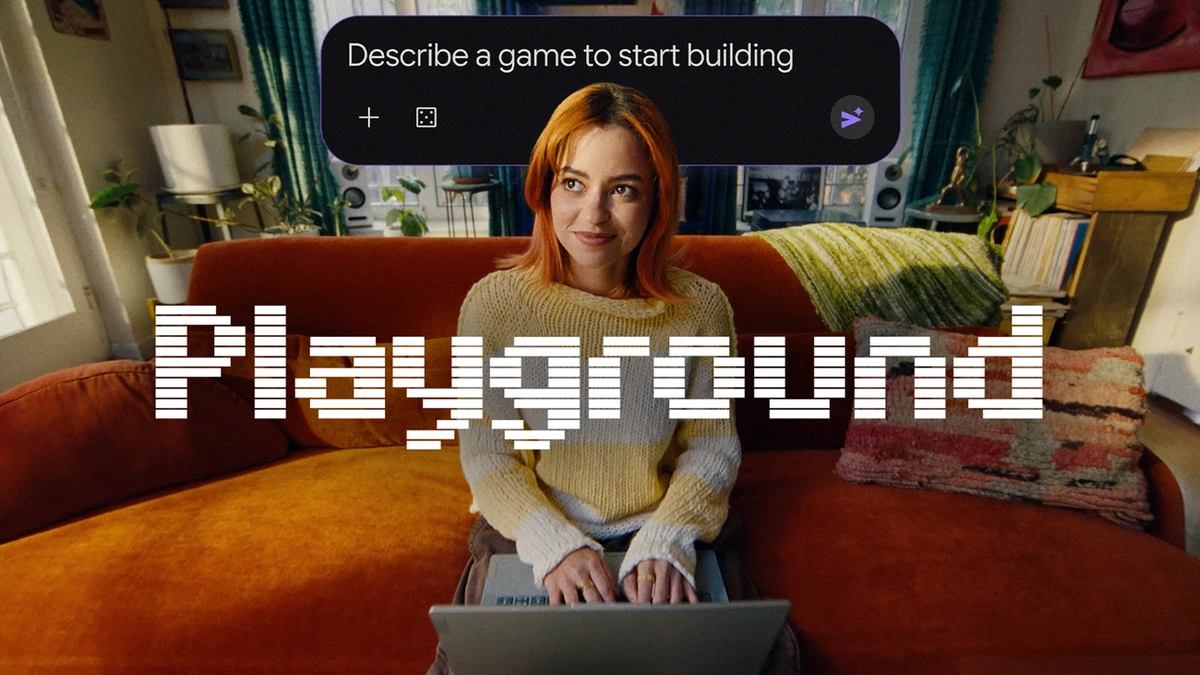
Google Playground turns a browser tab into a game studio: a user types what the game should be, and the platform builds something playable from that description. The experiment targets people who have never opened a game engine, and it pairs creation with a built-in place to publish and compete.
Per Google, Google Playground opens to U.S. users aged 18 and over at playground.google, with creation access tiered by Google AI subscription. A creator can start from a blank canvas, remix starter prompts or lean on guided support, then test the result immediately. Changes to physics, rules, characters or scenery are made by asking for them in plain language, and Google says the creator keeps control of the direction from rough idea to finished game.
Finished games can stay private, go out as a shareable link or be published to the Playground Explore gallery. Because Google Playground runs in the browser, titles play on phones and laptops alike. Google says leaderboards work across games, while multiplayer is limited to select genres. A Play Games profile adds a custom handle, likes and a follow list for creators. The gallery surfaces games using player ratings and play activity, and Google says every published game passes a safety screening tied to its Community Guidelines, backed by user reporting.
The more telling detail is the growth path. Google says Playground will soon integrate Unity Spark, which it describes as bringing professional-grade mechanics, high-fidelity 3D and the Unity runtime. Unity Spark is still in testing, and a closed beta is coming without a date attached. Games built that way are meant to appear to all Google Playground users.
That pairing reads as an on-ramp strategy. Prompt-built games give newcomers a first result in minutes, and the Unity route is the place for those who outgrow the prompt box. Google calls the product an early experiment, so the first test is whether the gallery fills with games people replay or with throwaway demos, and which subscription tier unlocks enough creation to find out.