Apple's MacBook Pro with PROLED XDR Display puts a touchscreen and a tandem OLED panel on 14- and 16-inch models, with pre-orders open since October 28.
The panel stacks two self-illuminating pixel layers, per Apple, and is rated at up to 2,000 nits peak for HDR content and, outdoors, SDR content, and up to 1,000 nits sustained full screen, with a 10,000,000:1 contrast ratio. Refresh rates run from 10Hz to 120Hz. One default preset covers both P3 and Adobe RGB, and Apple puts Rec. 2020 coverage above 80 percent. Apple calls it the world's best laptop display.
The mini-LED models stay on sale. Apple sells the Liquid Retina XDR MacBook Pro, now with an M6, M5 Pro or M5 Max chip, next to the PROLED model, which makes the changes easy to compare.
| Spec | Liquid Retina XDR | PROLED XDR |
|---|---|---|
| Panel | Mini-LED | Tandem OLED |
| Peak HDR brightness | 1,600 nits | 2,000 nits |
| Contrast ratio | 1,000,000:1 | 10,000,000:1 |
| Color gamut | P3 | P3 and Adobe RGB |
| 14-inch M5 Pro weight | 3.5 lb | 3.0 lb |
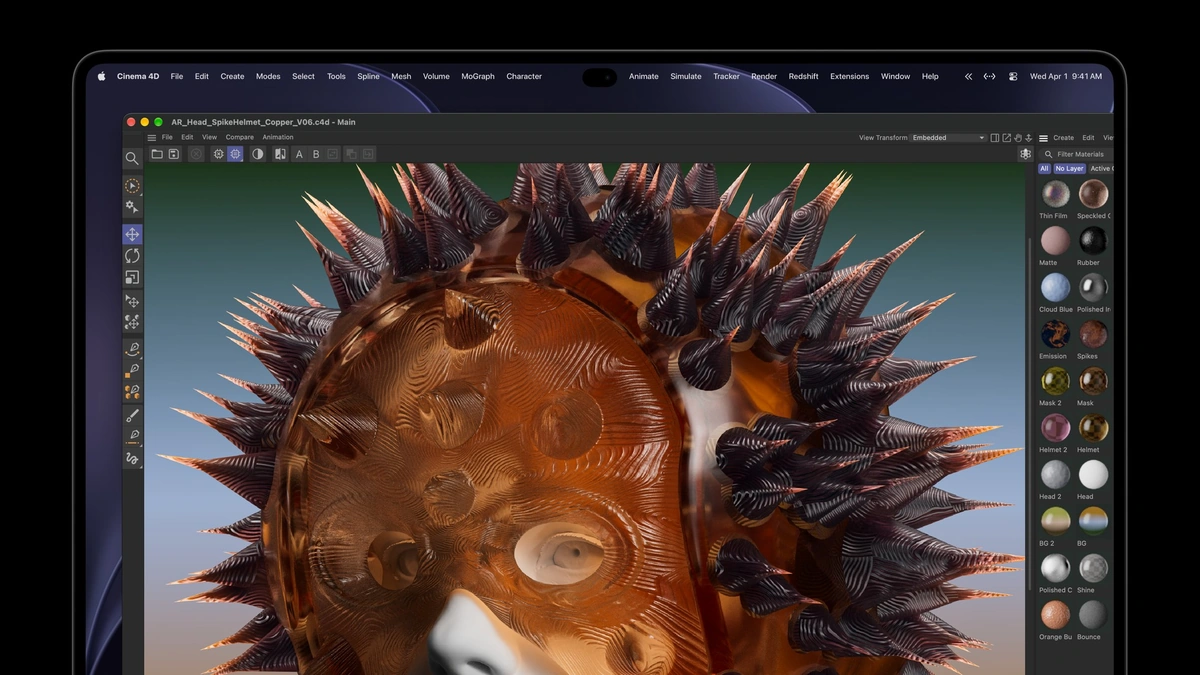
On the MacBook Pro with PROLED XDR Display, the touch sensor sits inside the panel instead of on top of it, which Apple credits for lower latency. macOS turns taps into clicks, so many existing apps work with Touch right away. Adobe Lightroom, DaVinci Resolve, Blender and Maxon Cinema 4D are among the apps Apple expects to add native Touch support later this year. App developers can test their iOS and iPadOS apps for touch on the laptop itself, and Touch works alongside the keyboard shortcuts and trackpad gestures. The Dynamic Island also arrives on the Mac as the home for Live Activities, Siri AI and Spotlight, which moves there only when Siri AI is available and turned on.
Apple credits the more efficient OLED stack for a slimmer body, with the 16-inch model nearly a millimeter thinner. The 14-inch MacBook Pro with PROLED XDR Display weighs 3 pounds, half a pound less than before. The 16-inch model weighs 4 pounds, 0.7 pounds less. Thinner borders let the larger screen grow to 16.3 inches, while the smaller one stays at 14.2 inches.
Chips are M5 Pro and M5 Max, with up to 128GB of memory and up to 16TB of storage. Ports are three Thunderbolt 5 ports, HDMI, an SDXC card slot, MagSafe and a headphone jack.
The 14-inch model with M5 Pro starts at $2,899 and the 16-inch at $3,399. M5 Max models start at $4,499, or $4,799 for the larger screen. Education pricing runs $150 to $300 lower across the four starting configurations.
Pre-orders cover 30 countries and regions including the U.S., and the first units arrive November 6. Eligible U.S. customers can also lease one through Apple Upgrade from $55.99 a month for 36 months, Apple's example for the $2,899 model.