A consumer CPU is a processing unit that executes all software instructions and determines the performance ceiling of every personal computing device. Apple Silicon, Intel, and AMD now ship three meaningfully different answers to the same question: what should a consumer processor do well, and at what power cost. Apple builds ARM-based system-on-chip designs with on-package memory. Intel ships x86 hybrid-core processors that mix performance and efficiency cores on a single die. AMD ships x86 chiplet designs that lean on large caches and high core counts. Each approach produces a distinct profile across single-core performance, multi-core performance, power efficiency, and platform compatibility, and those profiles map cleanly onto specific buyer use cases.
How Apple Silicon, Intel, and AMD Differ at the Architecture Level
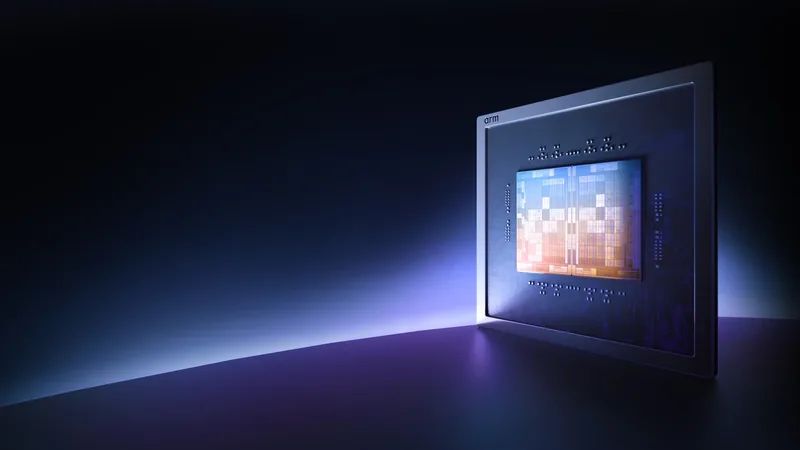
A consumer CPU today is defined as much by its memory model and core topology as by raw clock speed. Apple Silicon uses the ARM instruction set architecture (instruction set architecture (ISA)), a load-store design that favors fixed-width instructions and a deep reorder buffer to push instructions per clock (instructions per clock (IPC)) higher at modest frequencies. Intel and AMD use the x86 instruction set architecture, a variable-length design with decades of legacy support, optimized for high clock speeds and broad operating system compatibility. A measurement study on real ARM and x86 hardware, Power struggles: Revisiting the RISC vs. CISC debate on contemporary ARM and x86 architectures (IEEE HPCA, 2013), found the two families to be engineering design points for different performance levels and concluded that whether an ISA is RISC or CISC seems irrelevant.
Apple pairs its ARM cores with a unified memory architecture (UMA) where CPU, GPU, and Neural Engine share one on-package memory pool, a design that Apple vs. Oranges: Evaluating the Apple Silicon M-Series SoCs for HPC Performance and Efficiency (IEEE IPDPSW, 2025) reviews and benchmarks, measuring up to 100 GB/s of memory bandwidth on the M1, M2, M3 and M4 chips it tested. Intel Core Ultra parts use a hybrid core architecture that places Performance cores and Efficient cores on the same die, with the Windows scheduler routing threads via Intel Thread Director. AMD Ryzen desktop parts use a chiplet design that scales core count and L3 cache without changing the core itself.
| Dimension | Apple Silicon | Intel Core Ultra | AMD Ryzen |
|---|---|---|---|
| ISA family | ARM (AArch64) | x86-64 | x86-64 |
| Memory model | On-package UMA | External DDR5, upgradeable | External DDR5, upgradeable |
| Core topology | Performance + Efficiency clusters | P-core + E-core hybrid | Uniform cores, optional 3D V-Cache tier |
| Fabrication | Leading-edge TSMC node | Intel 4 / TSMC mix | TSMC chiplets |
| Target thermal budget | 10-40 W typical | 15-125 W range | 15-200 W range |
Single-Core Performance: Where Each Platform Excels
For a consumer CPU, single-core performance still governs the responsiveness of most desktop applications, including web browsing, spreadsheet recalculation, and the responsiveness of integrated development environments. Apple Silicon and the latest Intel and AMD generations have converged in this dimension, with leadership rotating release by release. Benchmark methodology matters: SPECint and Geekbench measure different workload mixes, and IPC at a fixed clock is a more honest comparison than peak boost numbers.
- Apple Silicon M-series. Strong IPC at low clocks, typically 3.5 to 4.5 GHz. The current Apple M4 family extends single-thread leadership at low power (see Apple Newsroom for chip-family specifications). Best for laptop workloads where peak frequency is thermally limited.
- Intel Core Ultra. Highest sustained clock speeds among the three, with P-cores pushing into the high 5 GHz range on desktop parts. The Intel Core Ultra 200 series targets single-thread responsiveness on Windows (see Intel Core Ultra product page). Best where Windows-only software is the constraint.
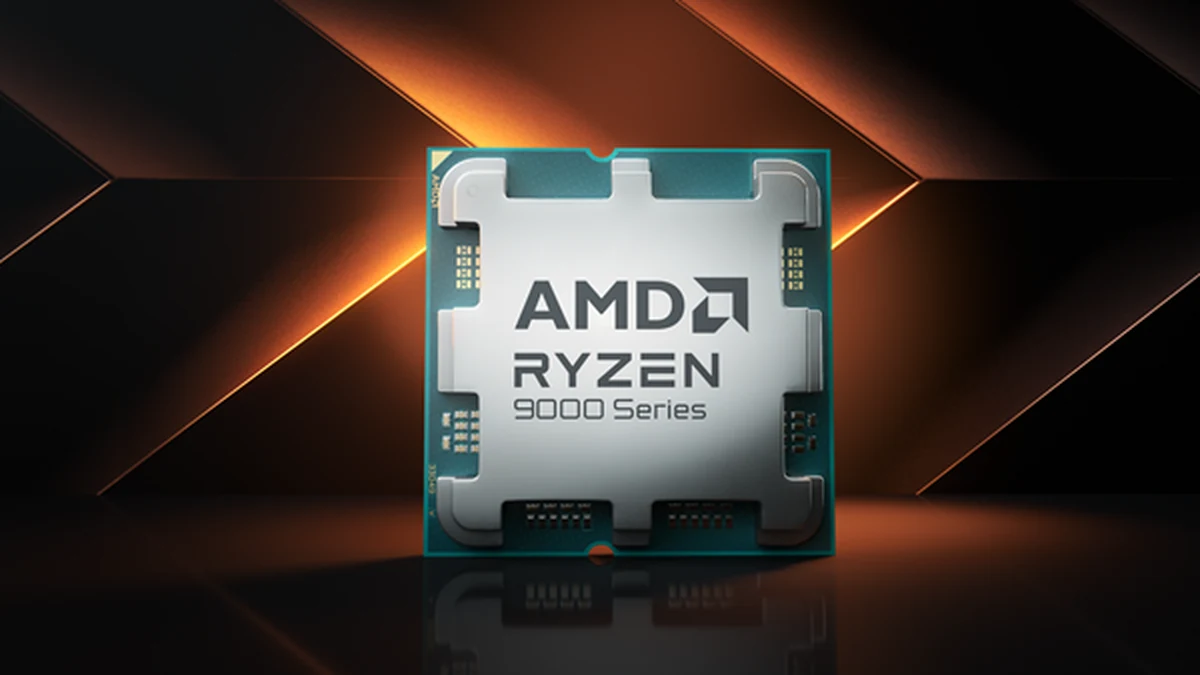
- AMD Ryzen. Competitive IPC with the X3D variants adding stacked L3 cache that lifts single-thread performance on cache-sensitive workloads. The Ryzen 9000 series anchors the current desktop lineup (see AMD Ryzen desktop processors page). Best for gaming and cache-bound simulation work.
Desktop-only single-thread analysis sits in best desktop CPU for productivity and gaming, which compares Intel and AMD at the SKU level.
Multi-Core Performance and Workload Scaling
A consumer CPU shows its second personality under multi-core performance: software compilation, video encoding performance, 3D rendering, and local model inference. Here the differences widen. AMD pushes core count high on desktop, with flagship parts reaching 16 cores at a 200 W thermal design power (thermal design power (TDP)) ceiling. Intel Core Ultra desktop parts trade some core uniformity for the hybrid mix, leaning on E-cores to absorb background work without burning the P-cores. Apple Silicon caps core count lower but uses the on-chip media engine to handle ProRes, H.264, H.265, and AV1 codecs in dedicated hardware, which decouples video encoding performance from general core scaling.
| Workload | Apple Silicon | Intel Core Ultra | AMD Ryzen |
|---|---|---|---|
| Video encoding (hardware codecs) | Strong (media engine) | Strong (Quick Sync, AV1) | Moderate (depends on GPU) |
| Software compilation | Strong on M Pro and M Max tiers | Strong on i9 / Ultra 9 parts | Strong on high-core Ryzen 9 |
| Local ML inference | Strong with Neural Engine and UMA | Moderate with NPU | Moderate with Ryzen AI |
| General productivity | Strong | Strong | Strong |
The cache hierarchy reshapes this picture. AMD X3D parts stack additional L3 cache directly on the compute die, which lifts game and database workloads where working sets exceed standard L3 capacity. Intel uses a shared L3 across the P-core and E-core clusters with the ring bus arbitrating access. Apple Silicon uses a large system-level cache fed by UMA, which removes the round-trip cost of moving textures or tensors between CPU and GPU memory. The head-to-head matchup on the Apple side sits in AMD Ryzen vs Apple M Series performance.
Power Efficiency and Thermal Management Compared
For a consumer CPU intended for a laptop, power efficiency is the dominant variable. Apple Silicon retains a structural advantage on performance-per-watt for sustained workloads because the ARM architecture and UMA design reduce the energy cost of memory access, and the leading-edge TSMC node compounds the savings. Intel and AMD have narrowed the mobile gap, but x86 still carries higher static and decoder power at equivalent IPC.

- Laptops, sustained workloads. Apple Silicon leads decisively on battery life and fanless or low-fan operation, with thermal design power typically held under 40 W.
- Laptops, light workloads. Intel Core Ultra mobile parts compete closely, as E-cores handle background tasks at very low TDP and the Windows power model parks P-cores when idle (see Microsoft Windows scheduling documentation for how the Thread Director hint is consumed).
- Desktops, peak throughput. AMD and Intel pull ahead because the platform allows TDP headroom into the 125 W to 170 W range, where Apple Silicon has no comparable desktop product outside the Mac Studio and Mac Pro tiers.
- Desktops, idle and light load. All three platforms idle efficiently. Differences shrink to single-digit watts.
The tradeoff that matters for buyers: Apple Silicon's UMA is soldered and non-upgradeable, so the memory configuration chosen at purchase is permanent. Intel and AMD desktop platforms accept user-replaceable DDR5, which extends useful life but adds bus power overhead. Our guide on laptops versus desktops versus workstations walks through how that choice interacts with form factor.
Platform Compatibility and Software Ecosystem Tradeoffs
A consumer CPU lives or dies by what software runs on it. Platform compatibility is where the ISA choice imposes its hardest constraints, and x86 Windows still runs a much larger catalog of native desktop software than ARM-based macOS.
- Native ARM macOS catalog. Mature for creative, productivity, and developer tooling. Most major applications now ship ARM-native binaries.
- Rosetta 2. Apple's binary translation layer runs x86-64 macOS applications on Apple Silicon with a measurable performance penalty on instruction-heavy workloads. Some legacy Intel-only Mac titles run only under Rosetta 2.
- Windows on x86. Broadest application and game library of any consumer platform. Driver support for peripherals is most complete here.
- Windows on ARM. Improving but narrower than Windows on x86. Not a substitute for Intel or AMD desktops when legacy Windows software is the requirement.
- Game library coverage. Substantially larger on x86 Windows than on Apple Silicon macOS. Anti-cheat compatibility and DirectX 12 support remain Windows strengths.
- Driver support. External GPU, capture card, and audio interface drivers ship first for Windows x86, then macOS, then Linux.
For buyers weighing how the CPU choice interacts with discrete graphics, see CPU vs GPU: what matters for productivity or gaming.
Choosing a Consumer CPU Platform: A Decision Framework
The three-way comparison resolves into a small set of clean recommendations once the use case is fixed. Pick the consumer CPU platform whose tradeoff profile matches the workload that dominates your week, not the one that wins isolated benchmarks. Benchmark methodology rewards different platforms differently, and platform compatibility constraints often override raw performance gaps. See also: iOS. See also: Best Smart Assistants Compared: Google Home Vs Alexa Vs Apple.
- Laptop-primary user, mixed productivity. Apple Silicon. The power efficiency advantage translates to longer battery life and a thinner, quieter chassis at the same workload class.
- Desktop content creator working in Final Cut Pro or DaVinci Resolve on macOS. Apple Silicon at the M Pro or M Max tier. The media engine and UMA accelerate the codec and color pipelines that dominate this workflow.
- Desktop content creator working in Premiere Pro, After Effects, or Blender on Windows. AMD Ryzen 9 with high core counts for render scaling, or Intel Core Ultra 9 when Quick Sync acceleration matters for the specific codec stack.
- Developer needing cross-platform build, test, and container workflows. Apple Silicon for native ARM Linux container parity with cloud ARM instances. Intel or AMD when the toolchain depends on x86-only binaries or kernel modules.
- Gamer on Windows. AMD Ryzen X3D variants for cache-sensitive titles, or Intel Core Ultra 9 for engines that scale well with high P-core clocks. Apple Silicon remains a poor match for the Windows-dominant game library.
- Budget-constrained buyer. AMD desktop platforms typically offer the broadest socket longevity, since AM5 sockets accept multiple CPU generations. The companion guide on how SSDs, RAM, and motherboards affect overall system performance covers the surrounding platform costs.
Further reading
- AMD Ryzen vs Apple M Series performance
- CPU vs GPU: what matters for productivity or gaming
- Laptops vs desktops vs workstations
- How SSDs, RAM, and motherboards affect performance
Intel's hybrid core architecture mixes performance and efficiency cores in one package, while AMD uses uniform Zen cores; the hybrid core architecture requires Windows 11 thread scheduling support.
Frequently Asked Questions
What is the practical difference between Apple Silicon's ARM architecture and the x86 architecture used by Intel and AMD?
Apple Silicon uses an ARM-based ISA with a unified memory architecture where CPU and GPU share the same on-package memory pool, eliminating the bandwidth bottleneck that exists when transferring data between discrete CPU and GPU memory on x86 platforms. Intel and AMD use the x86 ISA, which supports a broader range of legacy operating systems, external GPU upgrades, and user-replaceable DRAM. The tradeoff is that x86 platforms carry higher per-watt overhead at equivalent IPC levels compared to Apple Silicon's recent process node implementations.
Which desktop CPU platform handles video editing most efficiently?
Apple Silicon delivers the highest performance-per-watt for sustained video encoding workloads on macOS, primarily because the media engine on-chip handles hardware-accelerated ProRes and H.264 or H.265 encode and decode without CPU core involvement. AMD Ryzen 9000-series processors offer competitive multi-core encoding throughput on Windows for codecs not offloaded to dedicated hardware. Intel Core Ultra 200-series chips provide a similar media engine for AV1 and H.265 acceleration. The optimal platform depends on the editing software stack: DaVinci Resolve and Final Cut Pro have different GPU and codec acceleration paths across the three platforms.
Are there real compatibility problems running existing Windows software on Intel or AMD when switching from Apple Silicon?
Moving from Apple Silicon macOS to an Intel or AMD Windows platform typically eliminates Rosetta 2 translation overhead, since the software catalog for Windows is native x86. The friction runs in the opposite direction: users switching from x86 Windows to Apple Silicon macOS may find that some legacy x86-only Windows applications have no native ARM macOS equivalent, and that Rosetta 2 adds a measurable performance penalty for instruction-heavy workloads. Game library coverage is substantially larger on x86 Windows than on Apple Silicon macOS.
How does battery life compare between Apple Silicon laptops and Intel or AMD laptops at equivalent workloads?
Apple Silicon laptops consistently achieve longer battery life at equivalent workloads because the ARM architecture on a leading-edge process node produces lower heat per unit of compute than current x86 implementations. Intel Core Ultra 200U-series mobile chips have narrowed the efficiency gap through the hybrid P-core and E-core architecture, where E-cores handle light tasks at low TDP. AMD Ryzen mobile processors using the current Zen 5 architecture also deliver competitive efficiency on light workloads. For sustained heavy workloads, Apple Silicon maintains a larger lead because UMA reduces memory access power draw.