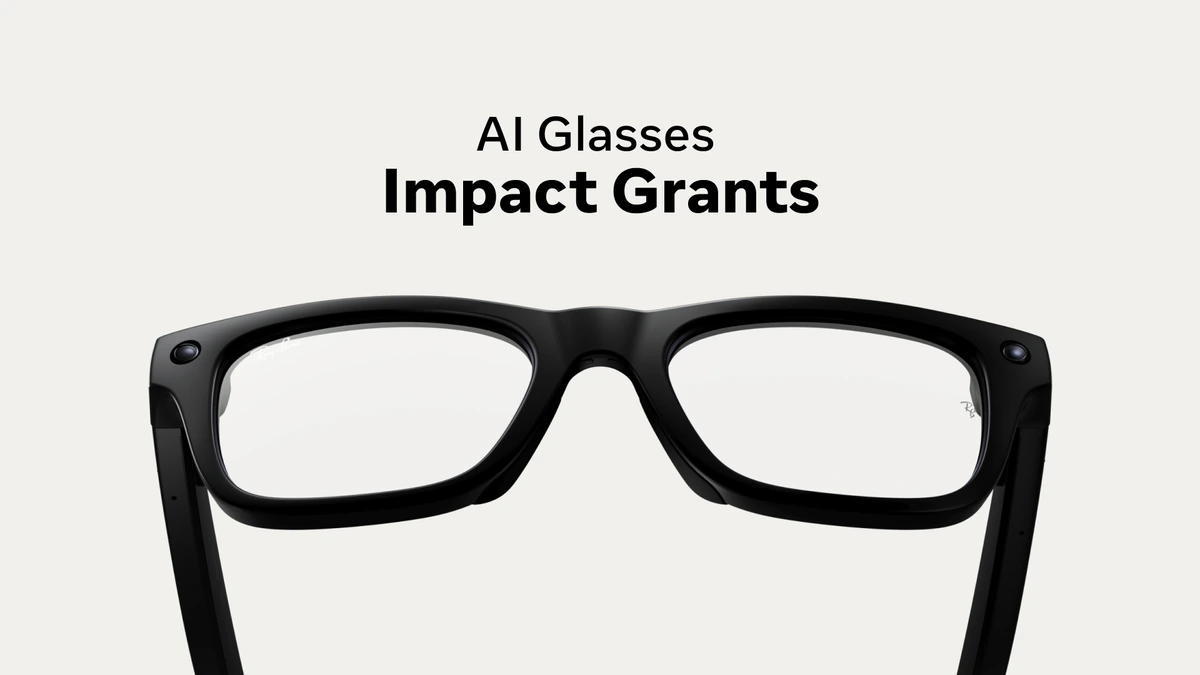
Meta is funding 30 US organizations that are putting its AI glasses to work on skilled-trade coaching, roadside repair, crop scouting, and accessibility auditing.
The AI Glasses Impact Grants total nearly $2 million and reach recipients in 18 states, picked from close to 500 applications, according to Meta. The program runs on two tracks: Accelerator Grants for groups already scaling work with the glasses, and Catalyst Grants for developers writing software against the Meta Wearables Device Access Toolkit.
The money is not spread evenly. Meta set the award sizes when it opened applications in January: 15 Accelerator grants of $25,000, 10 more at $50,000, and five Catalyst grants of $200,000 each. That routes more than half the fund to the five software teams rather than to the 25 organizations already using the glasses in the field.
On the workforce side, Strategic Workforce Development in Missouri walks career changers through construction tasks with hands-free instruction and records their skill demonstrations as a portfolio they can show an employer. Mycelia Foundation in New Mexico fits rural broadband installers with the glasses for safety guidance at height, where reaching for a phone is itself the hazard. Agerpoint in North Carolina points them at crop health data for growers, and Onsite in Michigan lets field service contractors capture job notes, estimates, and diagnostic help by voice.
A second group of awards goes to accessibility work. OurLife Labs in California, backed by Reality Hack in Massachusetts, is building an assistant for people living with early-stage dementia and mild cognitive impairments that gives step-by-step help with daily routines and is meant to be shared with families and caregivers. United Spinal Association in New York is equipping wheelchair user advocates to document barriers in parks and public spaces and route that evidence to the officials responsible for Americans with Disabilities Act compliance.
Easter Seals Greater Houston is running a pilot rather than a deployment, studying three groups through its BridgingApps program, people with low vision, people with intellectual and developmental disabilities, and people with cognitive aging, to build the evidence base that assistive technology procurement usually asks for. The full cohort list names all 30 recipients.
The Catalyst track is also product strategy. OurLife Labs, Proformance-AI, Immerse Inc., Onsite, and Agerpoint are due to ship their apps on Ray-Ban Meta glasses through the Device Access Toolkit in the coming months, which hands Meta a funded pipeline of third-party software for a wearable that has had very little of it. What none of the descriptions carry yet is a measured result: each one states what a recipient plans to do with the glasses, not what the glasses have already been shown to do.