MIT built a robot that can set up an entire laser experiment from scratch, run it, and take it apart again, no lab technician required. The project targets one of the most stubbornly manual corners of hardware research: aligning mirrors and lenses by hand is slow, repetitive, and easy to get slightly wrong, and it has to be redone for nearly every new test bench.
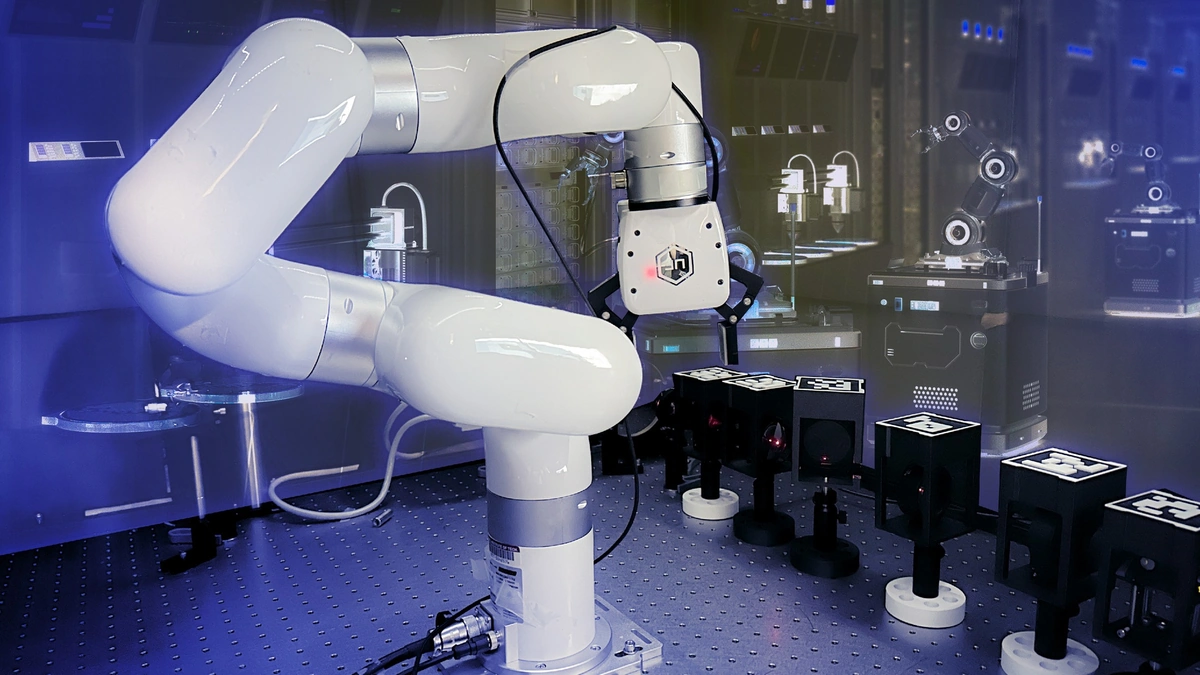
Instead of automating just one step, the MIT group tried to close the whole loop. Their arm has seven movable joints and grabs individual parts (mirrors, lenses, other optical hardware) each sealed inside a printed case stamped with a scannable code so the machine knows exactly what it is holding and how to place it. Once a piece is set on the tabletop, a magnet keeps it from drifting, and a small wireless gadget grips the same knobs a person would turn to fine-tune it, only with far steadier hands. To prove the concept, the team had the arm build a laser cavity, the paired-mirror arrangement that turns ordinary light into a laser beam, entirely unassisted; it finished in half an hour across roughly 50 individual moves, a process the group walks through in its published writeup, which is headed for presentation at this month's Intelligent Robots and Systems conference.
What stood out in testing wasn't just the assembly, but the recovery: pushing a component off its mark mid-experiment didn't kill the run. The arm noticed the beam had drifted and corrected the setup on its own. Seou Choi, an MIT graduate student who co-led the work, called the underlying alignment task one that "is not something a new trainee could do in an afternoon," pointing to how much hands-on calibration experience it normally takes.
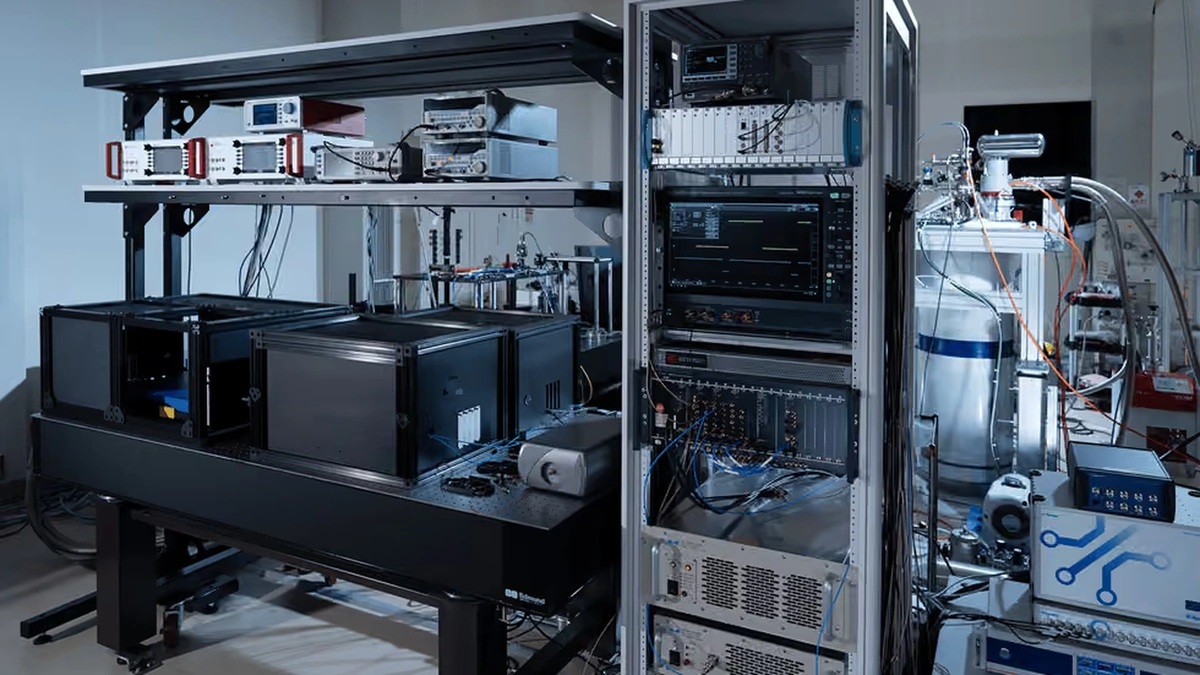
Motorized knobs already exist in plenty of optics labs, but postdoc Sachin Vaidya says none of those tools cover a full experiment from a bare table to a working beam. He and physics professor Marin Soljacic see the clearest early payoff in industries that repeat the same tedious calibration across many prototype units, such as solar-cell testing, camera and display development, and AR and VR optics. Beyond the demo, the MIT team, alongside collaborators from Nokia Bell Labs and Arizona State University, is putting the robot to work screening candidate carbon-capture materials and building a remote interface so outside researchers could eventually queue up experiments for the machine to run on its own.