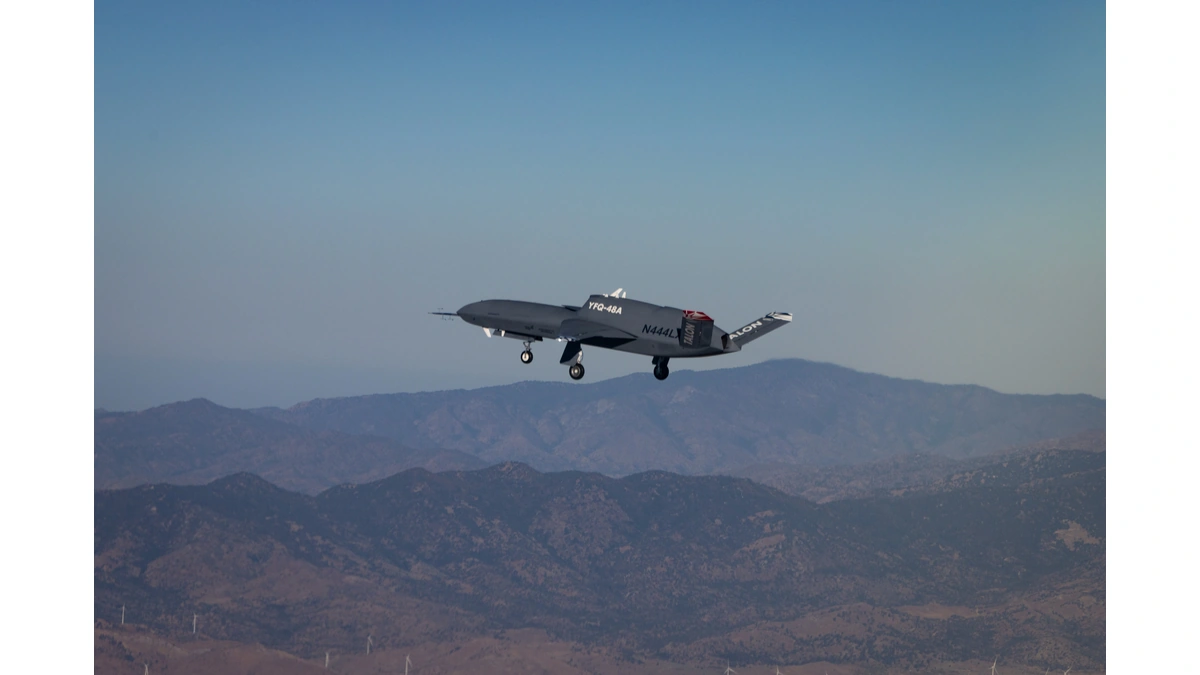
Northrop Grumman's YFQ-48A Talon Blue has made its first fully autonomous flight, the company says, taxiing, taking off, maneuvering and landing at Mojave, California. The aircraft is a self-funded effort under Project Talon, per Northrop Grumman, which names no specific customer or contract.
The flight draws on seven decades of autonomy work and more than 500,000 autonomous flight hours, according to Northrop Grumman. Those hours belong to the company's wider record; the YFQ-48A Talon Blue's own log starts with this flight. The company gives no flight time, altitude or speed.
Cost is the argument behind the YFQ-48A Talon Blue's design. Northrop Grumman credits modular design and what it calls advanced manufacturing with cutting part count and weight, which it says lowers cost and speeds production. Craig Woolston, vice president and general manager of research and advanced design at the company, said customers "made it clear they need autonomous systems that can be fielded faster and more affordably." No unit cost, weight or part-count figure backs any of this, so the savings remain a claim.
The YFQ-48A Talon Blue's high air intake, wide wheelbase and integrated weapons bay are the features Northrop Grumman singles out, saying they suit a range of missions for U.S. and allied partners. The company does not say the bay was used or tested on this flight.
YFQ-48A Talon Blue sits beside a second Project Talon effort, Talon IQ, an autonomy testbed that flies on a Scaled Composites aircraft and runs Northrop Grumman's Prism Mission Autonomy software. The company describes Talon IQ as a government reference architecture that speeds autonomy work, and says the two let it and its partners develop, test and field new capabilities against emerging threats. Woolston called the flight "one step toward a new generation of autonomous capabilities," and the company says what it learns will inform future systems.