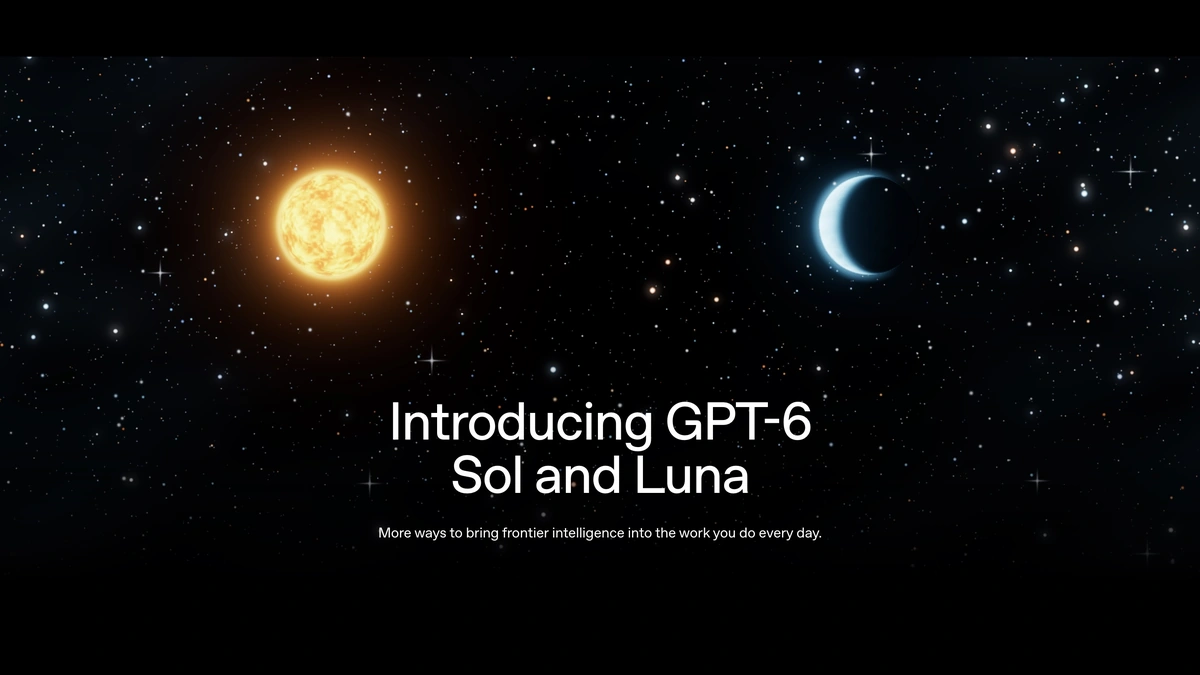
OpenAI rolled out two new models this week, GPT-6 Sol and GPT-6 Luna, expanding the family it introduced with the flagship Astra model earlier this month. Both are built for higher-volume, everyday work rather than the hardest research problems, and both ship with a matching cut to their API prices.
OpenAI says the new per-million-token API rates are $2 for Sol's input and $10 for its output, down from $4 and $20 under the prior GPT-5.6 Sol pricing. Luna drops from $0.20 and $1.20 to just $0.10 and $0.50. On the company's AutomationBench workflow evaluation, OpenAI reports that Sol at its highest reasoning effort scores above Claude Opus 5 at maximum effort while costing about 9 percent of Opus 5's per-task price, a gap it credits to lower inference and caching costs.
The company also points to internal factuality tests built from flagged ChatGPT conversations: Sol reportedly makes about half as many mistakes as its GPT-5.6 predecessor, and Luna, at higher effort settings, matches old Sol's accuracy at roughly one-hundredth the cost. Those specific margins are OpenAI's own characterization rather than independent benchmarks.
Sol and Luna are live today in ChatGPT Work and in Codex for Plus, Pro, Business, Enterprise, and Edu subscribers. Free and Go users can reach Luna through the ChatGPT desktop app, though OpenAI says neither model is available in Chat yet. Developers can call them through the API under the model names gpt-6-sol and gpt-6-luna.
OpenAI also raised the discount on cached input tokens to 90 percent for the GPT-6 family, alongside new tools for tracking and adjusting what gets cached, changes aimed at agent builders who replay the same long context thousands of times a session.