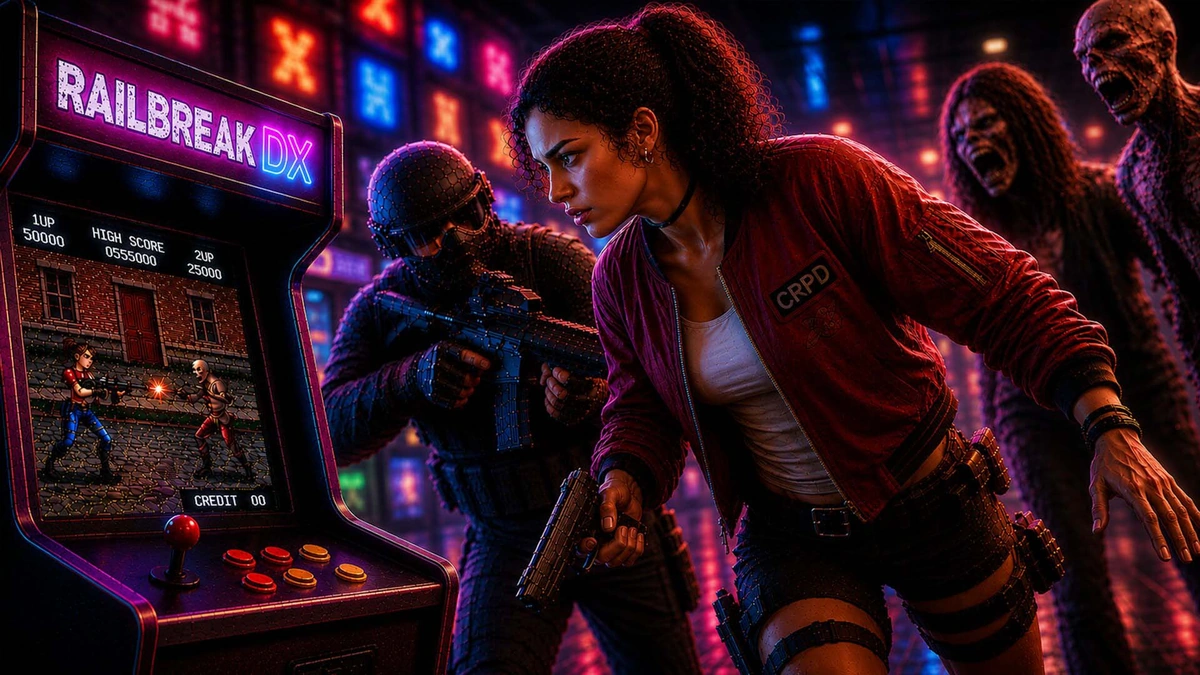
Xbox confirmed Friday that Railbreak DX, Dead Drop Studios' overhauled version of its on-rails zombie shooter, is now available on Xbox Series X|S and Xbox Play Anywhere, with Xbox Cloud Streaming support so players can start without downloading it first.
According to Xbox, the new edition roughly doubles the original cast, going from nine playable survivors to 18, and Dead Drop Studios rebuilt the game on the latest build of Unreal Engine 5 with ray tracing added. It is priced at $24.99, and the original Railbreak will be pulled from individual sale later this month, leaving Railbreak DX as the only way to buy the game going forward.
Dead Drop Studios co-founder and chief operating officer Julia Wolbach wrote in the launch post that each of the nine new characters carries its own weapon, fire rate, and damage quirks, and that every returning survivor was rebalanced to match. She pointed to Michael, who resists poison and bleed effects but is stuck with an ammo-hungry shotgun, and Rin, whose ice-bullet handgun and sword-beam attacks reward precision headshots at the cost of survivability, as examples of the trade-offs built into the new roster.
Beyond the six-scenario Story mode, Railbreak DX adds an endless Onslaught mode, a roguelike Glitch Gauntlet, and a DINOBREAK setting that swaps in dinosaurs alongside or instead of the undead. A new practice mode and full two-player co-op round out the changes, and progress carries over between console, PC, and handhelds through Xbox Play Anywhere. Dead Drop Studios describes the game as a prelude to its upcoming title Outbreak: Shades of Horror.