Fitbit Edge goes on sale October 27 at $179.99, giving Google a fitness tracker with a real display, built-in GPS and a replaceable battery that sits between the screenless Fitbit Air and the Pixel Watch line. Pre-orders are open now at the Google Store and retail partners.
Google aims the Fitbit Edge at people who want more than a band but less than a smartwatch. The recycled aluminum case is 11.5 mm thick, and the company says it is 45% lighter than the case of the Apple Watch Series 12. The Hybrid OLED screen offers 46% more viewing area than earlier Fitbit trackers, Google says, and a physical side button handles quick actions such as pausing a workout. It ships in four finishes: Obsidian, Fog, Olive and Canyon. A Stephen Curry Special Edition costs $219.99.
For training, the Fitbit Edge offers more than 50 exercise modes, according to Google, and an altimeter for hill and stair work, and automatic recognition of up to 100 workout types when the wearer forgets to press start. The company credits an upgraded GPS chipset and nano-molded aluminum housing for tracking accuracy up to 40% better than previous Fitbit generations. That number compares Google's own devices with each other, not with Garmin or Apple hardware.
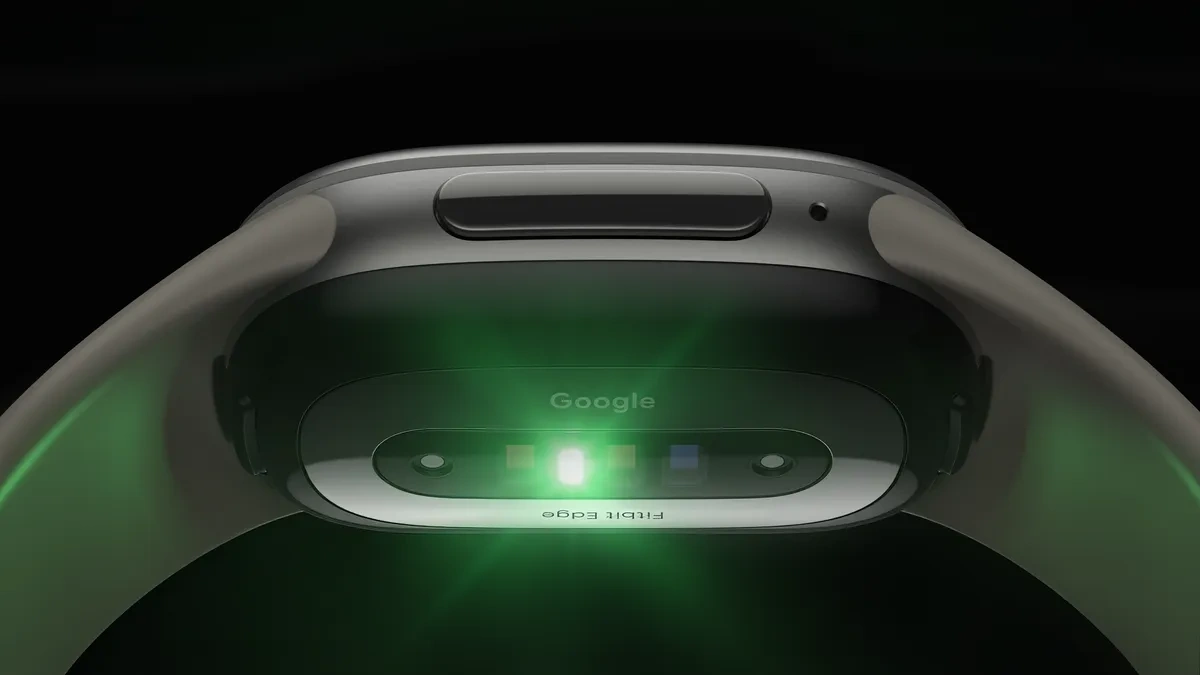
The health sensors are the larger change for a tracker at this price, and the Fitbit Edge carries a full set. There is an optical heart rate sensor, an on-wrist ECG app in select countries, and a skin temperature sensor that feeds a nightly recovery score alongside sleep stages and heart rate variability. Google also lists Health Guardian features that watch for trends in blood pressure and insulin resistance and for high or low heart rate, with availability varying by region. It describes them as general wellness tools that do not diagnose or treat any condition. Coaching that interprets those shifts needs a Google Health Premium subscription, and Google includes three months with each purchase.
Battery and repair set the Fitbit Edge apart most. Google quotes up to seven days per charge, measured on pre-production hardware with default settings, and says a five-minute top-up on a 30W USB-C adapter, which is sold separately, yields about a day of use. Water resistance is rated to 50 meters. Google calls the Fitbit Edge its first repairable fitness tracker, with modular internals and a user-replaceable battery, a change that matters most for a product whose battery usually decides when it gets thrown away.
It pairs with both Android phones and iPhones. Because the battery, GPS and charging figures all come from Google's pre-production tests, real-world numbers will not exist before units reach buyers on October 27.