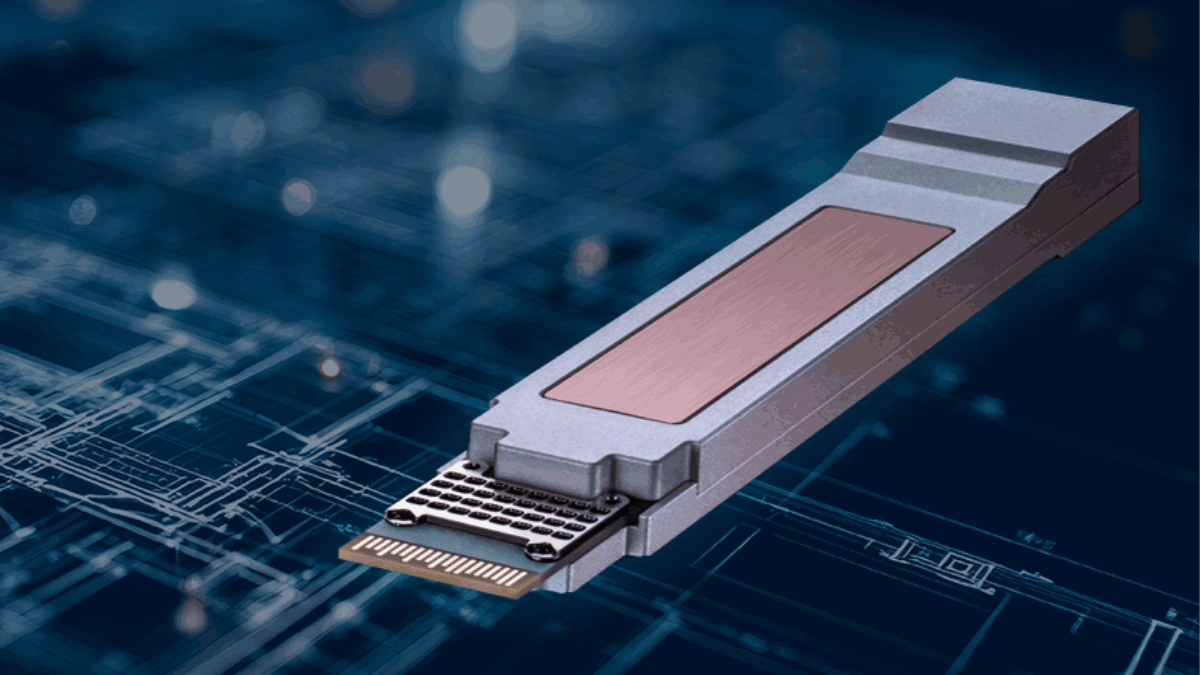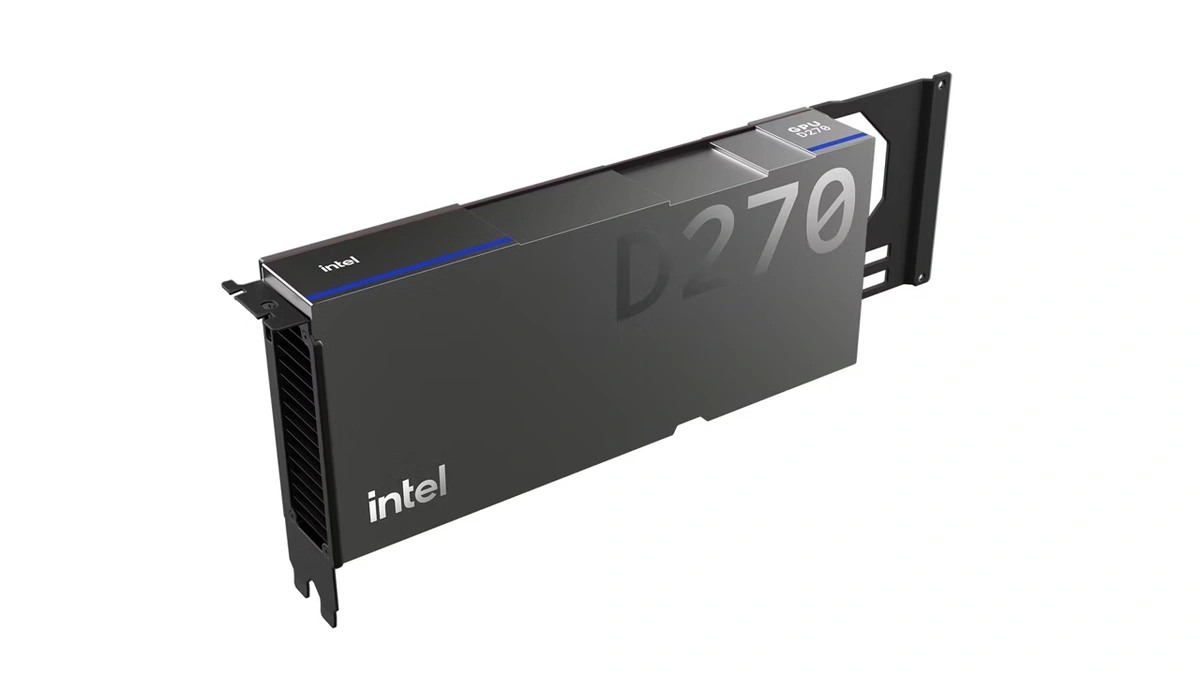
Intel GPU D-Series is the production name for Crescent Island, an inference accelerator built around memory capacity: partner cards can carry up to 480 GB of LPDDR5X on one PCIe card, at 350 watts.
At the Open Compute Project Global Summit, Intel put numbers on the card. It is built on the Xe3P architecture and pairs that memory pool with 1.5 TB/s of bandwidth and 1.3 petaflops of FP8 compute. Intel says one card can serve models of up to 300 billion parameters, and an eight-GPU system can pass one trillion.
The choice of LPDDR5X, a cheaper memory type than the stacked HBM common on data center accelerators, is the story. Intel pitches the card at the economics of sustained, memory-intensive inference, including long-context work. The standard PCIe form factor and air cooling mean it is meant for existing data centers, with no specialized rack or cooling, per Intel.
The headline capacity needs a qualifier. In a footnote, Intel states that its own branded PCIe card carries 160 GB of LPDDR5X. The 480 GB figure is what the design allows partners to build into ODM-branded cards, so the biggest configuration depends on what OEMs and ODMs choose to ship. Intel did not give a price, a launch date or a card-level list of partners, and says only that customer sampling is underway.
On the software side, Intel says the card shares a common Xe foundation with its other GPUs, so existing applications should port across, and that it is working on Day 0 support for new open models through upstream framework work. It cited Meta's Muse Glimmer as a recent example. The same event covered Xeon-based rack designs on the Open Rack v3 standard, plus an Open Adapter Card form-factor contribution aimed at making accelerator cards interoperable across system designs.
All performance figures are Intel's own and come with its standard caveat that results vary by configuration. How the card holds up against HBM-based cards on real inference workloads will need independent testing.