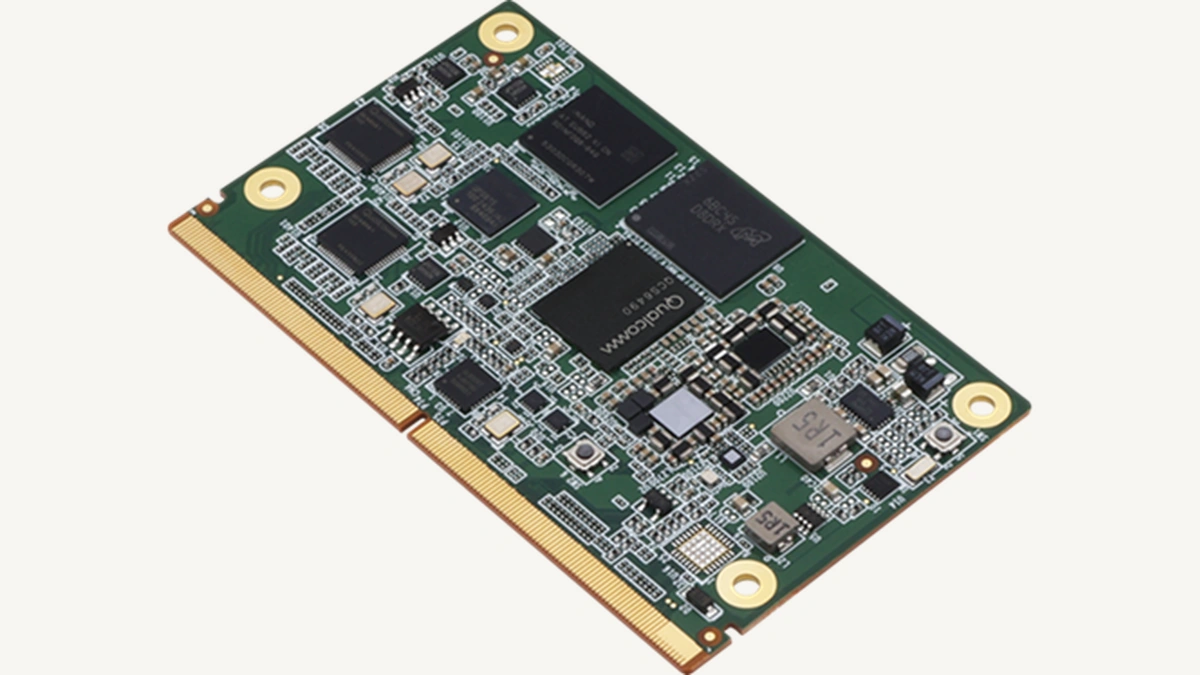
AAEON's first Qualcomm-based compute module packs an 8-core Kryo 670 CPU and 12 TOPS of AI performance through the integrated Hexagon 770 NPU onto an 82 x 50 mm SMARC 2.1 card, per AAEON. The uCOM-Q6490 runs the Qualcomm Dragonwing QCS6490 processor with an Adreno 643 GPU for multi-format video encoding and playback, up to 16GB of soldered LPDDR5, SDIO 3.0 support, 64GB of UFS storage, and a PCIe Gen 3 expansion slot. A display port makes the fanless module a fit for digital signage.
The compact module fields dual Gigabit Ethernet, three I2C buses, and five USB ports, which supports LiDAR, IMUs, robotic controllers, and camera peripherals, while two SPI interfaces offer low-latency deterministic communication for embedded robotics sensors. AAEON points at robotics, digital signage, and portable healthcare imaging as target verticals.
AAEON's release labels the module a small and lightweight platform for integration into robotics, healthcare, and automation applications. Default operating temperature is 0 to 60 degrees Celsius, with a -40 to 85 degree range available on special request.
AAEON has built industrial IoT and AI edge platforms since 1992 and supplies OEM and ODM services worldwide; the uCOM-Q6490 follows a portfolio that spans industrial motherboards, rugged tablets, and embedded AI edge systems. AAEON announced the module from Taipei on August 21, points readers to the product page for detailed specifications, and directs inquiries to an AAEON representative. The company did not state any pricing in the announcement.