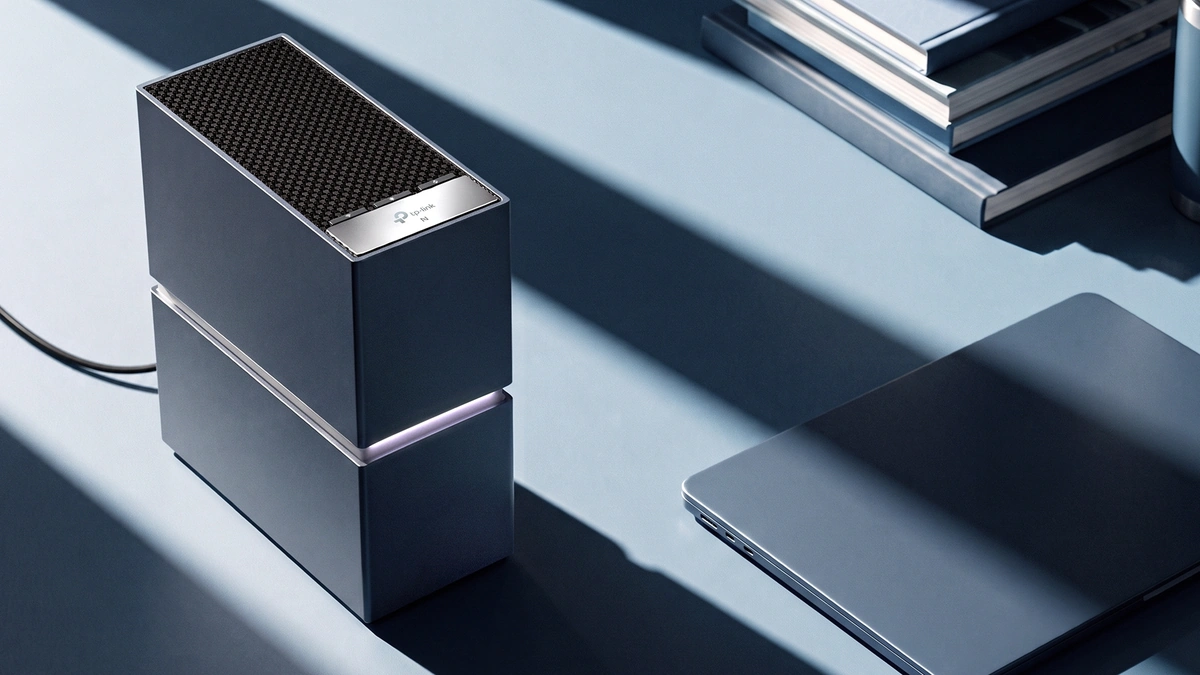

AMD showed the Threadripper Halo Station at IFA in Berlin, a desk-side machine that pairs its top workstation processor with the class of accelerators normally bolted into server racks. AMD describes it as a way to run and fine-tune large AI models on one desk, without booking capacity on a cloud provider.
The prototype AMD brought to IFA 2026 runs a 96-core Ryzen Threadripper PRO 9995WX processor on the Zen 5 architecture, paired with four AMD Instinct MI350P accelerators. AMD lists up to 2.6TB of combined memory across the processor and accelerators, and up to 16.4TB/s of aggregate memory bandwidth. By the company's own comparison, that memory pool is roughly 3.4 times the capacity of Nvidia's DGX Station, the system it measured against.
The pitch tracks a change in what AI work costs. When models were used mostly one prompt at a time, a single workstation GPU could keep pace. Agent workloads shift that balance, holding a model resident in memory and querying it for hours or days at a stretch, and on a metered cloud account that running time accumulates. AMD says keeping the work on local hardware also keeps the data there, which matters for teams handling regulated or proprietary material.
Whether the Halo Station delivers on that depends mostly on memory. The largest open models need hundreds of gigabytes for their weights alone, and the running context that agents build up needs still more room on top. That is why the accelerator memory pool, rather than raw compute, is the figure to watch, and why AMD is leading with capacity and bandwidth rather than benchmark results.
Lenovo and HP used the same show to preview their own AMD-based AI workstations, so the desk-side AI machine is becoming a product category rather than a single device. The Halo Station itself is still a prototype. AMD points to a 2027 release and has not set a price or a final configuration.