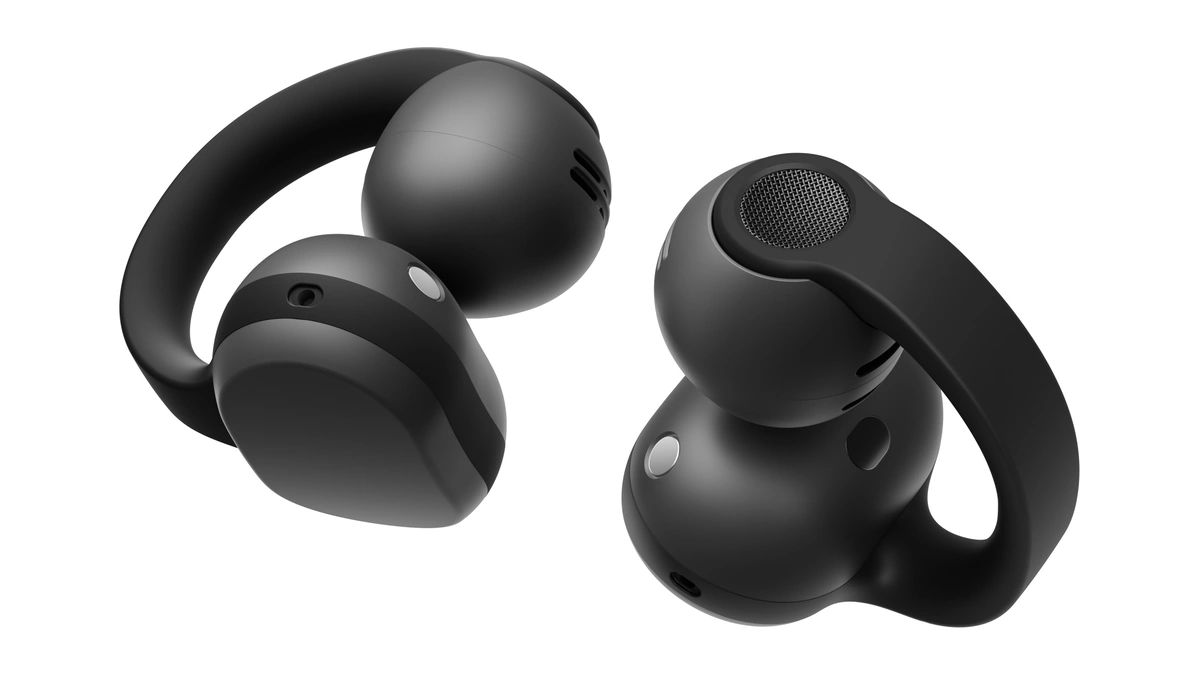
Samsung's Galaxy Buds On clip onto the ear and leave it unblocked, a shape the company presents as a first for the Galaxy Buds line.
Samsung positions Galaxy Buds On as a companion to its in-ear models, not a successor. In its framing, the in-ear Galaxy Buds suit moments of deep immersion, while the clip-on pair is for outdoor runs and walks where hearing the surroundings matters. To keep a clip-on from slipping or aching, Samsung says it analyzed data on many ear shapes, ran simulations to place the speaker and battery, widened the contact area to spread pressure and tuned the band's elasticity so the fit holds through large movements. A light touch on the back of each earbud handles playback and call control.
Galaxy Buds On run on the Snapdragon S7 Gen 1 Sound Platform with a Class-D amplifier that Samsung says keeps power use low enough for up to 9.5 hours of continuous music on one charge. No total that includes the charging case is given. The earbuds launch in South Korea on Oct. 27 in a single black model at ₩299,000 (about $220 at the Oct. 2 exchange rate), with other markets to follow in sequence and no dates or prices stated for them.
For hands-free voice features, Galaxy Buds On depend on a paired Galaxy AI phone or tablet. A spoken Hey Google prompt starts Gemini Live, and Quick Voice Memo records whatever the wearer says while holding the touch area, with the clip searchable through Bixby afterward. That memo feature has conditions: Samsung lists the Voice Recorder and Bixby apps as requirements, plus a long-press action set in Settings. Head gestures cover other hands-busy cases, so a nod or shake can answer or end a call, dismiss an alarm or read a message alert. For calls, the company combines three microphones, a bone-conduction-based Voice Pickup Unit sensor and a machine-learning model to isolate the wearer's voice, and says it stays clear in outdoor wind or vacuum-cleaner noise indoors. Opening the case starts pairing with a Galaxy phone or tablet, and volume and equalizer controls sit in the phone's own settings and quick panel, so the Galaxy Wearable app is not needed.
The sound is the hardest part to judge on paper. Samsung presents TwinBoost, a speaker meant to fill in low frequencies, automatic volume that follows the surroundings and Audio Leakage Reduction, which it applies for the first time here, as answers to the acoustic limits of a design that leaves the ear open. It says the leakage feature lets Galaxy Buds On be used in libraries and cafes without worry. Samsung's own footnote tempers that: some sound can still escape depending on volume, ear shape and ambient noise, and the effect is more noticeable in quiet settings. A quiet library is therefore where the claim gets tested hardest.