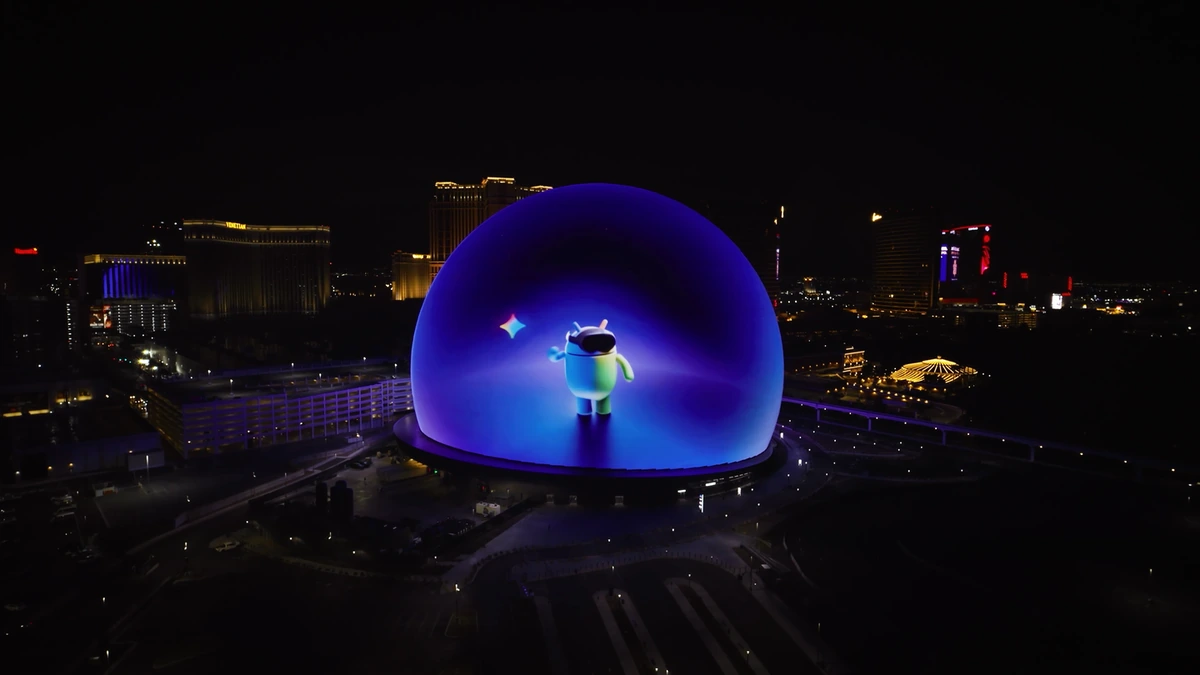
Google spent the opening night of CES 2026 turning the exterior of the Sphere in Las Vegas into a billboard for a platform most people have never worn. The wraparound display ran a sequence built around the Android bot soaring through space, painting in mid-air, and getting help mid-game, the kind of set piece that reaches a huge crowd without asking any of them to strap on a headset first.
Underneath the spectacle, the pitch is for Android XR, Google's operating system for the next wave of headsets and glasses. The company describes it as pairing Gemini with an awareness of the wearer's surroundings, so the assistant can help while you build a virtual workspace or drop into a game. The only shipping device that runs it so far is the Samsung Galaxy XR, which reached buyers late last year, and Google used the same moment to point back at the hardware it previewed on its Android Show for XR.
Nothing new was actually announced on the glass. There were no fresh specs, no prices, and no ship dates attached to the display, which makes this a brand exercise rather than a product event. That is a reasonable use of the biggest screen in the desert for a category still measured in early-adopter numbers, but it also frames the real test Google faces this year. Android XR does not yet have the thing a spectacle cannot buy, which is a lineup of devices and a reason for ordinary buyers to want one.