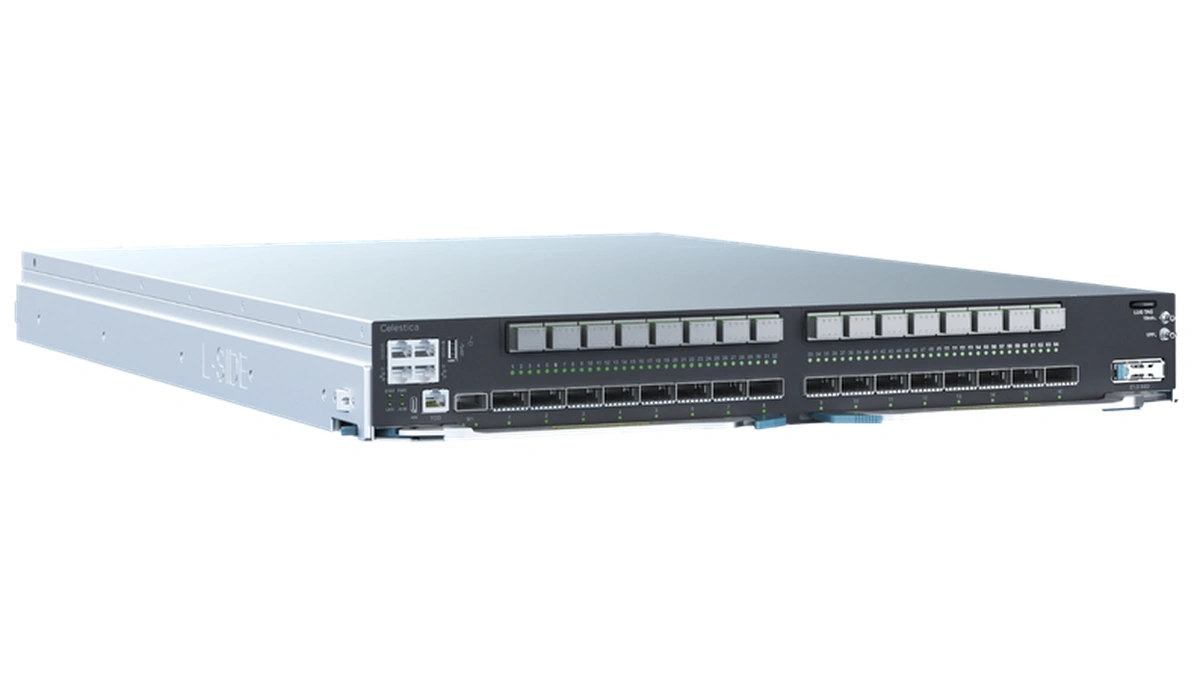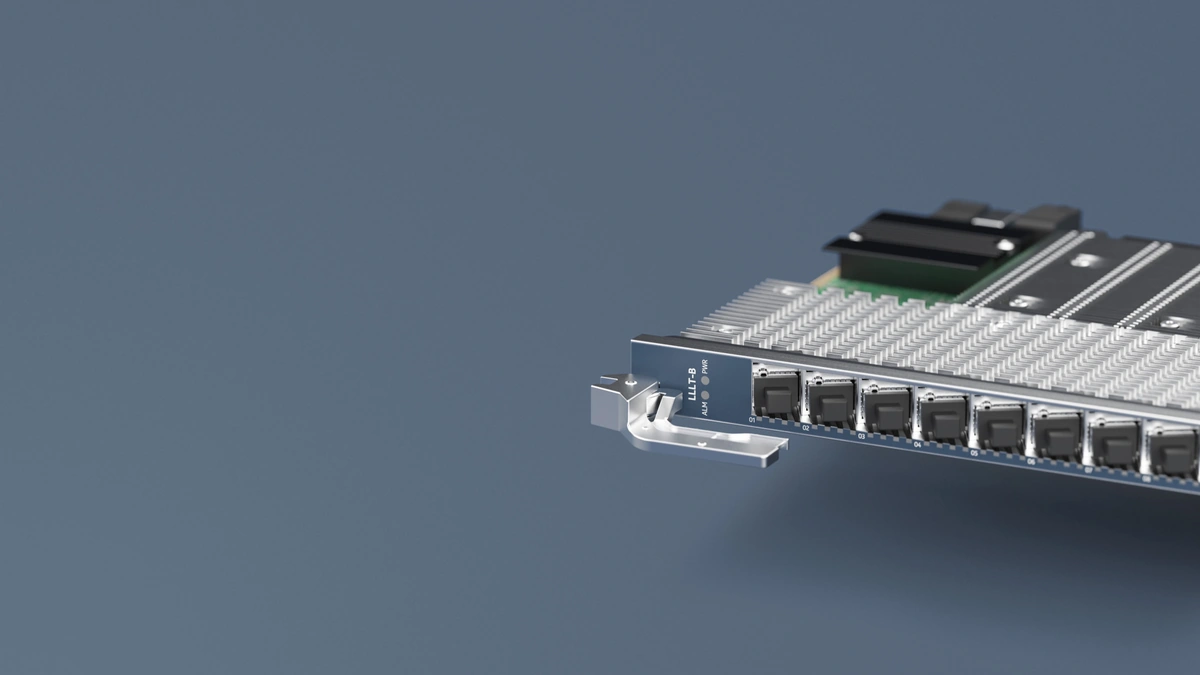
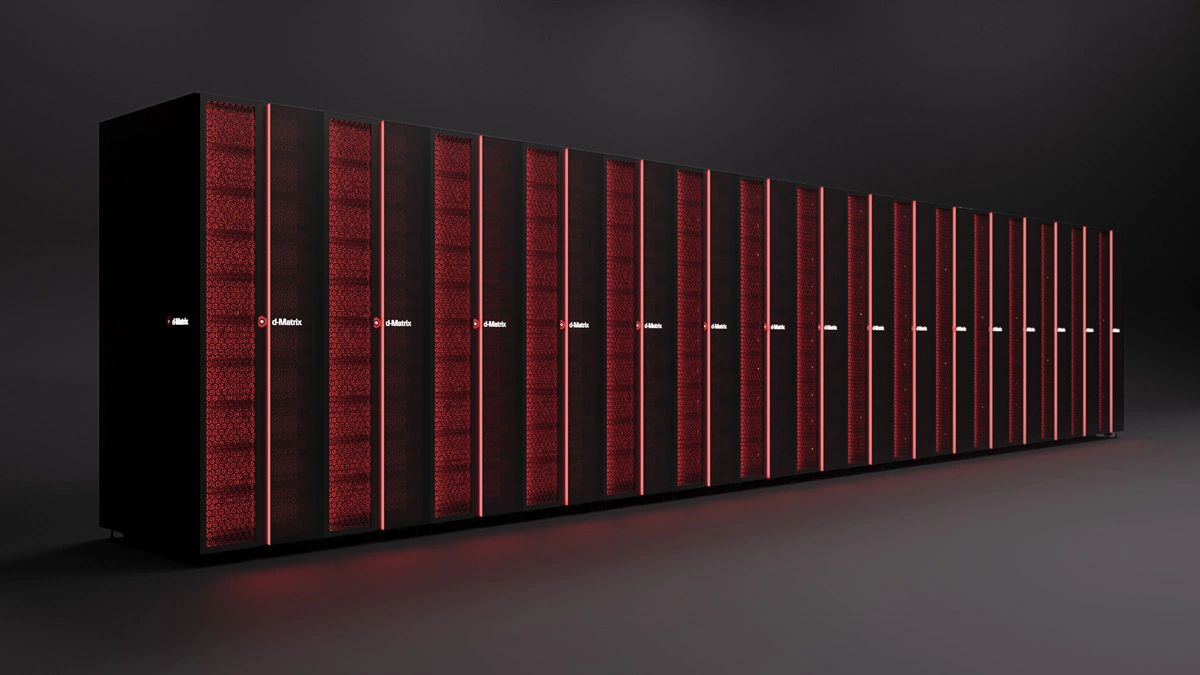
Squadron, d-Matrix's multi-rack cluster built from Corsair inference accelerators, is now shipping to priority customers. The company also made the pieces underneath it, Corsair servers and single-rack SquadRacks, generally available.
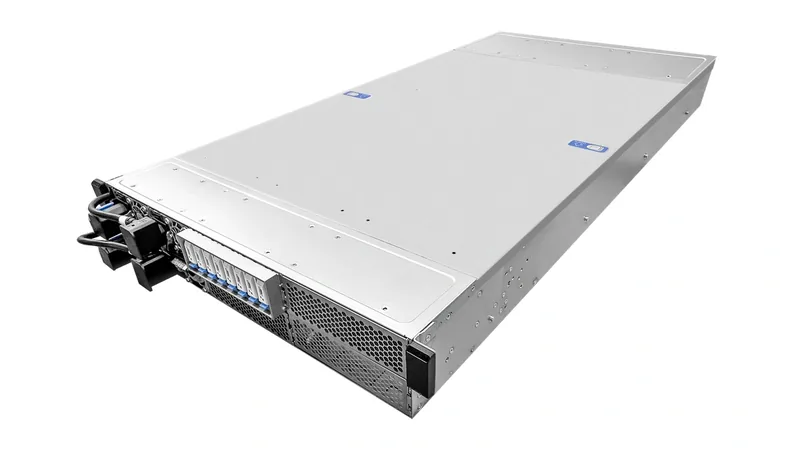
Per d-Matrix, a SquadRack holds eight servers, and a Squadron grows to 16 racks wired into a single cluster with as many as 1,024 Corsair XPUs. JetStream network cards link the racks, and Aviator software handles deployment. Smaller buyers can begin with one Corsair server on the same architecture. The target is latency-sensitive work such as coding, personal agents, cybersecurity and high-frequency trading, sold to AI labs, enterprises and sovereign organizations.
Squadron clusters are air-cooled and built on industry standards. That matters more than the rack count. Operators can place them in data centers they already run, with no liquid cooling and no new buildout, a common obstacle for dense accelerator racks. Arista, Broadcom and Supermicro helped develop the design, and d-Matrix says one Squadron already runs in its Arizona data center for internal research.
The most concrete evidence came from chief executive Sid Sheth's keynote at the OCP Global Summit in San Jose. d-Matrix ran attention-FFN disaggregation, known as AFD, on a Squadron paired with GPU servers, with the Corsair racks taking the expert and feed-forward layers. According to d-Matrix, the run produced 845 tokens per second for each user, and 20,415 tokens per second in total with 64 concurrent users. It also says it is the first to show AFD on silicon customers can buy today.
The two throughput figures do not line up. Spread evenly, the combined figure works out, by our arithmetic, to roughly 320 per user, well below the 845 figure, which suggests the two come from different setups. d-Matrix does not say which model or settings produced either one, which makes comparison with GPU benchmarks premature. For now the only evidence is d-Matrix's own demo, running at its OCP booth through Thursday.