A noise-canceling headphone is a headset or earbud that pairs a physical seal with microphones and anti-noise processing to reduce the ambient sound reaching your ear. That one definition hides three separate choices: how much outside sound to block, how much to let back in, and whether music should seem to play inside your head or in the room around you. Active noise cancellation (ANC), Transparency modes, open-ear designs and spatial audio each answer one of those questions. The right pair for a train commute is rarely the right pair for a run.
How Noise-Canceling Headphones Work
Noise-canceling headphones use microphones to sample the noise around you and a chip to play an inverted copy of it through the speakers, so the two sound waves cancel each other, an effect called destructive interference. Sony's guide to its WF-1000XM6 earbuds says the effect works primarily on low-frequency noise such as vehicles and air conditioning, and that it reduces the noise rather than removing it.
ETSI, the European telecom standards body, publishes the test methods for these devices in ETSI TS 103 640, and it describes active noise cancellation as producing a sound pressure with opposite phase to the unwanted noise. Two waves that are mirror images largely cancel where they meet, which is the ear canal.
Apple's support documentation spells out the loop in plain terms. On AirPods with ANC, Apple says outward-facing microphones detect external sound, the earbuds counter it with anti-noise, and an inward-facing microphone listens inside the ear for whatever still gets through. The sequence looks like this:
- Sample the outside. Outward-facing microphones pick up outside sound before it reaches the ear.
- Check the inside. An inward-facing microphone measures the sound that actually arrives in the ear canal.
- Compute the anti-noise. A dedicated audio chip generates the inverted signal. Google says the Tensor A1 in Pixel Buds Pro 2 adapts to the environment up to 3 million times per second.
- Play it through the speaker. The earbud speaker plays the anti-noise into the ear, and Google says that Tensor A1 processing gives Pixel Buds Pro 2 Active Noise Cancellation twice as strong as its previous generation.
Premium earbuds from Apple and Google list similar parts. The AirPods Pro 3 technical specifications list dual beamforming microphones, an inward-facing microphone and the Apple H2 headphone chip, while the Pixel Buds Pro 2 spec sheet lists three microphones per earbud and Google's Silent Seal 2.0 noise cancellation. When parts lists look this alike, fit, comfort and software modes are the things worth comparing closely.
What Noise Cancellation Cannot Block
Active noise cancellation has a narrower target than its name suggests. Sony's WF-1000XM6 help guide says the function works primarily on noise in the low-frequency band, such as vehicles and air conditioning, and that the noise is reduced but not completely canceled. The next section covers the physical seal, which ETSI measures as passive insertion loss.
Sudden loud noises get separate features. Bose says ActiveSense in Aware Mode smooths changes in cancellation when it filters spikes such as a passing siren, and Google says Loud Noise Protection on Pixel Buds Pro 2 offers added protection for your hearing. The model matters to cancellation strength too: Apple says AirPods Pro 3 deliver up to 3x more noise cancellation than AirPods 5, which Apple sells with noise cancellation in an open-ear design, when tested to IEC 60268-24.
Passive Isolation Comes First
Old-fashioned blocking still matters. ETSI splits the quiet a listener experiences into separate measurements, and the split explains why two headphones with similar chips can sound very different:
- Passive insertion loss: the reduction that comes from physically plugging or covering the ear, with noise cancellation disabled.
- Active insertion loss: the extra reduction the active noise cancellation circuit adds on top.
- Total insertion loss: the combined drop in sound at the eardrum compared with wearing nothing.
The same ETSI specification warns that large performance differences are expected between devices even when they share a common ANC technique, because the acoustic components and how they are integrated matter as much as the algorithm. It also defines a separate wind noise test, measured as an insertion gain, since wind interacting with the device or its noise cancellation can add noise rather than remove it.
For buyers the practical lesson is to treat passive isolation as the base layer, which depends on the ear tip or ear cushion. Apple says ANC and Transparency mode work best when AirPods Pro fit well, and it ships AirPods Pro 3 with silicone ear tips in five sizes, from XXS to L, according to the AirPods Pro 3 specs. Apple's Hearing Protection guidance adds that improper fit reduces how much noise AirPods attenuate, which is why Apple and Samsung both build an ear tip fit test into their apps.
Transparency and Adaptive Modes
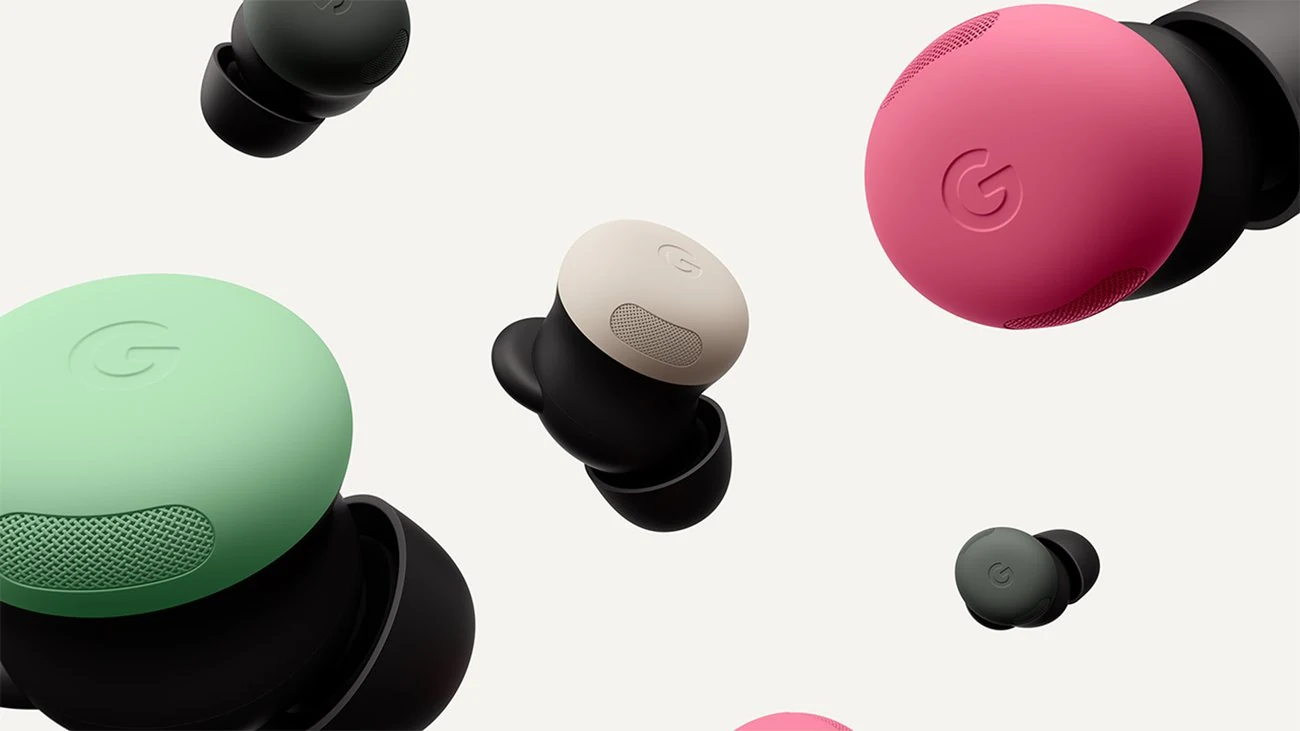
Each of the four brands below pairs noise cancellation with a hear-through mode. ETSI calls the reverse function pass-through mode, in which external sound and your own voice are reproduced through the drivers, and each brand below ships one under its own name. All four also add an automatic setting that adjusts to the surroundings.
| Brand and product | Full cancellation | Hear-through | Automatic adjustment |
|---|---|---|---|
| Apple AirPods Pro 3, AirPods Max 2 | Noise Cancellation | Transparency | Adaptive |
| Google Pixel Buds Pro 2 | Active Noise Cancellation | Transparency mode | Adaptive Audio |
| Samsung Galaxy Buds4 Pro | Adaptive ANC 2.0 | Ambient Sound | Adaptive Noise Control |
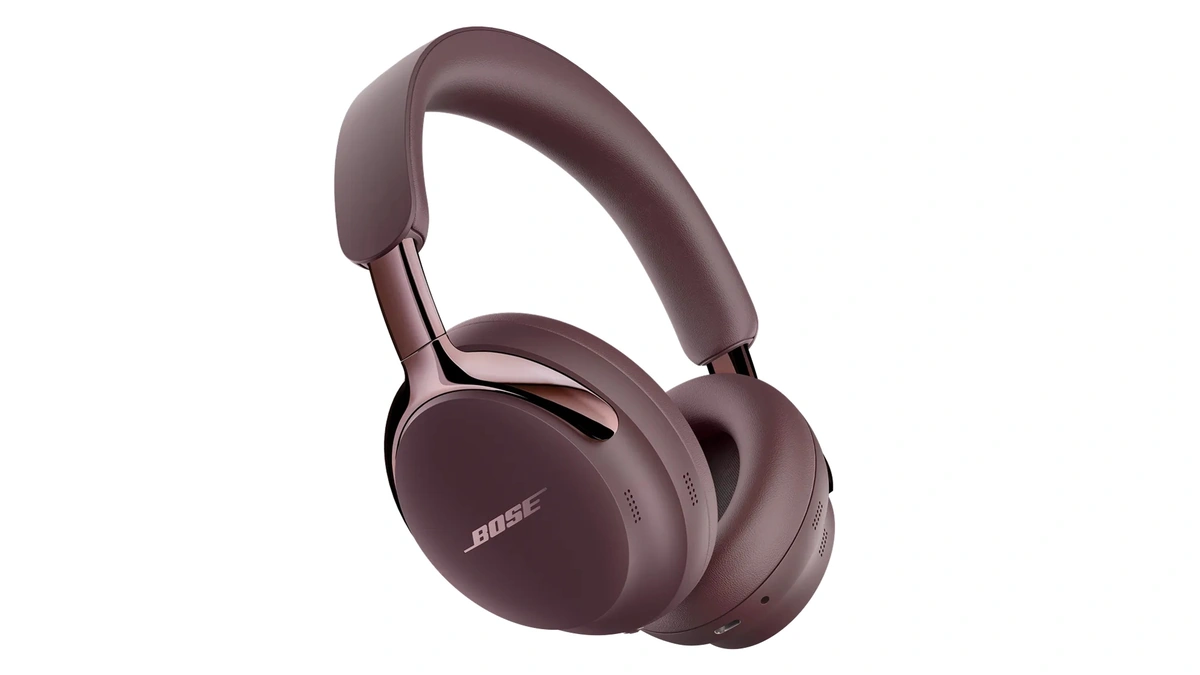
| Bose QuietComfort Ultra Headphones (2nd Gen) | Adjustable noise cancellation | Aware Mode | ActiveSense in Aware Mode |
Apple describes Adaptive Audio as combining Active Noise Cancellation and Transparency into one mode that adjusts noise control as conditions change, and its listening modes guide lists it on AirPods 4 with ANC, AirPods 5, AirPods Pro 2, AirPods Pro 3 and AirPods Max 2. Bose says its updated ActiveSense algorithm smooths changes in cancellation when it filters sudden spikes such as a passing siren. The names differ, but the idea is the same: adjust to the surroundings without a manual switch.
When comparing pairs, weigh how natural the hear-through mode sounds alongside the cancellation claims. A Transparency mode you trust at a street crossing is one you will leave on instead of pulling the earbuds out.
Open-Ear and Bone-Conduction Designs
Open-ear designs sit at the opposite end, leaving the ear canal uncovered on purpose. Bose says its Ultra Open Earbuds (2nd Gen) do not include active noise cancellation because of their open-ear, non-occluding design, and are built to keep the wearer aware of their surroundings instead. That trade suits runners, cyclists and anyone who has to hear a colleague without pulling out an earbud.
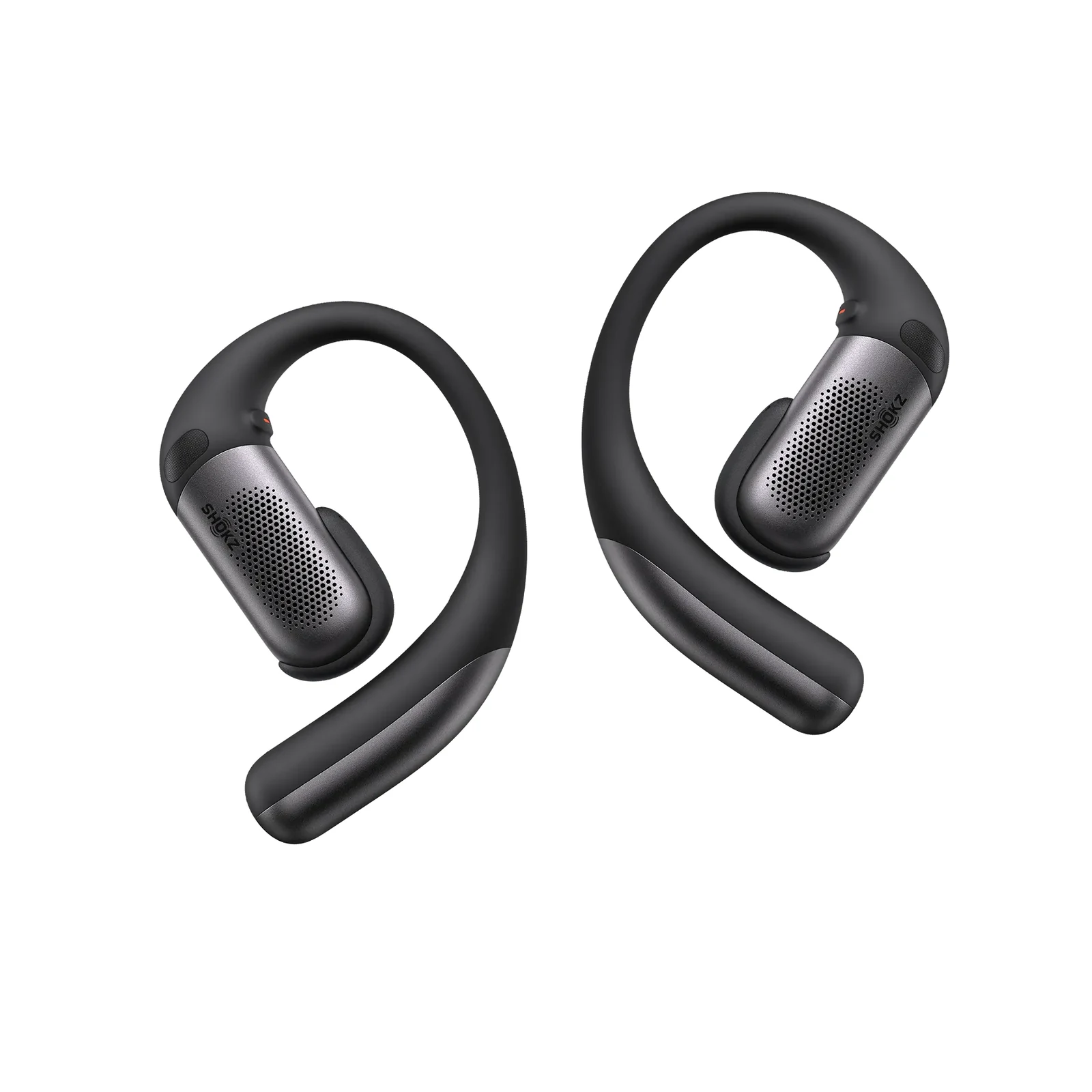
Open-ear audio comes in three main forms:
- Cuff earbuds: Bose says the Ultra Open Earbuds wrap around the ear instead of fitting inside it, playing sound from just outside the canal.
- Ear-hook open earbuds: Shokz says its OpenFit earbuds use DirectPitch technology to direct sound toward the ear with minimal sound leakage.
- Bone conduction: Shokz describes bone conduction technology as converting sound into vibrations carried through the skin and temporal bone to the cochlea, bypassing the ear canal.
The line between the camps is starting to blur. Shokz sells OpenFit Pro as an open-ear model whose triple-microphone system generates inverse sound waves to reduce noise. An open-ear design does not plug or cover the ear canal, which is where ETSI's passive insertion loss comes from, so treat open-ear noise reduction as taking the edge off traffic, not as a substitute for a sealed earbud on a flight.
Spatial Audio and Head Tracking
Spatial audio ships on many premium noise-canceling headphones, but it solves a different problem. ANC removes sound from the world; spatial audio rearranges the sound you chose to play, so it seems to come from around you rather than from between your ears. Head tracking goes one step further and pins that virtual sound stage in place as you turn your head.
| Brand | Feature name | Controls | Limits |
|---|---|---|---|
| Apple | Personalized Spatial Audio | Off, Fixed or Head Tracked | Supported apps and content only; profile needs an iPhone with TrueDepth camera (AirPods Pro 3 specs) |
| Samsung | 360 Audio | Head tracking on Galaxy Buds4 Pro | Galaxy phones and tablets on One UI 3.1 or later, selected Samsung TVs |
| Bose | Immersive Audio | TrueSpatial processing on Ultra Open Earbuds (2nd Gen) | Cuts QuietComfort Ultra battery from 30 to 23 hours |
The fine print matters more than the feature name. Apple notes that spatial audio is not available for all apps or content and that not all content is available in Dolby Atmos, and it needs an iPhone with a TrueDepth camera to create a personal profile, per the AirPods Pro 3 specs. Samsung restricts 360 Audio to its own phones, tablets and TVs. Spatial audio depends heavily on the phone ecosystem, so it should follow your phone choice, a split the iOS and Android platform comparison covers from the phone side.
Battery Life, Bluetooth and LE Audio
Every extra job costs battery, and vendors usually quote two figures, with cancellation on and off. The figures below come from each vendor's own spec page and were measured under that vendor's own test conditions, not by an independent lab.
| Model | Type | Listening time per charge | Bluetooth |
|---|---|---|---|
| Apple AirPods Pro 3 | Sealed earbud | Up to 8 hours with ANC | 5.3 |
| Google Pixel Buds Pro 2 | Sealed earbud | Up to 8 hours with ANC, 12 hours without | 5.4 |
| Samsung Galaxy Buds4 Pro | Sealed earbud | 6 hours with ANC, 7 hours without | 6.1, LE Audio ready |
| Bose QuietComfort Ultra Headphones (2nd Gen) | Over-ear | Up to 30 hours, 23 with Immersive Audio | 5.4 |
| Bose Ultra Open Earbuds (2nd Gen) | Open-ear, no ANC | Up to 9 hours | 5.4 |
Spatial processing has a cost too. Apple quotes up to 7.5 hours for AirPods Pro 3 with spatial audio and head tracking enabled, half an hour less than with ANC alone, according to the AirPods Pro 3 specs. The over-ear Bose runs several times longer than any earbud listed, the usual trade for a bigger and heavier headphone.
The Bluetooth version on the box matters less than the audio stack it supports. The Bluetooth SIG says LE Audio runs on the Bluetooth Low Energy radio, adds the LC3 codec, adds hearing aid support, and introduces Auracast broadcast audio, which lets one source stream to an unlimited number of headphones. Fraunhofer IIS, quoted by the SIG, says listening tests showed LC3 beating the older SBC codec even at half the bit rate. Samsung lists Auracast on the Galaxy Buds4 Pro, so a headphone bought for ANC can also receive Auracast broadcast audio. Codec choice still splits by brand: Bose supports Qualcomm aptX Adaptive with Snapdragon Sound devices on the QuietComfort Ultra Headphones (2nd Gen), per its launch announcement.
Hearing Health and Safe Volume
Health authorities are unusually direct about noise-canceling headphones. The World Health Organization advises using well-fitted noise-canceling headphones so listeners do not raise the volume to drown out a noisy bus or train. The WHO numbers are blunt:
- 80 dB: safe for up to 40 hours a week.
- 90 dB: safe time drops to four hours a week.
- Volume rule of thumb: keep a device at no more than 60% of its maximum.
- Scale of the problem: the WHO estimates that over 1 billion young adults are at risk of permanent, avoidable hearing loss from unsafe listening, per its deafness and hearing loss fact sheet.
Some earbuds now turn hearing protection into a formal feature. Apple says Hearing Protection on AirPods Pro 2 and AirPods Pro 3 is active across all listening modes by default, and that the actual reduction depends on fit, the volume of the surroundings and the mode in use. Apple gives a worked example: in a 100 dBA environment with 20 dB of attenuation, the wearer's exposure is 80 dBA. It also states the limits, saying the feature is not suitable for impulse sounds such as gunfire, fireworks or jackhammers, or for sustained sound above 110 dBA. Google takes a similar route with Loud Noise Protection on Pixel Buds Pro 2, which Google says offers added protection for your hearing.
How to Choose Noise-Canceling Headphones
Choosing noise-canceling headphones starts with where you will wear them, not with the spec sheet. Work through these questions in order:
- Where is the noise? Flights and long commutes favor over-ear active noise cancellation and its battery headroom; office and city use favor sealed earbuds with a good Transparency mode.
- Do you need to hear traffic? Running, cycling and shared offices point to an open-ear design, accepting little or no cancellation.
- Which phone do you own? Spatial audio, fit tests and hearing features work fully only inside one ecosystem, so buy the brand that matches your phone.
- Will the fit hold? Check how many ear tip sizes come in the box and whether the app runs a fit test, because passive isolation sets the ceiling for everything else.
- What else should the buds do? AirPods Pro 3 add a heart rate sensor for workouts, according to the AirPods Pro 3 specs, which overlaps with what a smartwatch or ring already tracks; the smartwatch, ring and fitness tracker comparison shows where that overlap ends.
Creators have a different checklist. Recording or monitoring a show raises latency and wired-connection questions that consumer earbuds are not tuned for, and the podcast streaming technology setup breakdown covers that side. For everyone else, a sensible order of priorities is fit first, ecosystem second and cancellation strength third, since Apple says Active Noise Cancellation and Transparency mode work best when AirPods Pro fit well.
Further reading
Frequently Asked Questions
Why can I still hear people talking with noise-canceling headphones?
Because active noise cancellation works mainly on low-pitched sound. Sony says its noise canceling works primarily on low-frequency noise such as vehicles and air conditioning, and reduces it rather than removing it, so other sounds, including conversation, can still come through. A better-fitting ear tip helps, since Apple says Active Noise Cancellation works best when AirPods Pro fit well.
Is noise canceling bad for your ears?
No. It mostly helps by letting you keep the volume down in loud places, which is why the World Health Organization recommends well-fitted noise-canceling headphones. The WHO puts a safe weekly dose at 80 dB for up to 40 hours, shrinking to four hours at 90 dB. Apple says the Hearing Protection feature on AirPods Pro is not suitable for impulse sounds such as gunfire, fireworks or jackhammers, or for sustained noise above 110 dBA.
Is noise cancellation worth it on AirPods?
Apple has made the choice simpler: it sells AirPods 5 with noise cancellation in an open-ear design, so the real question is how much cancellation you need. Apple says AirPods Pro 3 deliver up to 3x more Active Noise Cancellation than AirPods 5 when tested to IEC 60268-24. For flights and loud commutes, the model with more cancellation suits the job better.
Why can I still hear noise with AirPods noise cancellation on?
Check the mode first: Apple's listening modes guide separates Noise Cancellation from Transparency and Adaptive, and the last two let outside sound in on purpose. After that, fit and dirt are the usual causes. Apple says debris or earwax buildup can affect Active Noise Cancellation, Adaptive Audio and Transparency, and its Hearing Protection guidance adds that debris can affect the seal, so clean the earbuds, try another tip size and rerun the fit test.
Can open-ear earbuds cancel noise?
Most cannot, because an open-ear design leaves the ear canal uncovered on purpose. Bose says its Ultra Open Earbuds leave out active noise cancellation for that reason. Shokz sells OpenFit Pro as an open-ear model that generates inverse sound waves to reduce noise, which shows the category is changing. Treat open-ear noise reduction as taking the edge off, and buy open-ear for awareness first.
Does spatial audio work with any phone?
Only partly, because each brand ties its full spatial audio features to its own devices. Samsung limits 360 Audio to Galaxy phones, Galaxy Tab models and selected Samsung TVs, and Apple needs an iPhone with a TrueDepth camera to create a Personalized Spatial Audio profile. Apple also says AirPods work with non-Apple devices with limited functionality, so match the headphones to the phone you already own.