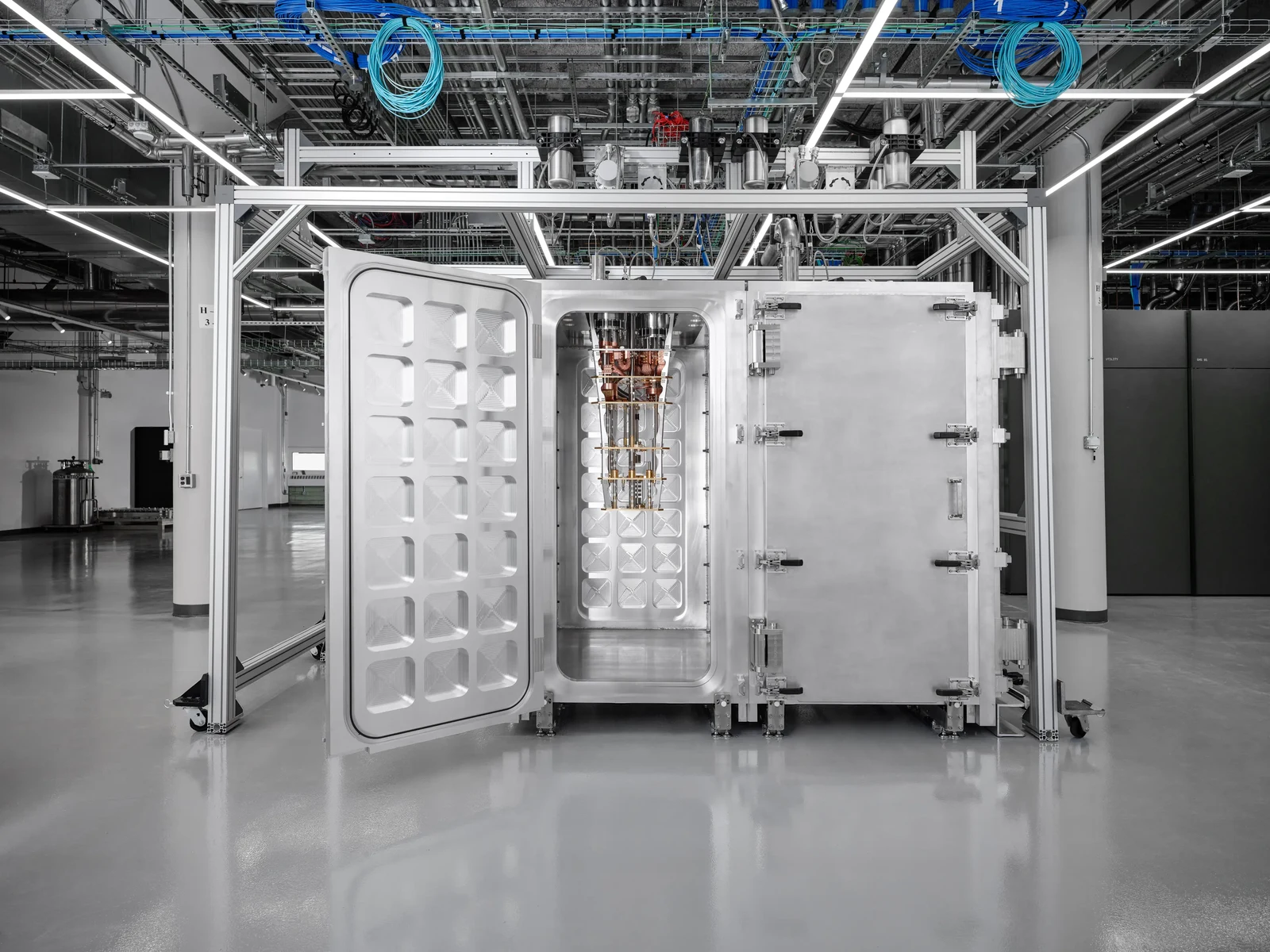
IBM has announced a modular architecture for the cryogenic systems used to cool quantum processors, replacing single cylindrical cryostats with connectable box-shaped cells that can house multiple processors at operating temperatures.
Each cell carries its own vacuum chamber, cooling hardware, and thermal shielding, IBM notes, and processors connect through both quantum and classical links, with quantum cables routed from one cell's opening into an adjacent cell inside a cryogenic tunnel of connected shielding. Where cylindrical cryostats need long interconnects between processors, the modular boxes sit tightly side by side, shortening interconnect paths and cutting the qubit crosstalk risk that comes with long runs.
Cells measure roughly three times the size of a typical kitchen fridge, with about 0.53 square meters of wiring area and 2.75 cubic meters of vacuum chamber volume per cell, and thermal interaction between adjacent cells stays minimal. That supports cell-by-cell upgrades: future hardware generations can expand without redesigning the whole system. IBM says future single cells are expected to support at least 2,000 qubits, more than its largest fabricated chip today, and the company describes the architecture as a step toward IBM Quantum Starling, its first fault-tolerant quantum computer, expected in 2029.
IBM says the architecture aligns with its long-term goals for connected multi-chip systems, with every aspect tailored to advancing readout wiring, processor designs, and cryoelectronics. IBM's technical overview, published with the demonstration, notes two coupled modular cryogenic cell prototypes were operated together at the Poughkeepsie, New York quantum facility, providing early validation of the modular approach. Researchers can also use the cells to validate components such as the l-coupler long-range quantum interconnects first demonstrated in 2024.