
Quantum computing is a paradigm of information processing that encodes data as qubits rather than binary bits, using superposition and entanglement to solve optimization, simulation, and cryptographic problems that remain intractable for classical hardware. The two paradigms serve fundamentally different problem classes, and choosing between them requires understanding where each architecture produces results the other cannot match.
How Classical Computing Works
Classical computing encodes every unit of information as a binary bit that holds exactly one of two values at any moment: 0 or 1. This deterministic model, formalized by the von Neumann architecture, has powered every commercial processor, server, and smartphone for seven decades. Four constructs define how classical systems operate:
- Binary bit
- The smallest unit of information in classical computing. A binary bit is a physical state, a transistor either conducting or blocking current, that the processor interprets as 0 or 1. Every classical program reduces to sequences of bit manipulations.
- Transistor
- The physical switch that implements a binary bit. Modern processors pack billions of transistors onto a silicon die; each one gates electrical current to represent logical states. Transistor density continues to grow, though approaching atomic-scale limits.
- CPU clock cycle
- The fundamental rhythm of classical execution. Each cycle fetches, decodes, executes, and writes one or more instructions. Clock speeds and instruction-level parallelism define throughput, but execution remains sequential at the register level.
- Von Neumann architecture
- The structural model shared by virtually all classical computers: a central processing unit, separate memory, and an instruction-data bus connecting them. Programs and data occupy the same address space, and the CPU fetches instructions one at a time. This separation between compute and memory creates the principal throughput bottleneck in classical systems.
Classical computing handles transaction processing, operating systems, web services, and virtually every deployed software workload with near-zero error rates. Understanding that baseline is the prerequisite for evaluating where quantum hardware adds anything at all. Background on qubits and entanglement as foundational quantum concepts: Quantum Computing: Qubits, Entanglement and Beyond.
How Quantum Computing Works
Quantum computing replaces binary bits with qubits, which exploit superposition to represent 0, 1, or any linear combination of both simultaneously until a measurement collapses the state. This behavior is not a trick of probability: it is a consequence of quantum mechanics that allows a quantum processor to represent an exponentially large state space with a polynomial number of physical components. Four concepts underpin the paradigm, as documented by the NIST Quantum Information Science program:
- Qubit and superposition
- A qubit is the quantum analog of a binary bit. Unlike a classical bit constrained to 0 or 1, a qubit exists in superposition until measured, encoding a weighted combination of both states. A register of n qubits can represent 2n states simultaneously, enabling algorithms to process many candidate solutions in a single circuit pass.
- Quantum entanglement
- When two or more qubits become entangled, their states are correlated regardless of physical separation. Measuring one qubit instantly constrains the outcomes of its entangled partners. Quantum entanglement allows a quantum computer to coordinate qubit states across the entire register, which is the mechanism behind multi-qubit gate operations and error-correction protocols.
- Quantum interference
- Quantum algorithms are designed so that computational paths leading to wrong answers cancel out (destructive interference) while paths leading to correct answers reinforce (constructive interference). Interference is what transforms superposition from a random sampling mechanism into a directed computation.
- Quantum gate
- The quantum equivalent of a classical logic gate. A quantum gate applies a unitary transformation to one or more qubits, rotating their state in a defined way without measurement. Sequences of quantum gates form a quantum circuit, the executable program format for quantum processors.
These four properties together enable quantum computing (QC) to attack certain problem classes with computational complexity that scales more favorably than any known classical algorithm. The catch is that superposition and entanglement are fragile: environmental noise collapses quantum states before circuits can complete, which is the central engineering challenge separating today's prototypes from production hardware.
Classical vs Quantum: Architectural Differences
The two paradigms differ at every layer of the stack, from how information is physically encoded to how algorithms express computation. The table below maps seven architectural axes side by side:
| Dimension | Classical Computing | Quantum Computing |
|---|---|---|
| Information unit | Binary bit (0 or 1, deterministic) | Qubit (superposition of 0 and 1 until measured) |
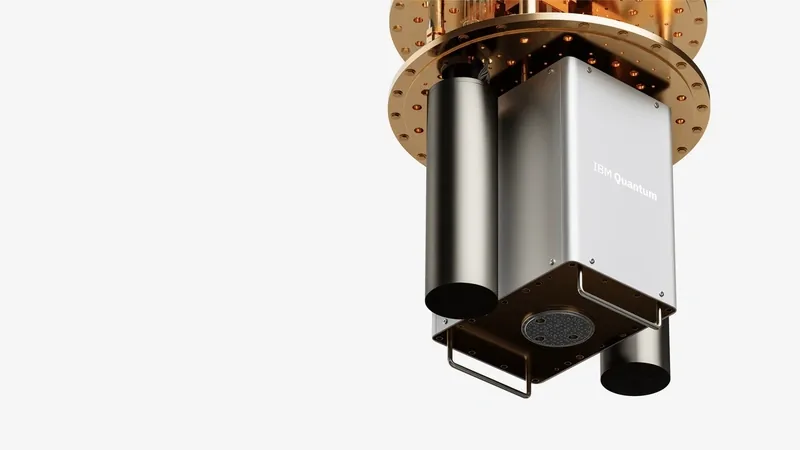
| Physical substrate | Silicon transistors on CMOS die | Superconducting circuits, trapped ions, or photonic waveguides |
| Processing model | Deterministic, sequential instruction execution | Probabilistic parallel exploration of state space via quantum gates |
| Error model | Near-zero bit-flip rates; ECC handles memory errors | High decoherence rates; requires quantum error correction (QEC) overhead |
| Programming model | Classical logic gates, compiled to machine code | Quantum circuits composed of quantum gates, measured at output |
| Scaling law | Transistor density (Moore-adjacent); clock speed and core count | Qubit coherence time and gate fidelity; more qubits do not help if fidelity is low |
| Current maturity | Commodity hardware; billions of deployed units | NISQ-era prototypes; no fault-tolerant production system exists |
One architectural reality often goes unstated: quantum computers cannot operate independently. Every quantum processor requires a classical computing host to compile and load the quantum circuit, to post-process measurement results, and to execute the feedback loops that quantum error correction demands. The IBM Quantum Platform, Google Quantum AI, and similar services expose this hybrid model directly: users write programs in Python, submit jobs to cloud-hosted quantum hardware, and retrieve classical probability distributions as output. The two architectures are complementary by design, not competitive. Platform-level differences between vendors are covered at IBM Quantum vs Google Quantum AI platform comparison.
Where Each Paradigm Excels: Problem-Class Fit
The right choice of computing paradigm depends on problem class, not general performance: quantum hardware accelerates a narrow set of problem types while classical hardware handles the vast majority of real-world workloads. Five problem classes illustrate where the boundary sits:
- Combinatorial optimization. Quantum annealing and variational quantum algorithms such as QAOA (Quantum Approximate Optimization Algorithm) can explore large combinatorial search spaces. Classical heuristics (simulated annealing, genetic algorithms) remain competitive on most real-world instances today, but quantum annealing hardware from vendors like D-Wave has demonstrated feasibility on constrained logistics and scheduling problems at moderate scale.
- Molecular and materials simulation. Quantum hardware can model electron orbital interactions natively, because the physical substrate obeys the same quantum mechanics as the molecules being simulated. Classical simulation of molecular systems becomes intractable beyond roughly 50 atoms due to the exponential computational complexity of tracking all electron correlations; quantum simulation could extend that boundary significantly, with implications for drug discovery and materials science. The drug discovery application is examined in depth at Quantum Computing in Drug Discovery.
- Cryptographic factoring. Shor's quantum algorithm solves integer factorization exponentially faster than any known classical algorithm, which threatens RSA and ECC (Elliptic Curve Cryptography) public-key schemes at scale. NIST IR 8309 documents the standardization response: post-quantum cryptographic algorithms designed to resist attacks from a fault-tolerant quantum computer. Fault-tolerant hardware capable of running Shor's algorithm at cryptographically relevant key sizes does not yet exist, but the threat horizon drives current cryptographic migration planning, as CISA's Post-Quantum Cryptography Initiative confirms (cisa.gov/quantum).
- Machine learning and AI. Classical GPUs and TPUs dominate ML training and inference. Claimed quantum speedups for ML tasks remain largely unproven on real hardware; the overhead of loading classical data into quantum states often erases any theoretical advantage. This is an active research area, not a production capability.
- Business transaction processing. Classical computing wins unambiguously. Database commits, web request handling, financial settlement, and messaging all require low latency, near-zero error rates, and deterministic outputs: properties that quantum hardware, with its probabilistic measurement model and high decoherence rates, cannot provide in its current form.
NISQ Era: Where Quantum Hardware Stands Today
Today's quantum processors operate in the noisy intermediate-scale quantum (NISQ) era, where qubit counts have grown but error rates remain too high for fault-tolerant execution of commercially useful algorithms. Four features define the NISQ landscape:
- Physical qubit counts versus usable circuit depth. NISQ devices operate with tens to over a thousand physical qubits depending on the platform, but high gate-error rates constrain how many sequential operations a circuit can execute before errors dominate the output. Qubit count is a misleading headline metric; coherence time and gate fidelity are the relevant figures of merit.
- Quantum error correction overhead. Quantum error correction (QEC) is the technique that converts unreliable physical qubits into reliable logical qubits by encoding each logical qubit across hundreds or thousands of physical qubits and running error-detection cycles continuously. Full fault-tolerant quantum computing (FTQC) requires QEC at scale, making it a mid-to-late decade milestone rather than an imminent capability, as the NIST Quantum Information Science roadmap reflects (nist.gov/quantum-information-science).
- Hybrid NISQ algorithms. Variational quantum algorithms such as VQE (Variational Quantum Eigensolver) and QAOA are designed to run on NISQ hardware by keeping circuit depth shallow and offloading optimization loops to classical co-processors. These hybrid approaches show limited practical quantum advantage on real problem instances, though research continues.
- Cloud quantum access. IBM, Google, IonQ, Quantinuum, and other vendors offer cloud-based access to quantum hardware, enabling practitioners to prototype and benchmark without on-premises infrastructure. Google Cloud's quantum computing platform provides direct access to quantum processors alongside classical simulation environments (cloud.google.com/learn/what-is-quantum-computing). AWS Braket similarly offers managed access to multiple quantum hardware providers, including superconducting and trapped-ion systems (docs.aws.amazon.com/braket).
The noisy intermediate-scale quantum phase sets realistic expectations for solutions architects evaluating QC: quantum hardware is a research and prototyping tool today, not a production replacement for classical infrastructure. Vendor roadmaps toward fault-tolerant milestones should be evaluated against independent assessments from analysts, not just marketing timelines. Forrester's analysis of enterprise quantum readiness frames the NISQ limitations in business terms and recommends hybrid classical-quantum architectures as the near-term adoption model (Forrester: Quantum Computing for Business Leaders). For platform comparisons between IBM Quantum and Google Quantum AI, see IBM Quantum vs Google Quantum AI platform comparison.
Choosing Between Classical and Quantum for Your Use Case
For most production workloads today, classical computing is the correct choice; quantum hardware makes sense only when your problem class aligns with known quantum speedup regimes and you can tolerate NISQ-era error constraints. A five-point decision sequence clarifies the evaluation:
- Does your problem appear on the known quantum-advantage list? Confirmed speedup problem classes include integer factoring (Shor's algorithm), unstructured database search (Grover's algorithm), certain molecular simulations, and select combinatorial optimization instances. If your workload is outside this set, use classical computing. Most enterprise software problems, including web services, analytics pipelines, and ML inference, fall outside it.
- Do you need fault-tolerant, error-free results? FTQC hardware is not production-ready. If your use case requires the deterministic accuracy of classical systems, quantum hardware cannot deliver that today. Plan for FTQC availability as a mid-to-late decade milestone and design architectures accordingly.
- Can you prototype with hybrid NISQ algorithms and measure a classical baseline? If your problem is on the quantum-advantage shortlist and you can tolerate probabilistic outputs, prototype on cloud quantum platforms. AWS Braket, Google Cloud Quantum AI, and IBM Quantum Platform all offer pay-per-use access. The benchmark question is whether NISQ results outperform the best classical heuristic on your specific problem instance, not on a theoretical model.
- Is post-quantum cryptography the primary concern rather than computation? Organizations planning cryptographic migrations should engage with NIST's post-quantum standardization outputs, documented in NIST IR 8309, and follow CISA's guidance on transition timelines. Quantum error correction and fault-tolerant quantum computing are relevant here as threat horizon markers, not as tools the organization deploys.
- Does your budget allow research or R&D experimentation? Cloud quantum access charges by circuit execution, making small-scale experiments cost-effective. A team with a genuine optimization or simulation research problem can run meaningful benchmarks on NISQ hardware within a modest R&D budget. Without a concrete research question mapped to a known quantum algorithm, spending on quantum access produces no advantage over classical alternatives.
Practitioners scoping projects should treat quantum computing as a targeted complement to classical infrastructure, not a general-purpose upgrade. The architectural contrast between the two paradigms is clear: classical computing is deterministic, mature, and universally applicable; quantum computing is probabilistic, early-stage, and narrowly specialized. Aligning hardware selection to problem class rather than to technology novelty is the discipline that produces real outcomes. Quantum advantage accrues only when the algorithm class, hardware maturity, and problem scale are all aligned.
Further reading
Frequently Asked Questions
What is the main architectural difference between classical and quantum computing?
Classical computing encodes every value as a binary bit that is deterministically 0 or 1, processed by transistors in a sequential logic model. Quantum computing uses qubits that exploit superposition to exist in a combination of states simultaneously, and quantum entanglement to correlate qubit states across the system. These properties allow quantum algorithms to explore large solution spaces in parallel, but they also introduce high error rates that require quantum error correction (QEC) to manage. Classical hardware is deterministic and mature; quantum hardware is probabilistic and still in the NISQ prototype phase.
Can quantum computing replace classical computing?
Quantum computing is not expected to replace classical computing. The two paradigms are complementary: quantum processors accelerate a narrow set of problem classes (combinatorial optimization, molecular simulation, cryptographic factoring) while classical hardware handles virtually all transaction processing, application logic, and general-purpose computation. Even a fault-tolerant quantum computer requires a classical computer to load its program, measure its output, and run error-correction cycles. The practical path is hybrid classical-quantum architectures, not wholesale replacement.
What are the main challenges stopping practical quantum computing today?
The central challenge is qubit decoherence: qubits lose their quantum state rapidly due to environmental noise, limiting the number of gate operations a circuit can execute before errors accumulate. Quantum error correction (QEC) can address this but requires hundreds or thousands of physical qubits per single logical qubit, making fault-tolerant quantum computing (FTQC) a mid-to-late decade goal. Additional barriers include the engineering complexity of operating qubits at millikelvin temperatures (for superconducting designs), the lack of mature quantum software toolchains, and the scarcity of practitioners trained in quantum algorithm design.