Quantum computing in drug discovery is a class of quantum-algorithmic methods that models molecular interaction at quantum-mechanical fidelity to identify drug candidates, simulate protein folding, and optimize lead compounds at a speed and accuracy that classical supercomputers cannot match.
What Quantum Computing Changes in Drug Discovery
Quantum computing in drug discovery does not replace classical computational chemistry. Molecular dynamics with force fields, DFT, and CCSD(T) remain the practical workhorse for most pharmaceutical R&D today. The quantum advantage case is narrow and specific: strongly correlated electron systems where DFT gives systematically wrong binding energies. Iron-sulfur clusters in enzyme active sites and transition-metal catalysts used in prodrug activation are the clearest examples where quantum molecular simulation offers a credible accuracy advantage over any classical approximation method. Outside chemistry, the same split shows up in how classical and quantum computing compare on other workloads.
Protein folding simulation is a frequently mischaracterized battleground. AlphaFold2 solved static structure prediction at scale using classical deep learning; that problem is no longer the bottleneck for most target identification work. Quantum methods target the dynamic conformational sampling problem: how proteins change shape when binding a ligand, a problem AlphaFold2 does not address. Protein folding simulation of dynamic ligand-binding conformations remains computationally intractable for both classical and current quantum hardware at realistic molecular sizes.
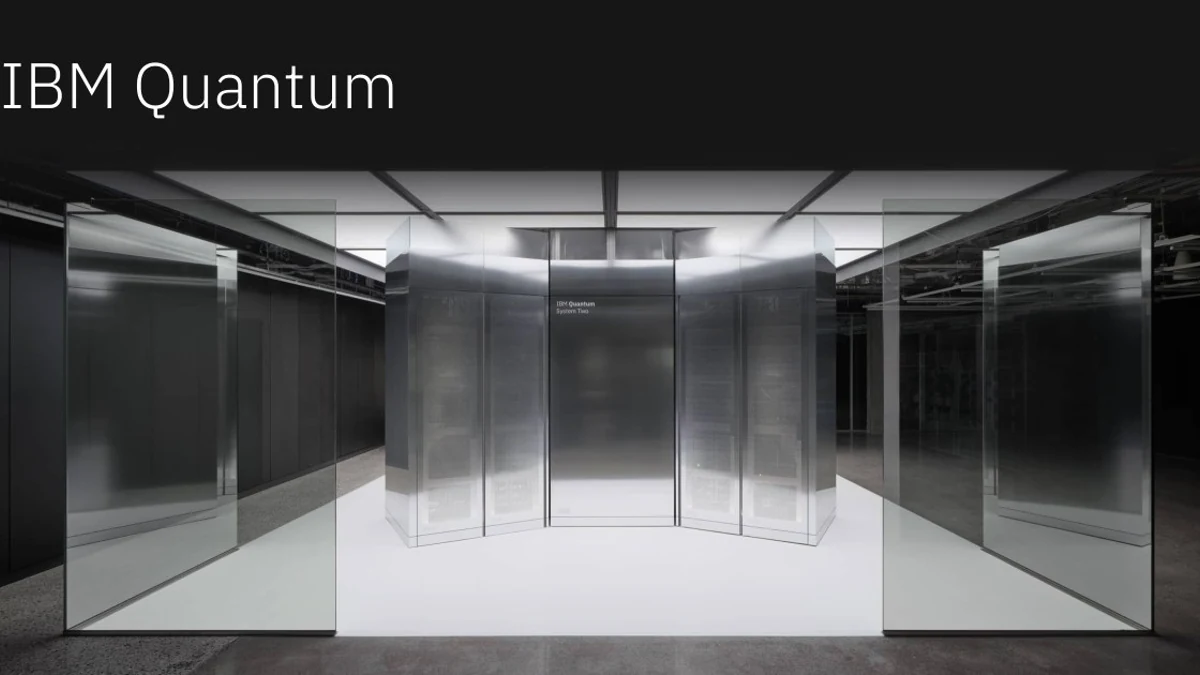
IBM's published roadmap targets a 100,000-qubit system for the early 2030s as the threshold for commercially relevant pharmaceutical simulations, per the IBM Quantum Development Roadmap. Photonic results such as Quantum computational advantage with a programmable photonic processor (Nature, 2022), which used Gaussian boson sampling, demonstrate narrow, specialized speedups; they do not transfer directly to pharmaceutical molecular simulation, where qubit quality and quantum error correction overhead remain the binding constraints.
The NIST post-quantum cryptography standards intersect with drug discovery data infrastructure in a specific way: research data with 10 to 20 year IP protection windows is a Harvest-Now-Decrypt-Later (HNDL) target. Adversaries collect RSA-encrypted research data today and hold it for decryption once fault-tolerant quantum computing arrives. Transitioning data-in-transit and data-at-rest to NIST Post-Quantum Cryptography Standards (FIPS 203 ML-KEM, FIPS 204 ML-DSA, FIPS 205 SLH-DSA) is actionable now, independent of any quantum computing adoption decision.
Classical vs Quantum Computational Chemistry: Current State
| Problem class | Classical method | Quantum method | Quantum advantage realized? | Timeline to practical scale |
|---|---|---|---|---|
| Small-molecule electronic structure (<50 atoms) | DFT, CCSD(T) | VQE on NISQ hardware | Demonstrated on hardware at small scale | Available now for research experiments |
| Protein-ligand binding (>200 atoms) | Molecular dynamics, docking | VQE on fault-tolerant hardware | Not yet; projected for fault-tolerant era | Early 2030s (IBM roadmap) |
| Protein folding simulation (dynamic conformational) | MD simulations, not solved by AlphaFold2 | Quantum simulation (projected) | Not yet; open research problem | Fault-tolerant era, timeline uncertain |
| Combinatorial lead refinement step | Heuristic search, genetic algorithms | QAOA; quantum-inspired available now | Quantum-inspired classical solvers available now | Native QAOA advantage requires fault-tolerant hardware |
| ADMET toxicity prediction | Classical deep learning (production) | Quantum ML (research) | Not yet; hypothesis stage | Dependent on NISQ noise reduction or fault-tolerant era |
Quantum Platforms and Pharma Ecosystem: IBM Quantum, Google Quantum AI, and Tools
Quantum computing in drug discovery reaches pharmaceutical R&D teams primarily through cloud platforms and vendor partnership networks, not on-premise hardware. IBM Quantum's Qiskit Nature library provides the workflow layer for quantum chemistry calculations on Eagle and Heron processors; the IBM Quantum Network connects pharma companies including Roche, Boehringer Ingelheim, and JSR Corporation to quantum hardware with error mitigation support. Google Quantum AI's Cirq framework and OpenFermion library for fermionic Hamiltonian construction are the alternative open-source stack. Google's 2023 paper in Nature, Suppressing quantum errors by scaling a surface code logical qubit, reported that a distance-5 surface code logical qubit modestly outperformed distance-3 logical qubits, an experimental sign that quantum error correction begins to improve performance as qubit count grows.
Additional platforms with pharma-relevant access: Rigetti Computing offers the Quilc compiler and Forest SDK via Amazon Braket. IonQ's trapped-ion architecture achieves higher gate fidelity at smaller qubit counts than superconducting alternatives, a relevant trade-off when quantum circuit depth per shot matters more than total qubit count. PennyLane from Xanadu is an open-source differentiable quantum computing library that bridges quantum kernels with classical machine learning frameworks, relevant for ADMET modeling research.
- Qiskit Nature (IBM Quantum)
- Quantum chemistry workflow library for electronic structure problems; supports VQE ansatz design, active space selection, and noise mitigation on IBM hardware.
- OpenFermion (Google Quantum AI)
- Open-source library for compiling and analyzing quantum simulation algorithms for fermionic and bosonic systems; integrates with Cirq and PySCF for molecular data preparation.
- PennyLane (Xanadu)
- Differentiable quantum computing library supporting quantum kernel methods and quantum neural networks; hardware-agnostic, works with IBM, IonQ, and Rigetti backends via plugins.
- Amazon Braket
- Cloud quantum computing service providing access to IBM Quantum, IonQ, Rigetti, and OQC hardware through a unified SDK; the practical entry point for pharma teams without platform-specific partnerships.
- Azure Quantum
- Microsoft's cloud quantum access layer; includes Quantinuum (formerly Cambridge Quantum) hardware and quantum chemistry tooling relevant to AstraZeneca-type partnership models.
The pre-clinical scope of these tools distinguishes them from clinical AI systems. Implementing AI in healthcare covers computational tool selection under FDA Software as a Medical Device (SaMD) oversight; quantum pharma platforms sit upstream of that regulatory tier, in the pre-clinical R&D instrumentation category where FDA computational model validation requirements are different and generally less prescriptive.
Readiness Assessment: Integrating Quantum Methods into Pharmaceutical R&D
Quantum computing in drug discovery is not a uniform readiness question. The answer depends on which problem in the pipeline is the actual bottleneck. Pharmaceutical R&D teams evaluating integration should work through four decision criteria.
- Problem type fit: quantum advantage arguments hold for strongly correlated electronic structure problems (transition-metal enzyme active sites, open-shell radicals) and large-scale combinatorial optimization in lead refinement. Molecular dynamics force-field simulations, structure-based docking for routine target identification, and classical deep learning for ADMET screening all remain classical territory where quantum methods offer no near-term advantage. If the team's bottleneck falls in the first category, quantum tools are worth evaluating. If it falls in the second, quantum adds noise without benefit.
- Horizon alignment: NISQ-era hardware gives research-grade experiments now, not production pipeline integration. VQE on IBM Quantum and QAOA on cloud platforms are tools for building capability and learning quantum-classical hybrid workflow design. Teams integrating quantum today position for the fault-tolerant era, not for immediate throughput gains. The IBM Quantum roadmap places pharma-relevant fault-tolerant quantum computing in the early 2030s; protein folding simulation of full binding dynamics and large-molecule compound optimization at production scale require that capability.
- Data security posture: research data with 10 to 20 year IP protection windows requires action now, regardless of quantum computing adoption readiness. Transitioning data-in-transit and data-at-rest encryption to NIST FIPS 203 ML-KEM, FIPS 204 ML-DSA, and FIPS 205 SLH-DSA addresses the HNDL attack vector. This criterion is the only one in this assessment where the action is immediate and independent of hardware maturity.
- Partnership vs build: no pharma company should be acquiring on-premise quantum hardware for R&D today. IBM Quantum Network partnerships, Amazon Braket, and Azure Quantum provide cloud access to multiple hardware backends with error mitigation and SDK tooling included. The barrier to quantum exploration is research budget allocation and quantum chemistry expertise, not hardware procurement.
The data security criterion stands apart because it requires no waiting. NIST finalized FIPS 203, 204, and 205 in August 2024. Pharmaceutical security teams that have not begun post-quantum cryptography migration assessments are accumulating HNDL exposure on exactly the class of data that quantum-capable adversaries will prioritize: novel compound structures, clinical trial datasets, and regulatory submission packages with decade-long competitive value.
Further reading
Frequently Asked Questions
Is quantum computing already being used in drug discovery today?
Quantum computing is being used in drug discovery research today, but at a pre-production scale limited by NISQ devices constraints. Pharmaceutical companies including Roche and Boehringer Ingelheim have active IBM Quantum Network collaborations running VQE-based molecular simulations on problems with fewer than 50 active electrons, which represents a small fraction of real drug targets. Full-scale pharmaceutical simulation requires fault-tolerant quantum computers with millions of physical qubits, a capability the IBM Quantum roadmap targets for the early 2030s.
What is the difference between VQE and classical DFT for drug discovery?
The Variational Quantum Eigensolver and density functional theory both compute molecular electronic structure, but they fail at different problem types. DFT uses an exchange-correlation approximation that breaks down for strongly correlated electron systems, such as transition-metal enzyme active sites, giving systematically inaccurate binding energies. VQE can in principle represent the full electron correlation without this approximation by encoding the wavefunction directly on qubits. In practice on NISQ hardware, VQE is limited to small molecules and introduces its own noise errors; DFT remains the practical workhorse for most drug targets.
Should pharmaceutical companies worry about quantum computing breaking their data encryption?
Pharmaceutical companies with research data requiring 10 to 20 years of confidentiality protection should act now on post-quantum cryptography, even though fault-tolerant quantum computers capable of breaking RSA or ECC are still a decade or more away. The risk is Harvest-Now-Decrypt-Later (HNDL): adversaries collect encrypted research data today and decrypt it once large-scale quantum hardware becomes available. NIST finalized post-quantum cryptographic standards in 2024 (FIPS 203 ML-KEM, FIPS 204 ML-DSA, FIPS 205 SLH-DSA); transitioning data-in-transit and data-at-rest encryption to these standards is the actionable step.