MediaTek published new technical details this week on how its latest Wi-Fi chipsets deliver reliability gains across networks that still run Wi-Fi 7 and Wi-Fi 6 hardware alongside newer equipment, per MediaTek.
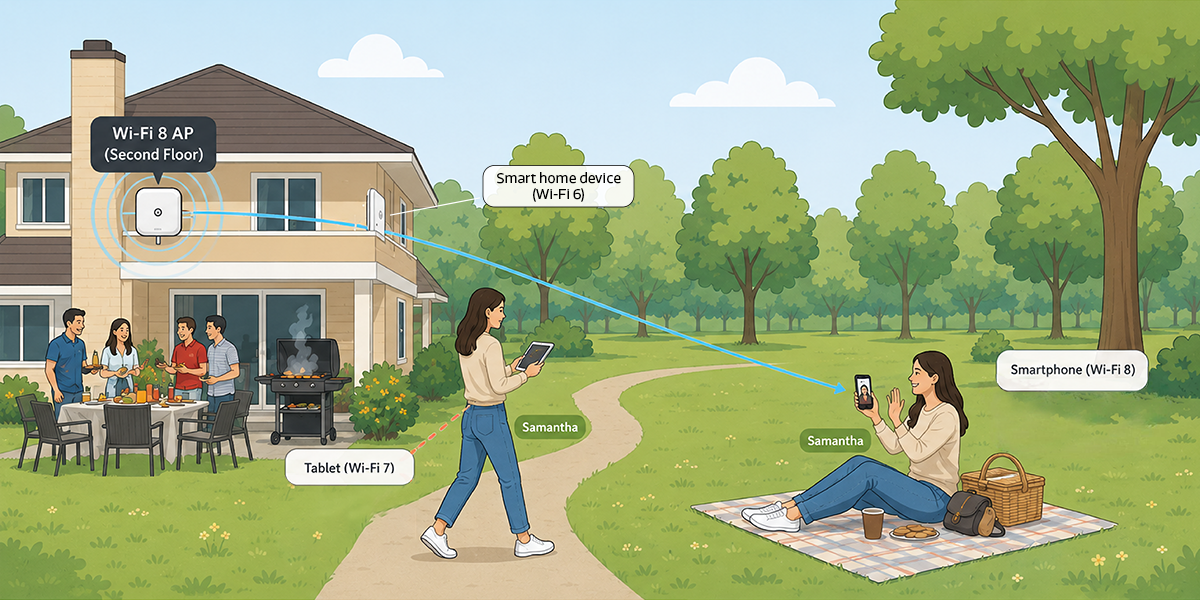
The premise driving the work is practical: real-world home and enterprise networks rarely consist of a single wireless generation. A household with a new router still serves older laptops, smart speakers, and phones that top out at prior wireless standards. MediaTek is addressing this through a system-level approach built on four platform technologies bundled into its latest chipsets: Dynamic Subband Operation+ (DSO+) and Non-Primary Channel Access+ (NPCA+) for coexistence-aware spectrum sharing; Xtra Range and Mesh Boost for coverage and backhaul improvements; and Zero-Wait DFS for reducing service interruptions from Dynamic Frequency Selection channel changes. All four are described in detail in MediaTek's post.
DSO+ and NPCA+ are designed for environments where clients from different wireless generations transmit simultaneously. The Xtra Range technologies extend effective coverage distance between access points and clients in two scenarios that legacy systems handle poorly: a newer access point talking to an older client, and an older access point serving a newer device. For mesh deployments, Mesh Boost activates wider channel operation in the 5 GHz band for backhaul links between mesh nodes, which MediaTek says significantly raises aggregate throughput across large homes or campus environments. Zero-Wait DFS reduces service interruptions caused by radar activity forcing channel changes, a persistent pain point in environments that rely on DFS spectrum.
The practical benefit MediaTek is stressing is that customers do not need to replace every device on a network to see performance improvements from a new generation of wireless hardware. A newer router or mesh node running these technologies should improve throughput, coverage, and reliability for the older hardware already in use, narrowing the upgrade pressure on end users and network operators.