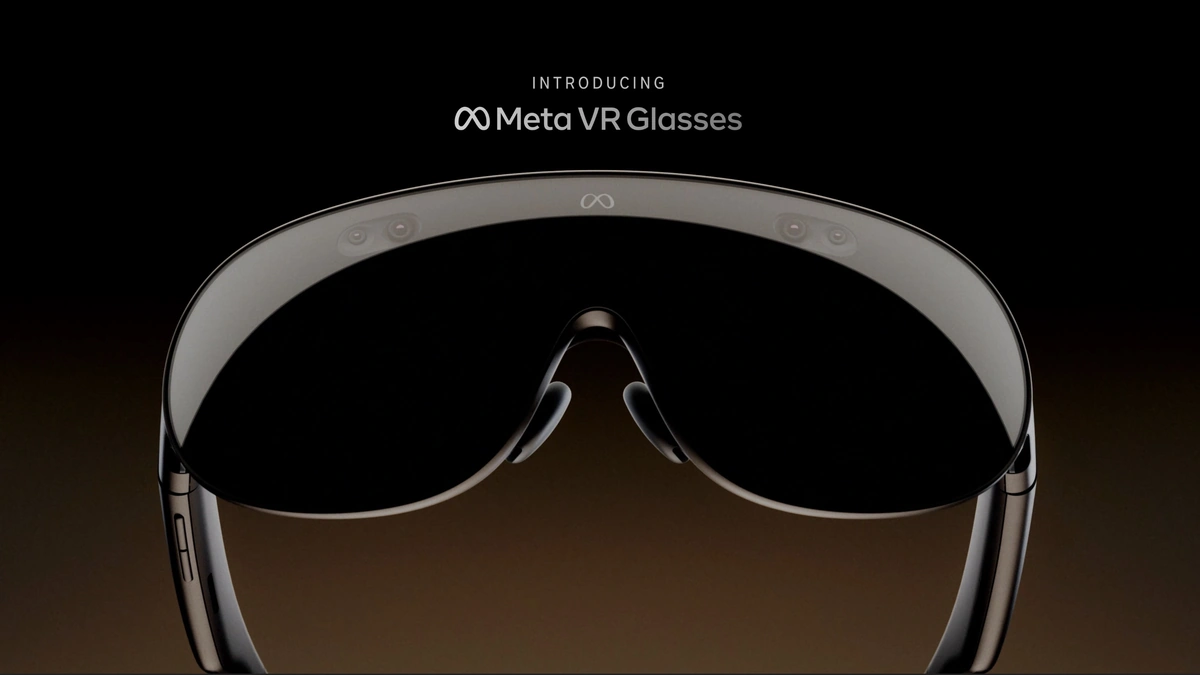
Meta will start selling Meta VR Glasses, a virtual reality headset built as a pair of glasses weighing about 100 grams, in spring 2027 for $1,299.99.
The weight figure comes with a design choice that explains it. The glasses carry only the sensors and displays, while a separate puck, joined by an optical tether, holds the processor, battery and storage and clips onto a pocket or bag. That split is how the company arrives at a device it says is five times lighter than Meta Quest 3, and it makes the cable part of everyday use rather than an optional accessory. The puck is rated for up to three hours of continuous high-resolution media playback with 45W fast charging, and the chip inside is Qualcomm's new Snapdragon Reality Elite.
Screen quality is where the product is aimed squarely at film watchers. Per Meta, micro-OLED panels branded as a 5K Infinite Display reach 37 pixels per degree behind pancake lenses made for this device, with Dolby Vision support and Dolby Atmos audio built into the frames. Meta also calls the glasses the first IMAX Enhanced certified VR device, which lets select films play in IMAX's expanded aspect ratio at home.

Content partnerships carry much of the pitch, which fits hardware that is still months from shelves. Meta says Disney+ subscribers in select countries can begin streaming films such as Marvel's The Avengers in 3D in November, and that Peacock, HBO Max and Paramount+ are opening their 3D catalogs for the first time. Sports follow the same pattern: once the glasses ship, Meta expects more than 100 immersive live US sports events each year through partners including ESPN, MLB, NBC Sports, TNT Sports and UFC.
Work is the other half of the argument. The company describes a private setup with several virtual screens, full-color passthrough that keeps the desk and phone visible, and the option to turn any flat surface into a keyboard and touchpad. There are no controllers; wearers steer the system by voice, gaze and hand gestures through the Meta AI agent built into the operating system. Meta lists more than 75 hand-gesture games at launch, streaming through Xbox Cloud Gaming, and a photorealistic hologram calling mode that it says works with apps from WhatsApp to Zoom.
Two practical details are missing from the announcement: which countries get the glasses at launch, and how much the tethered puck weighs on its own.