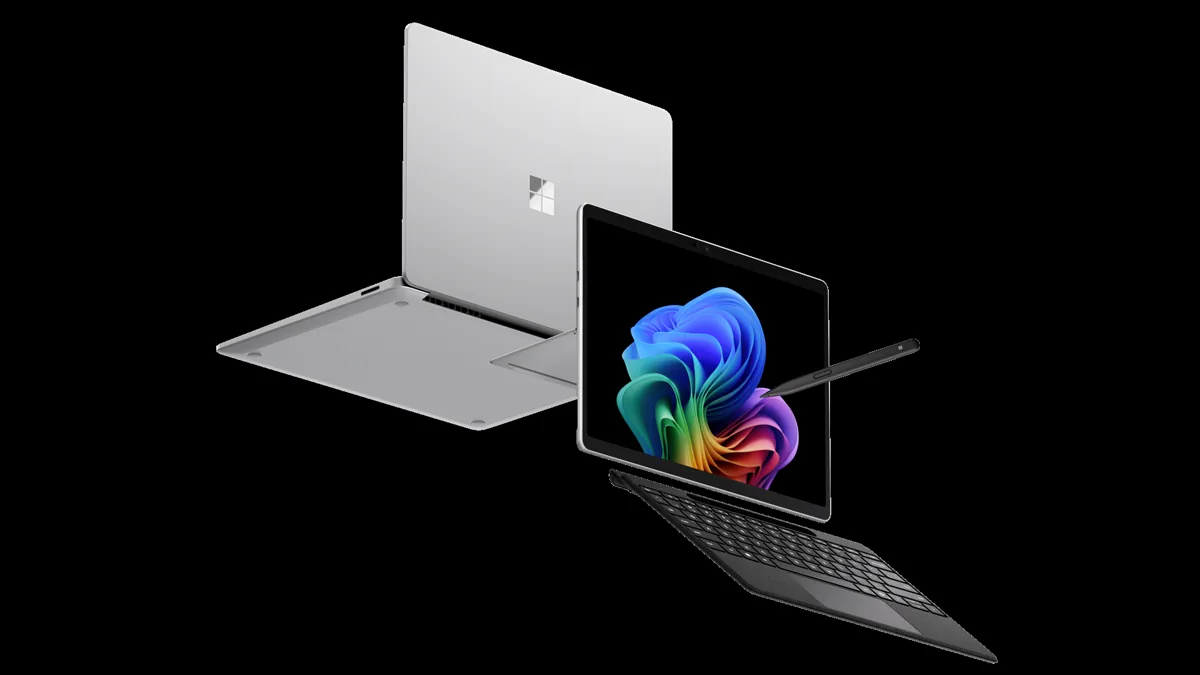
Microsoft Surface is a PC hardware line that Pavan Davuluri, the division's head, teased today with a cryptic photograph of a curved display edge and a promise that something new is coming for developers, ahead of two major industry events starting this weekend.
Davuluri posted on X the curved-edge image alongside the message that whatever is arriving is "not a new OS version," ruling out a software-only debut at Microsoft's Build developer conference on June 2nd. A separate post from the official Windows account pointed to the Taipei Nangang Exhibition Center coordinates that host Computex, framing the Microsoft Surface announcement as "a new era of PC." The Verge reported the teasers, connecting them to Nvidia's Computex keynote on May 31st.
The timing aligns with reporting by The Verge's Tom Warren that Nvidia is preparing to enter the Windows on Arm laptop market with its own chip designs, the N1 and N1X, built on the same Arm architecture used by Qualcomm's Snapdragon X series. A Microsoft-Nvidia partnership on those chips, Warren argued earlier this week, would be a natural fit for a Microsoft Surface refresh. If confirmed, the new hardware would extend the line's role as the primary flagship for Windows on Arm, a position Microsoft Surface has held since Qualcomm-based models launched in 2024.
What form factor the curved edge belongs to, whether a laptop lid, a monitor, or a tablet, has not been disclosed. The full Microsoft Surface reveal is expected at Nvidia's Computex keynote on May 31st, Microsoft Build on June 2nd, or both.