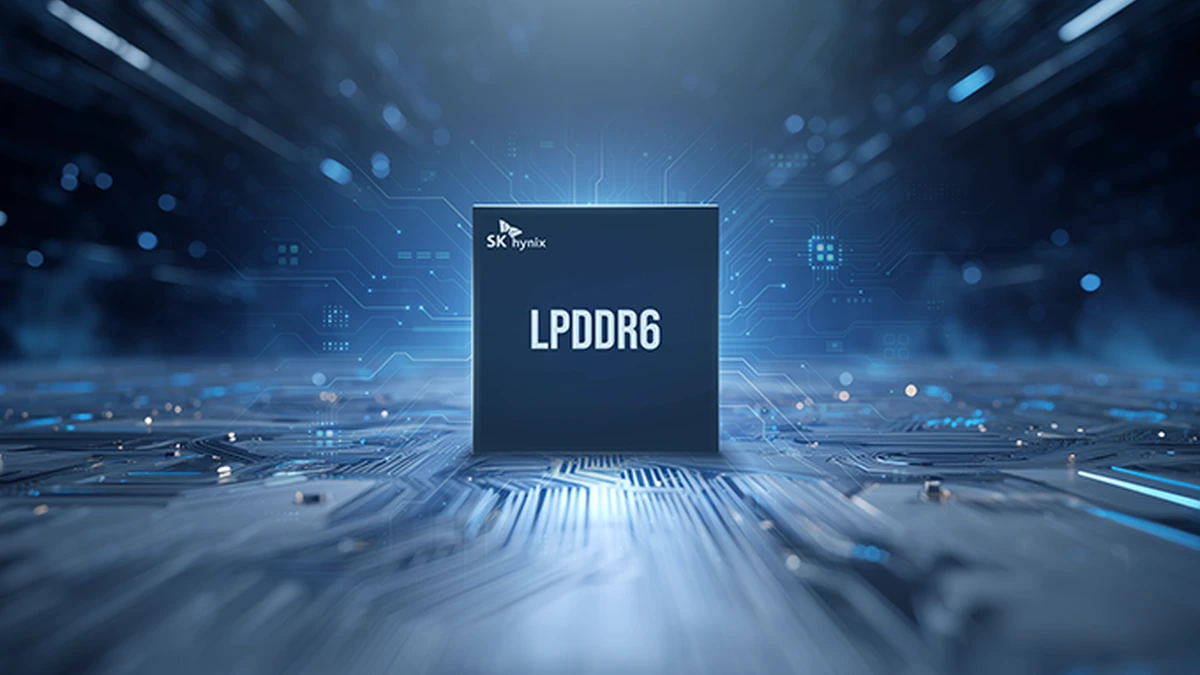
SK hynix has developed a 16Gb LPDDR6 chip built on its sixth-generation 10-nanometer-class process, known internally as 1c, and the headline number is a 33% speed gain over LPDDR5X with base operating speeds above 10.7Gbps. The company showed the chip at CES in January and says it has now completed the world's first validation of 1c LPDDR6, with mass production preparations targeted for the first half of 2026 and supply following in the second half.
The power side of the announcement is arguably the more consequential number for where this chip is headed. SK hynix says the design cuts power consumption by more than 20% compared with the previous generation, achieved through a sub-channel structure and dynamic voltage and frequency scaling that lets the chip throttle power use based on real-time load rather than running at a fixed voltage regardless of demand. That efficiency gain matters most for on-device AI workloads, where mobile chips increasingly run inference locally rather than sending requests to the cloud, and every milliwatt saved on memory access extends how long a phone or laptop can sustain that kind of processing before draining its battery.
SK hynix also demonstrated Automotive LPDDR6 and Auto/Robotics LPDDR5/5X variants built on the same 1c process, alongside the mobile-focused LPDDR6, which points to the company treating this node as a platform rather than a single-product launch. That's consistent with how the memory industry has approached recent process generations: Samsung and Micron both follow a similar pattern with their own DRAM nodes, validating a shrink on the highest-volume mobile use case first, then adapting it for automotive and industrial customers who need the same efficiency gains but under different reliability and temperature requirements. Whether 1c LPDDR6 ships on schedule in the second half of the year will say as much about SK hynix's yield curve on the new process as it will about demand from phone makers waiting on the chip, at a moment when rivals Samsung and Micron are racing toward their own next-generation LPDDR6 and HBM4 rollouts.