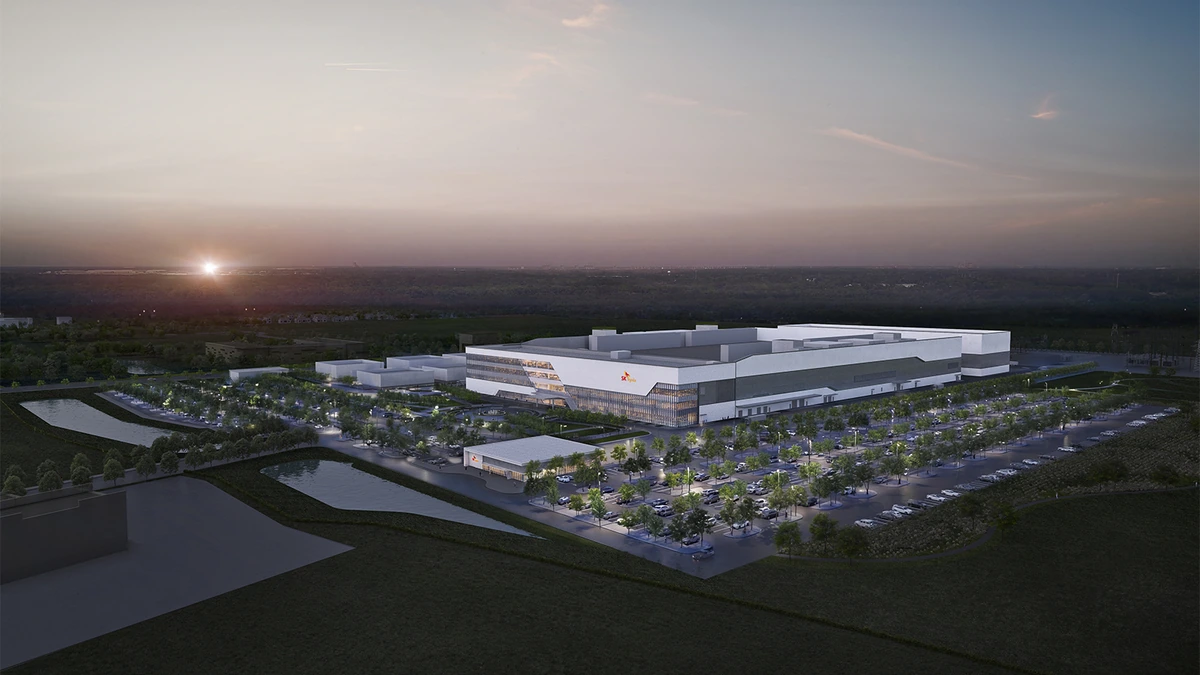
SK hynix has broken ground on its first US HBM production base, a more-than-$4 billion advanced-packaging facility in West Lafayette, Indiana, that is scheduled to begin mass production of next-generation High Bandwidth Memory in the second half of 2029, per SK hynix.
The company plans to open the Indiana cleanroom by October 2028. It will run the site with roughly 1,000 personnel during anticipated commercial operations. Wafers produced at SK hynix's plants in Korea will ship to Indiana for advanced packaging and testing. The resulting Made-in-USA HBM will supply US customers. That is the first time the company's flagship AI memory will be produced on US soil.
SK hynix positions the site as a way to stabilize the US AI chip supply chain. More than 100 companies are under consideration as suppliers for materials, components, and equipment. The project is expected to create about 7,000 direct and indirect jobs during construction and commercial operation, according to SK hynix. Indiana Governor Mike Braun called the project a win for the state's economy. Senator Todd Young tied it to the CHIPS and Science Act investment he supported.
Alongside the production lines, SK hynix will build an Advanced Packaging R&D Testbed where customers, universities, and partners can develop and prototype next-generation packaging technologies. The company signed a memorandum of understanding with Purdue University covering joint research on system integration and advanced packaging, including HBM.
SK hynix also announced a veteran hiring effort at the ceremony. SK Group will join the USFK Veterans Job Platform run by the Korea Chamber of Commerce and Industry and the Korea-US Alliance Foundation, creating employment paths for discharged US Forces Korea service members.
"Today marks the day when the United States and SK hynix embark on a new future of AI together," said SK hynix CEO Kwak Noh-Jung, who described the Indiana fab as the gateway for the first Made-in-USA HBM.
The ceremony at Purdue's Holloway Gymnasium drew Indiana and federal officials along with South Korean Ambassador Kang Kyung-wha. What still has to be proven is whether the Indiana line can actually feed US customers on that 2029 clock.