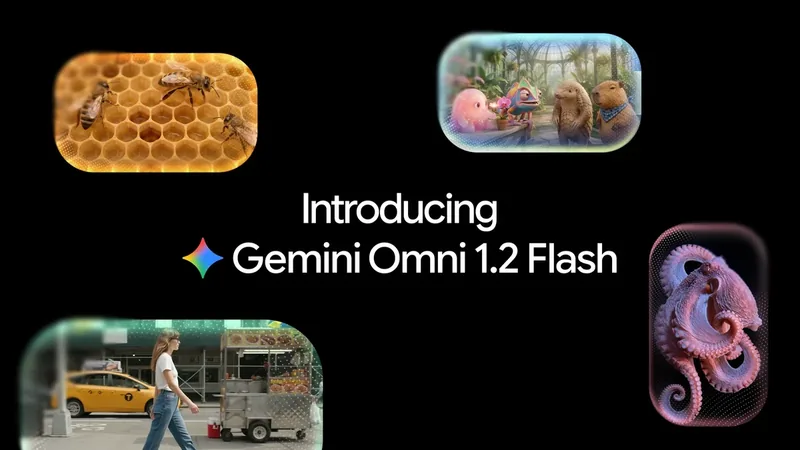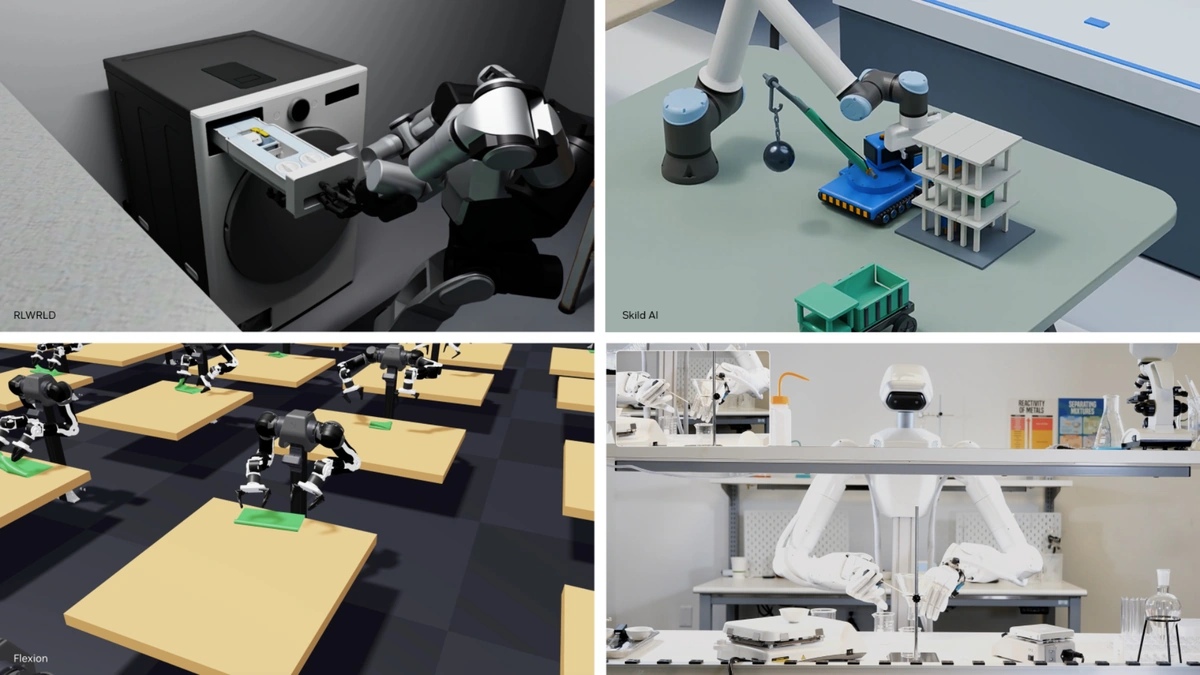
Generative AI is a class of machine-learning models that emulates the structure and characteristics of training data in order to produce new, synthetic content spanning text, images, audio, video, and code.
That single capability, learning a data distribution well enough to sample fresh examples from it, sits behind the chatbots, image generators, and coding assistants now embedded in mainstream software. Generative artificial intelligence is not one technique. It is a family of architectures, each tuned to a different output modality, that share a common training-then-sampling logic. The two dominant families are large language models for text and code, and diffusion models for images, audio, and video. Understanding GenAI means understanding how those families differ in what they predict and how they generate it, why they fail in characteristic ways, and where neutral bodies like the National Institute of Standards and Technology draw the definitional lines.
What Generative AI Is
Generative AI is formally defined by NIST as a class of AI models that emulates the structure and characteristics of input data to produce derived synthetic content. The glossary entry from the agency's Computer Security Resource Center adds that this content "can include images, videos, audio, text, and other digital content" (NIST CSRC glossary). This is a NIST glossary definition rather than a universally ratified global standard, but it is the most precise neutral wording available and it isolates the trait that matters: the model generates, it does not merely classify.
The contrast is sharper against the broader definition of AI. NIST describes artificial intelligence as a machine-based system that, for a set of human-defined objectives, makes predictions, recommendations, or decisions (NIST glossary). A credit-scoring model predicts. A recommendation engine ranks. A generative system instead returns an artifact that did not exist before. NVIDIA frames the same idea from the engineering side, noting that generative AI models use a neural network to identify the patterns and structures within existing data and then generate new and original content from them.
Most production GenAI works across four output types, which map onto the families covered below:
- Text: prose, summaries, structured answers, and translation, generated token by token by a large language model.
- Images and video: pixels and frames synthesized by a diffusion model that refines random noise into a coherent picture.
- Audio: speech and music produced either autoregressively or through the same denoising approach used for images.
- Code: source in many languages, treated by the model as another text sequence with strict syntax.
How Large Language Models Generate Text
Generative AI for text is dominated today by large language models (LLMs) built on the transformer architecture, which DeepMind describes as the foundation of generative AI today (Google DeepMind). An LLM is a neural network trained to predict the next token, a word fragment or symbol, given everything that came before it. NVIDIA notes that transformers process sequential input non-sequentially, which lets the attention mechanism weigh every prior token in parallel rather than reading strictly left to right. That parallelism is what made it practical to train these models on internet-scale training data.
Generation itself is sequential. DeepMind describes traditional autoregressive language models as systems that generate text one word, or token, at a time. Each step feeds the model's own previous output back as input, so the text grows one prediction at a time. This is autoregressive generation, and it explains both the fluency and the failure modes of modern chatbots: the model is always choosing a plausible next token, never consulting a database of facts. The same machinery covers how large language models are trained on supervised and tuned signals before they ever serve a user. Diffusion text models are the exception: Google's experimental DiffusionGemma generates 256-token blocks in parallel.
The text-generation loop runs through four stages:
- Pretraining corpus ingestion: the model reads a broad corpus and adjusts billions of weights to minimize next-token error.
- Tokenization: at inference, the prompt is split into tokens drawn from a fixed vocabulary.
- Forward pass: the transformer computes attention over the token sequence and outputs a probability for every possible next token.
- Softmax sampling: one token is sampled from that distribution, appended to the sequence, and the loop repeats until a stop condition.
The relevant background is the difference between supervised and unsupervised machine learning, since pretraining is self-supervised over raw text while later tuning uses labeled examples.
How Diffusion Models Generate Images and Other Media
Generative AI for images, audio, and video is built predominantly on diffusion models, which work by learning to reverse a step-by-step denoising process rather than predicting outputs token by token. DeepMind draws the contrast directly: where autoregressive models predict text in sequence, a diffusion model learns to generate outputs by refining noise step by step. The architecture trades the sequential token loop for an iterative cleanup of an entire image at once.
Training a diffusion model uses two complementary phases. The forward process takes a clean training image and adds Gaussian noise in small increments until the image is indistinguishable from static. The reverse process trains a neural network to undo a single noise step, learning to predict what was removed. NVIDIA describes the payoff of that training: novel data is generated by running the reverse denoising process starting from entirely random noise. The model never copies a training example. It walks a noisy sample back toward the kind of image its weights have learned to expect.
At inference, image generation runs through four steps:
- Sample random noise: start from a tensor of pure Gaussian noise, the blank slate every diffusion run begins from.
- Condition on the prompt: encode the text prompt into an embedding that steers each denoising step toward the requested content.
- Iterate denoising steps: apply the trained reverse network repeatedly, removing a little noise each pass over dozens of steps.
- Decode from latent space: map the cleaned latent representation out to pixels or a waveform for the final output.
The step count is the main cost lever in this pipeline, which is why the same model can trade speed for fidelity. The fuller mechanics of how diffusion models turn noise into images sit one level deeper than this overview, in the math of the reverse process and the choice of latent space.
Comparison: LLMs, Diffusion Models, and Other Architectures
Generative AI architectures differ primarily in what data modality they target and how they model the probability distribution over outputs. That distinction separates sequence models, which predict the next element, from latent-variable approaches that sample a whole output at once. The table below sets the three working categories side by side. It avoids naming specific model versions because release numbers move faster than any static definition.
| Architecture | Primary modality | Generation method | Key strengths |
|---|---|---|---|
| Autoregressive LLM | Text and code | Token prediction, one token at a time | Fluency, reasoning, in-context tasks |
| Diffusion model | Image, audio, video | Iterative denoising from random noise | Visual fidelity, output diversity |
| Multimodal foundation model | Cross-modal | Combined token and latent methods | Unified text, image, and audio tasks |
The third row matters most for where the field is heading. A foundation model trained on several modalities at once can accept an image and answer questions about it, or take text and return audio, without bolting separate systems together. That convergence is the practical meaning of multimodal AI: one set of weights serves tasks that used to require distinct models. The cost is interpretability. A single multimodal AI system mixing autoregressive and diffusion components is harder to evaluate than either foundation model family alone, which feeds directly into the safety questions below.
Training: From Raw Data to a Working Model
Generative AI models acquire their capabilities through a staged training pipeline that begins with large-scale pretraining on broad corpora and ends with alignment techniques such as reinforcement learning from human feedback (RLHF). Each stage shapes a different property: pretraining builds raw capability, fine-tuning narrows behavior to a task, and alignment tunes the model toward responses people actually want. Skipping the last stage leaves a capable model that ignores instructions.
- Pretraining: the model learns general structure from a large unlabeled corpus, the stage that consumes the most compute and the most training data.
- Supervised fine-tuning: curated input-output pairs teach the model the format and style of useful answers.
- Reinforcement learning from human feedback: human rankings of competing outputs train a reward model, and RLHF then optimizes the system against that reward.
The same staged pipeline applies whether the output is text or images, though the alignment step is most mature for LLMs. Teams selecting infrastructure for this work weigh data pipelines, compute, and tooling, the practical territory of choosing a machine learning platform. A fuller treatment of how AI models are trained covers the dataset curation and evaluation loops that decide whether a run is worth its compute bill.
Where Generative AI Is Used Today
Generative AI is deployed across software development, content production, scientific research, and customer interaction, with AI agents and retrieval-augmented generation extending its reach to dynamic, tool-using tasks. Adoption is widest where output is cheap to verify. OpenAI reports that college-age adults are the biggest adopters among age groups for ChatGPT (OpenAI), a signal that the first durable uses cluster around writing, study, and code rather than high-stakes decisions.
The active deployment patterns fall into five buckets:
- Text and code generation: drafting, summarizing, and writing source code under developer review.
- Image synthesis: diffusion-based generation for design, marketing, and product mockups.
- Audio and voice: speech synthesis, dubbing, and music sketches.
- Agentic task execution: autonomous AI agents that chain model calls with external tools to complete multi-step work.
- RAG pipelines: retrieval-augmented generation (RAG) that fetches documents at query time so the model answers from current, sourced material instead of its frozen weights.
Retrieval-augmented generation is the most consequential of these for accuracy, because it grounds token prediction in retrieved evidence and narrows the gap between a model's training cutoff and the present. Agentic systems extend the same idea to action, letting a model call a search tool, a database, or a code runtime. Both patterns raise oversight questions that connect to algorithmic accountability in AI systems, since a tool-using agent makes decisions that are harder to trace than a single chat reply. The catalog of generative AI tools for text, image, video, and audio keeps expanding around these two patterns.
Limitations, Risks, and Safety Considerations
Generative AI systems carry well-documented risks including hallucination, training data bias, and misuse potential, which is why NIST launched the GenAI evaluation program to measure model capabilities and limitations systematically (NIST GenAI). NIST describes it as an umbrella program for model evaluation, testing generators, detectors, and prompters across text, image, code, audio, and video. That structure exists because the failure modes are inherent to how these models work, not bugs to be patched away.
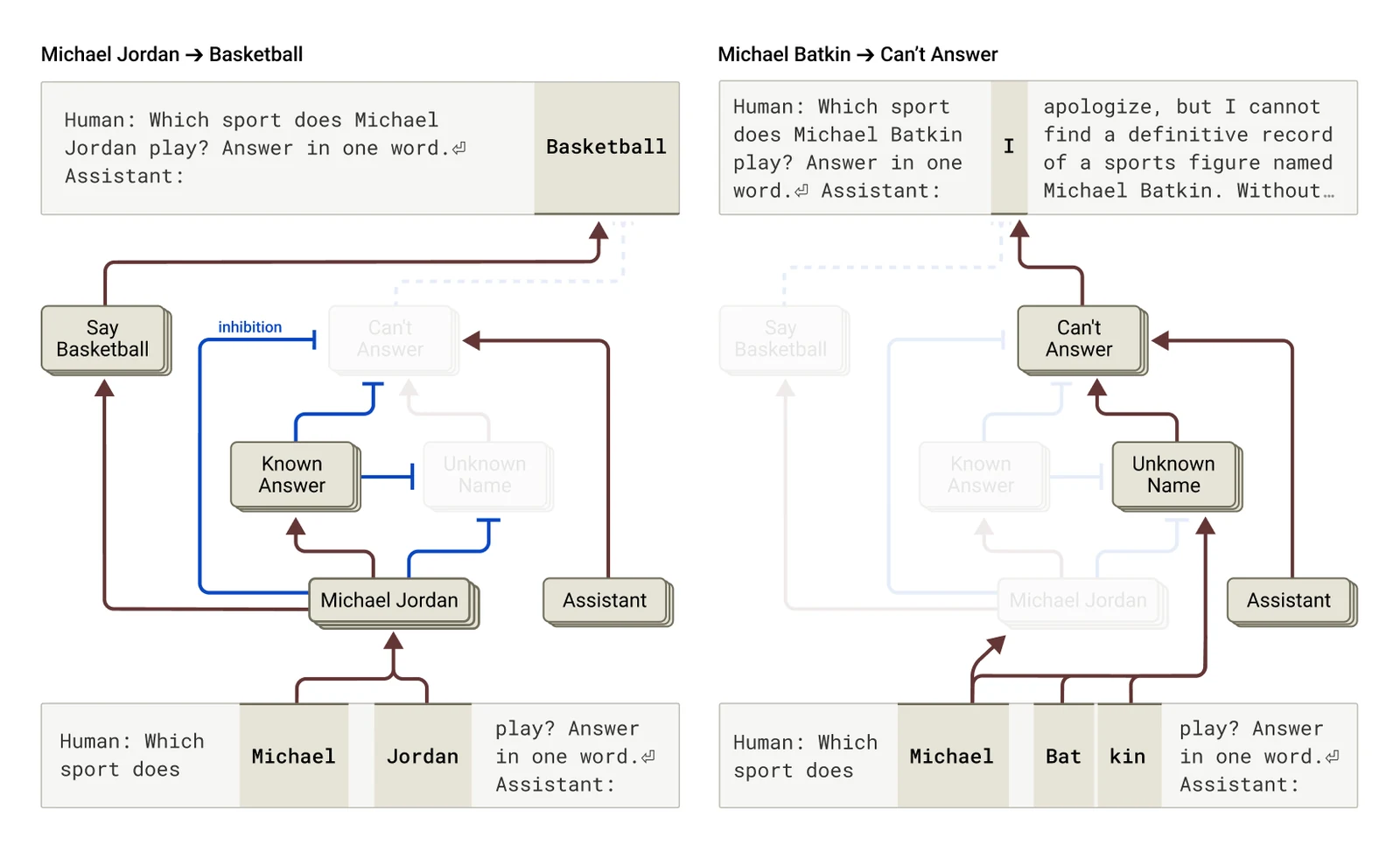
- Hallucination: autoregressive generation always returns a plausible next token, so a model can state false claims with full fluency and no internal flag.
- Copyright exposure: a EUIPO study notes that generative AI uses existing content to generate new material, which raises unresolved questions about training-data rights (EUIPO).
- Bias from training data: patterns in the corpus, including skew and stereotype, are reproduced and sometimes amplified in synthetic content.
- Synthetic disinformation: the same fidelity that helps designers makes convincing fake media cheap to produce at scale.
- Alignment failures: a model optimized against a proxy reward can satisfy the metric while missing the intent.
No sibling explainer in this pillar covers this full span at once: the breadth from transformer architecture text generation through diffusion media to the safety surface is what makes this the hub. The two front-line responses are better measurement and better alignment. Systematic model evaluation, the discipline of scoring capability and failure against fixed benchmarks, is how teams catch regressions before users do, and it connects to the broader question of how AI models are evaluated across reasoning, safety, and bias. The complementary track is AI safety and alignment techniques aimed at making a model's behavior match human intent under conditions its training never saw. NIST's program treats AI safety as a measurement problem first, which is the most actionable framing for practitioners who have to ship.
References
- NIST CSRC glossary: Generative Artificial Intelligence
- NIST GenAI evaluation program
- NVIDIA glossary: Generative AI
- Google DeepMind: diffusion models
Further reading
- Large Language Models Explained: Architecture, Training, and Limits
- Generative AI Tools Explained: Text, Image, Video, and Audio
- AI Agents Explained: How Autonomous AI Systems Work
- RAG Explained: How Retrieval-Augmented Generation Works
- AI Infrastructure Explained: How AI Models Are Served at Scale
- AI Model Evaluation: Benchmarks, Evals, and Their Limits
- AI Safety and Alignment Explained: How Models Are Kept on Track
- AI Use Cases Explained: Where AI Delivers Real Value Today
- AI Benchmarks Explained: MMLU, HumanEval, and What They Measure
- AI Hallucinations Explained: Why Models Make Things Up
Frequently Asked Questions
What is the difference between generative AI and traditional AI?
Traditional AI is designed to classify, predict, or make decisions from existing data; generative AI learns to produce new content that resembles its training data. A spam filter is a traditional AI system; a model that writes a reply to that email is a generative one. The distinction matters because generative systems require different evaluation methods: you measure output quality and diversity, not classification accuracy.
What are the functional components inside a diffusion model?
A diffusion model works in two phases: a forward process that adds Gaussian noise to training data, and a reverse process that learns to remove it. The reverse network is typically a U-Net or transformer trained to denoise step by step. At inference time, the model starts from pure random noise and iteratively refines it into a coherent image, audio clip, or other output.
Can you tell if content was generated by AI or a human?
Detection is unreliable at present. Statistical watermarking embeds low-perplexity patterns that specialized detectors can flag, but a determined adversary can paraphrase those patterns away. NIST GenAI includes a detector evaluation track that benchmarks how well discriminative AI tools identify synthetic content. For practical publishing, provenance metadata such as C2PA credentials is more reliable than text-only classifiers.
Do I need a GPU to run generative AI models locally?
Not always. Quantized small language models with 7 billion parameters or fewer run on modern CPUs and Apple Silicon chips with acceptable speed for light tasks. GPU acceleration becomes necessary when context windows are large, batch sizes are high, or you are running image-generation pipelines that require many diffusion steps. NVIDIA and AMD each publish minimum VRAM recommendations for popular open-weight models.